Maya Varichon El Zanaty
Commissaire d'exposition Curator Chercheuse Researcher Productrice Producer Consultante Consultant
Commissariat Curating

Création d'institution

Institution building

Ces institutions — maison d'artistes, laboratoire de recherche, collectifs — sont nées d'un même geste : créer les conditions d'une pratique artistique ancrée dans son contexte, au service de ceux qui l'habitent. Des espaces de friction entre l'art et le monde, entre transmission et invention, entre survie et utopie. En recherche d'alternatives aux formes et mécaniques conventionnelles, du white cube et du marché de l'art eurocentré, la création d'institution s'affirme ici comme acte politique et curatorial à part entière

These institutions — artists' house, research laboratory, collectives — were born of a shared gesture: creating the conditions for an artistic practice rooted in its context, in service of those who inhabit it. Spaces of friction between art and the world, between transmission and invention, between survival and utopia. In search of alternatives to conventional forms and mechanics — the white cube and the Eurocentric art market — institution-building asserts itself here as a fully political and curatorial act

Collectif · Art et activisme · Marseille · 2026 —

Collective · Bureau of Survival · Marseille

Bureau de la survie

Un ministère officieux — pour et par ceux qui n'ont pas un accès privilégié au monde de l'art

An unofficial ministry — for and by those without privileged access to the art world

2026 —

Fondé à Marseille en 2026, Bureau de la survie est un collectif opérant comme un ministère officieux — un bureau de la survie, pour et par ceux qui n'ont pas un accès privilégié au monde de l'art. Actions artistiques, commissariats d'exposition, ateliers, formations, développement du mécénat : un espace de friction entre stratégie institutionnelle et réalité du terrain, entre les cadres nécessaires à l'institution et l'énergie vitale portée par la communauté

Founded in Marseille in 2026, Bureau de la survie operates as an unofficial ministry — a bureau of survival, for and by those without privileged access to the art world. Artistic actions, curatorial projects, workshops, training, patronage development: a space of friction between institutional strategy and ground-level reality, between the frameworks institutions require and the vital energy carried by the community

Le collectif réunit Maya Varichon El Zanaty, commissaire et productrice ancrée dans les scènes africaines et internationales, et Nicolas Faubert (Kryzastyle), artiste multimédia, danseur et pédagogue franco-gabonais dont la pratique puise dans la culture hip-hop, le corps comme archive et l'accessibilité comme enjeu politique. Deux trajectoires qui se rencontrent sur un même refus : celui de séparer l'art de ceux qui en ont le plus besoin.

The collective brings together Maya Varichon El Zanaty, curator and producer rooted in African and international art scenes, and Nicolas Faubert (Kryzastyle), a Franco-Gabonese visual artist whose practice draws from hip-hop culture, the body as archive, and accessibility as a political stake. Two trajectories that meet on a shared refusal: to separate art from those who need it most.

Acte 1 · 24 mars – 24 mai 2026Act 1 · 24 March – 24 May 2026

Beaux-Arts de Paris · 13 quai Malaquais, Paris 6e Beaux-Arts de Paris · 13 quai Malaquais, Paris 6e

Dans cette exposition réunissant plus de deux cents œuvres du XIIe siècle à aujourd'hui — aux côtés de William Kentridge, Annette Messager, Cecilia Vicuña, Antoni Tàpies — Nicolas Faubert présente Survivors Office (2026). Une présentation numérique (PowerPoint) transmutée en station de pilotage : l'espace entre les visions inaccomplies et l'urgence de leur mise en acte. Les codes de la bataille appropriés pour incarner la tension entre cadres institutionnels et énergie vitale. Un horizon de pure potentialité

In this exhibition bringing together over two hundred works from the 12th century to today — alongside William Kentridge, Annette Messager, Cecilia Vicuña, Antoni Tàpies — Nicolas Faubert presents Survivors Office (2026). A digital presentation (PowerPoint) transmuted into a pilot station: the space between unaccomplished visions and the urgency of their enactment. Battle codes appropriated to embody the tension between institutional frameworks and vital energy. A horizon of pure potentiality

Nicolas Faubert — KryzastyleNicolas Faubert — Kryzastyle

Artiste plasticien, performeur et pédagogue franco-gabonais né en 1991 à Libreville. Malvoyant à plus de 90 %, il développe une pratique à la croisée de la performance, de l'installation et de la co-création, où le corps en mouvement devient matière et archive. Pavillon français, Biennale de Venise 2019 (Laure Prouvost) · Fondation Fiminco · Bourse de Commerce – Collection Pinault · Centre Pompidou · FRAC Île-de-France · Fondation Delfina, Londres · Kampnagel, Hambourg. Collections : Fonds d'art contemporain de la Seine-Saint-Denis, FRAC Île-de-France. Intervient à l'ENSBA Paris depuis 2023

Franco-Gabonese visual artist, performer and educator, born 1991 in Libreville. With over 90% visual impairment, he develops a practice at the intersection of performance, installation and co-creation, where the body in movement becomes material and archive. French Pavilion, Venice Biennale 2019 (Laure Prouvost) · Fondation Fiminco · Bourse de Commerce – Pinault Collection · Centre Pompidou · FRAC Île-de-France · Delfina Foundation, London · Kampnagel, Hamburg. Collections: Fonds d'art contemporain de la Seine-Saint-Denis, FRAC Île-de-France. Teaching at ENSBA Paris since 2023

AccessibilitéTransmissionCommunautéCabarets de la survie
Visuels à venir Visuals coming soon
01

Laboratoire de recherche indépendant · Dakar · 2020–2023

Independent research laboratory · Dakar

Bibliothèque Terme Sud

Ancrée dans son contexte, fugitive dans son esprit

Grounded in its context, fugitive in spirit

2020 – 2023

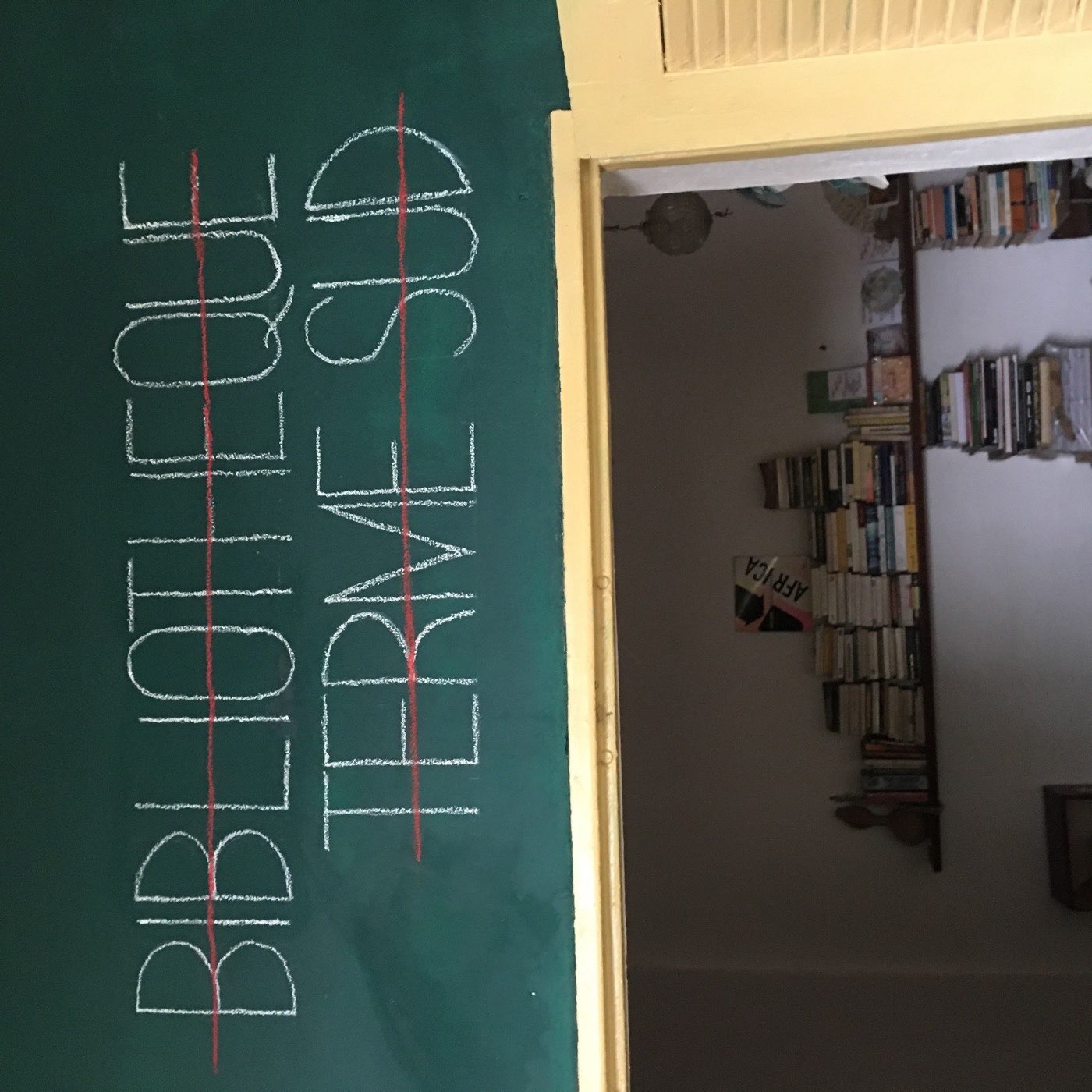
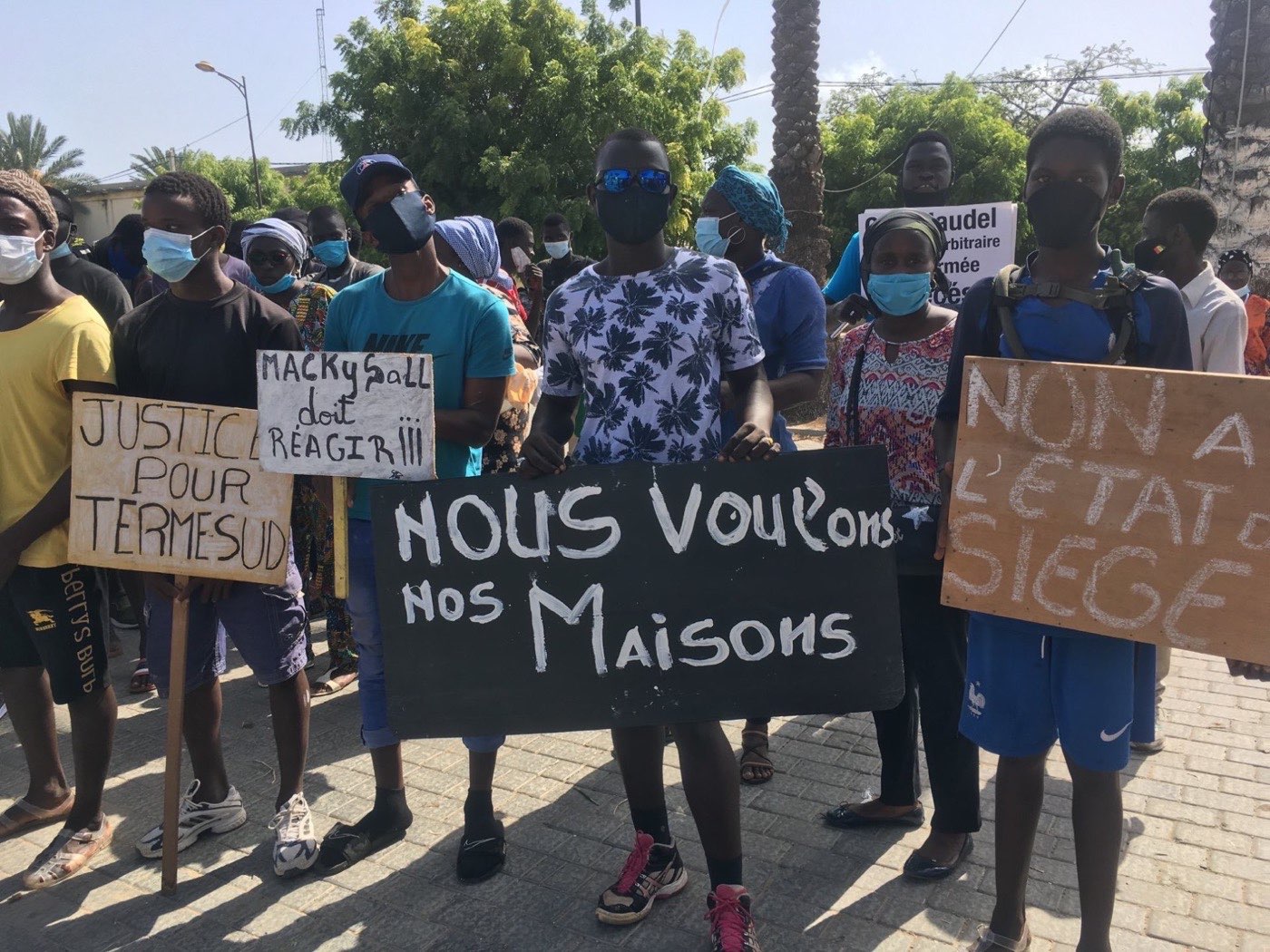
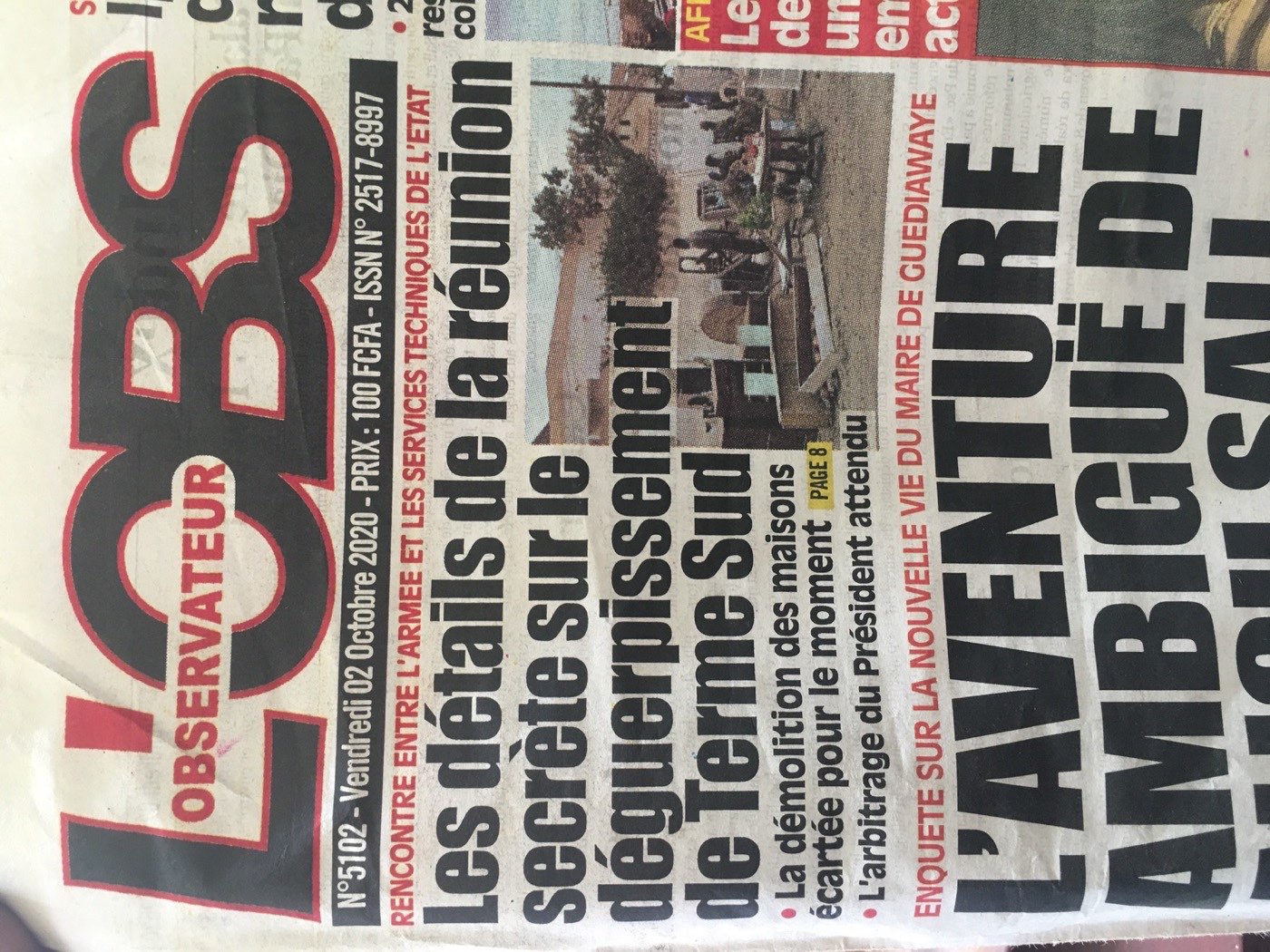
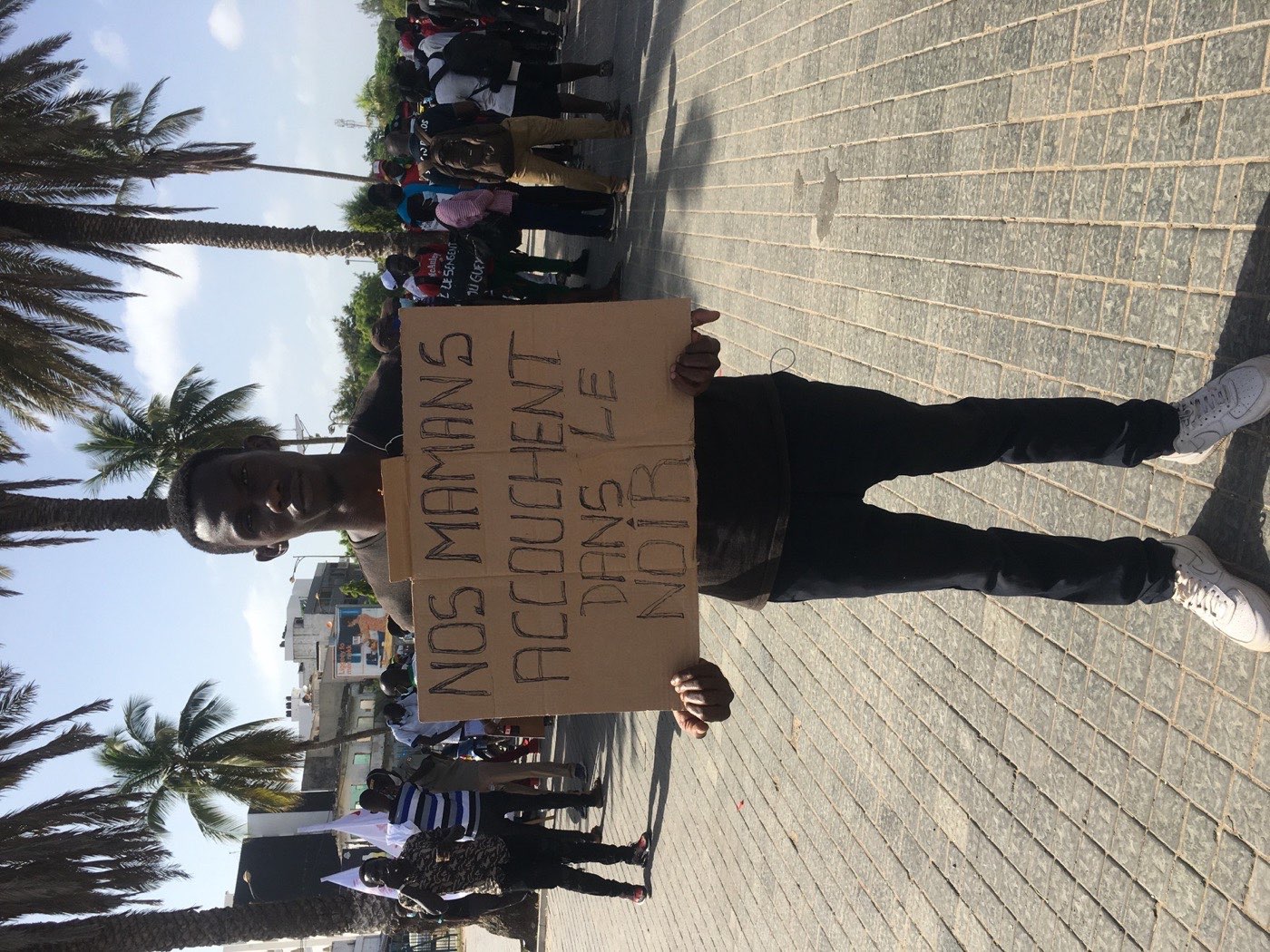
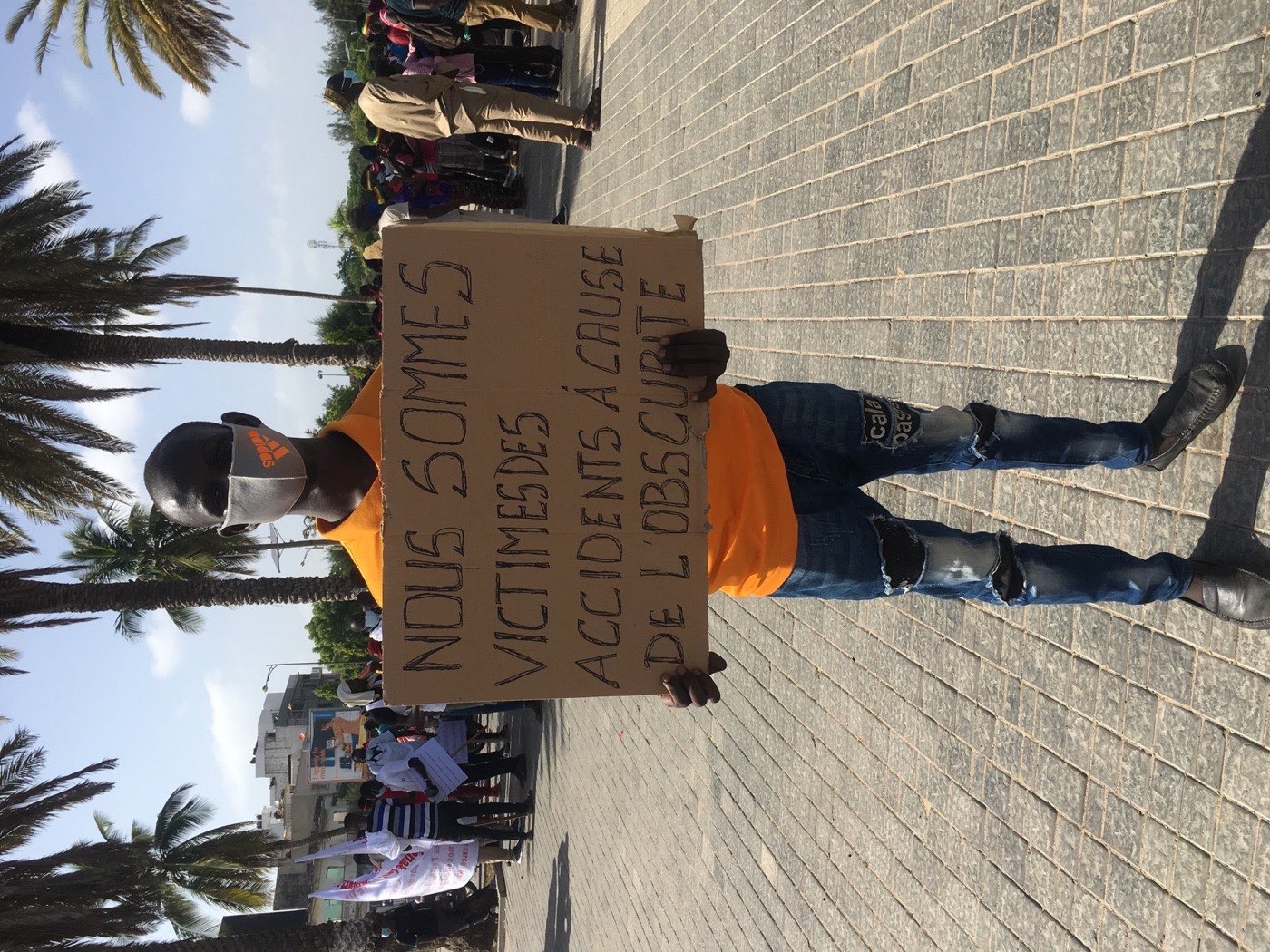
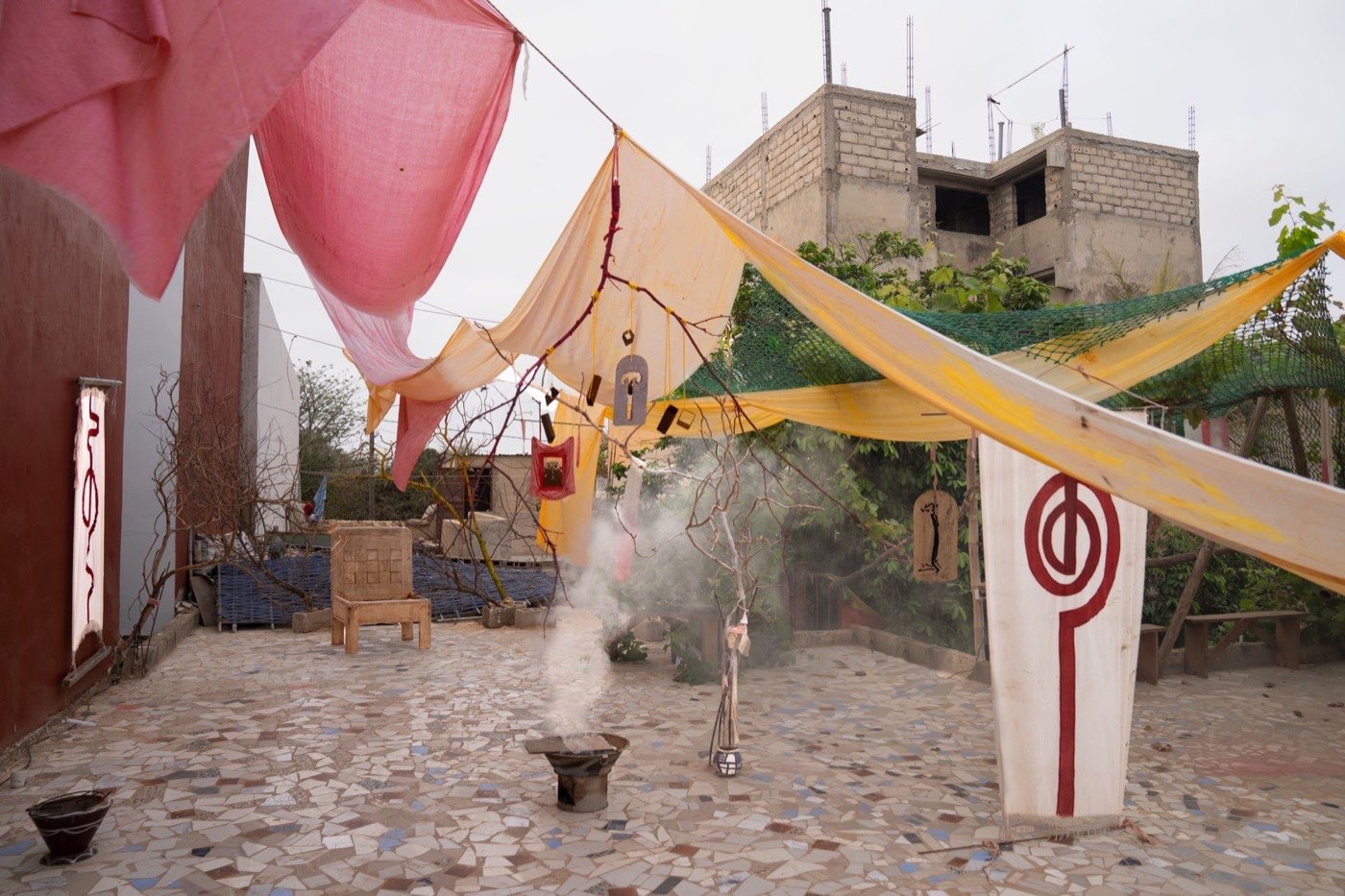
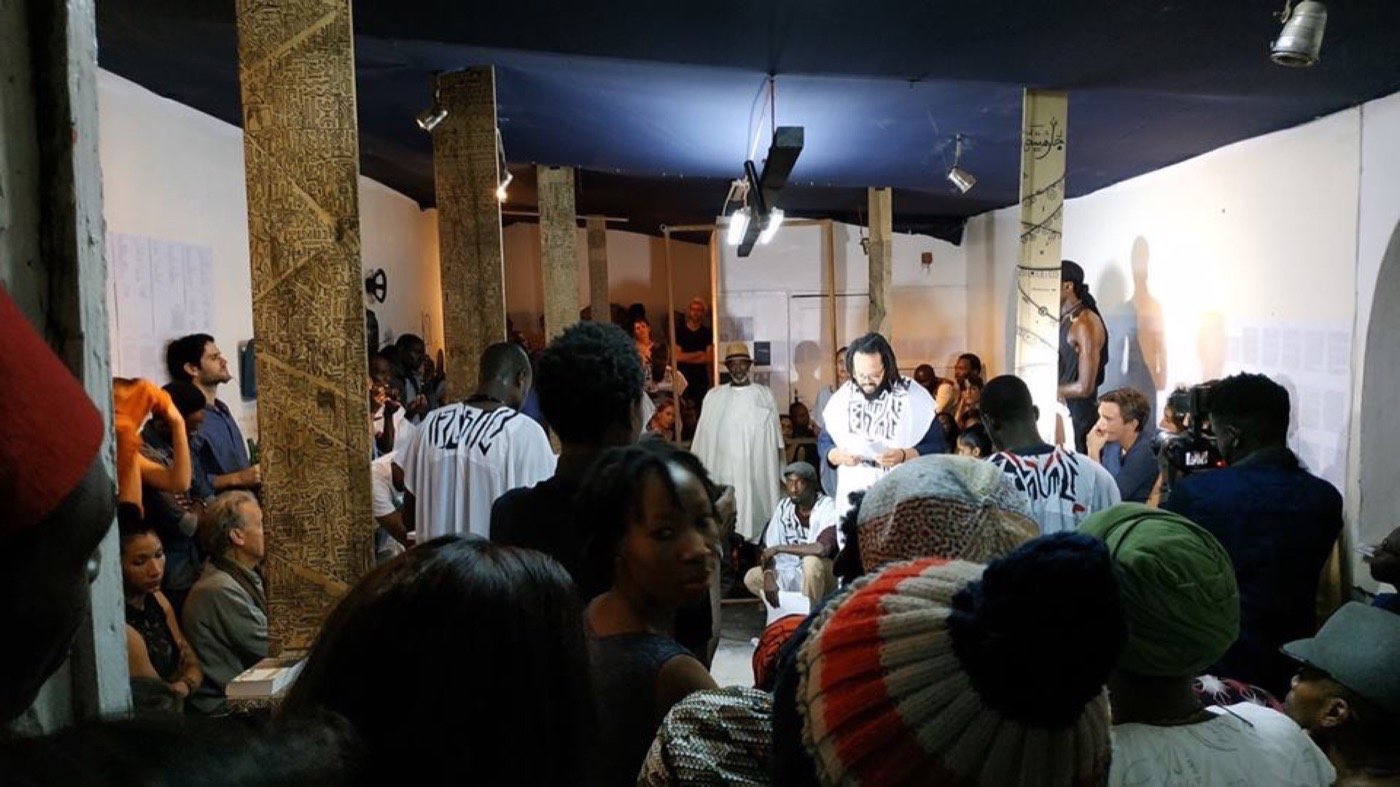
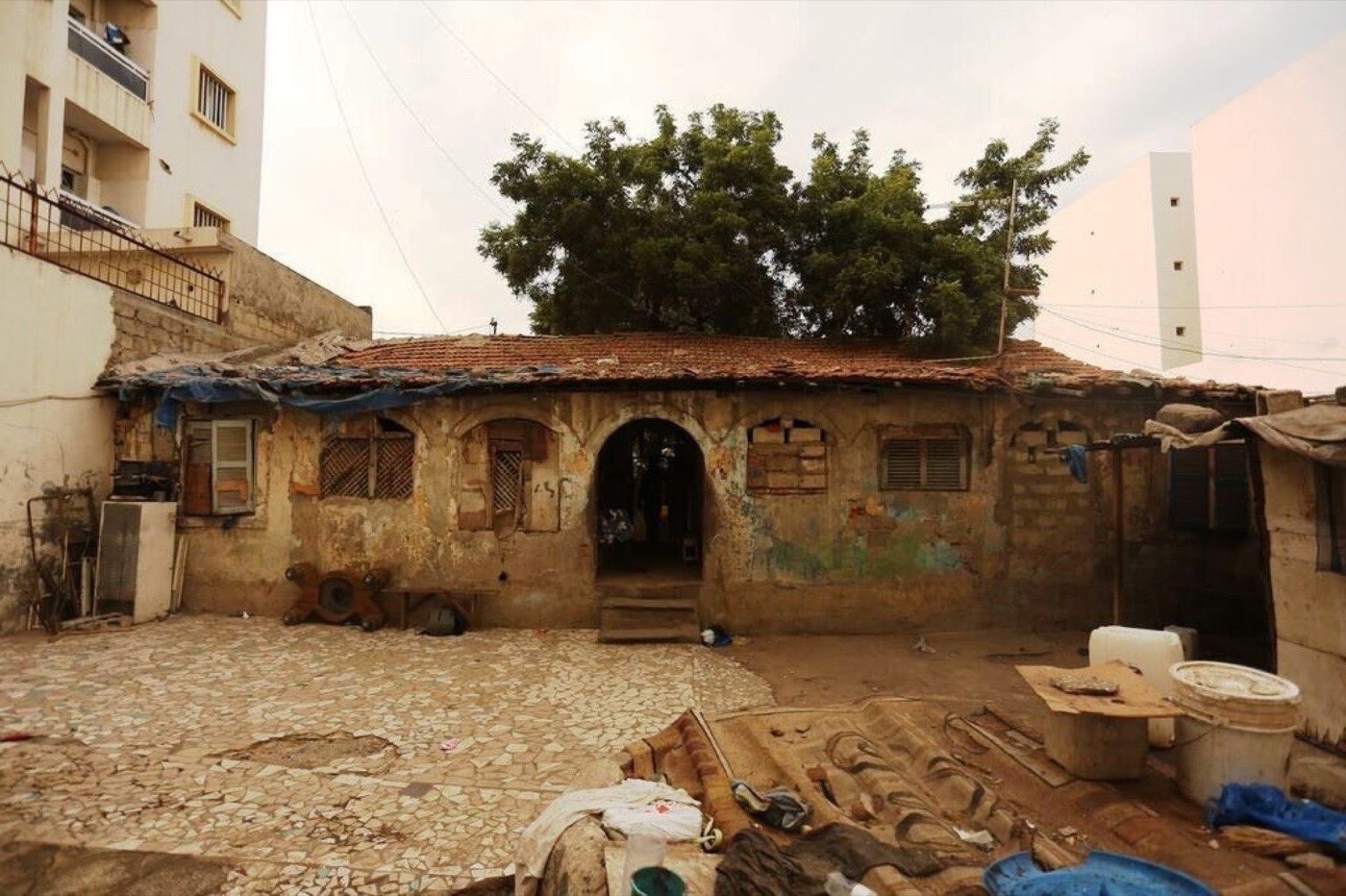
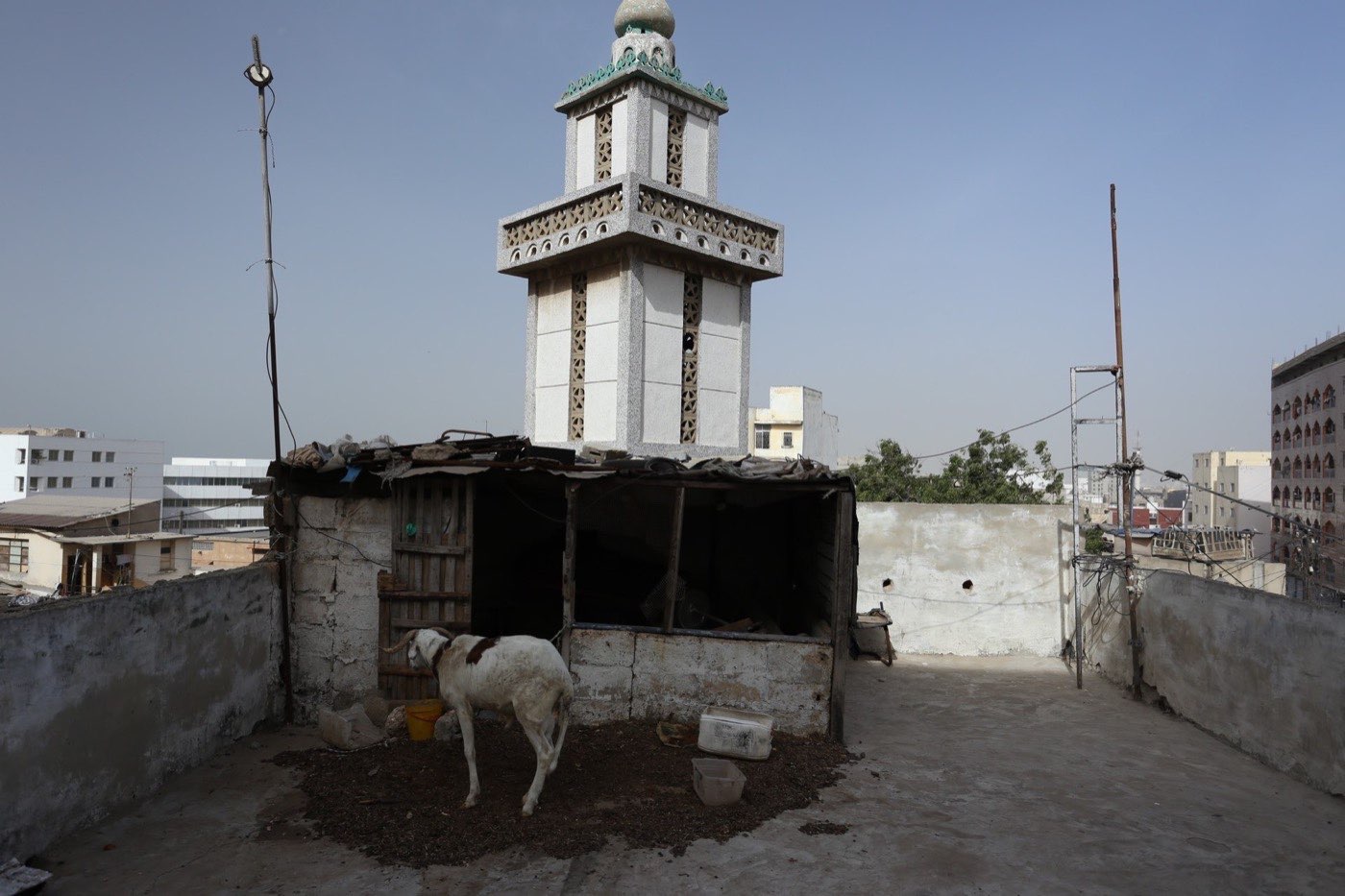
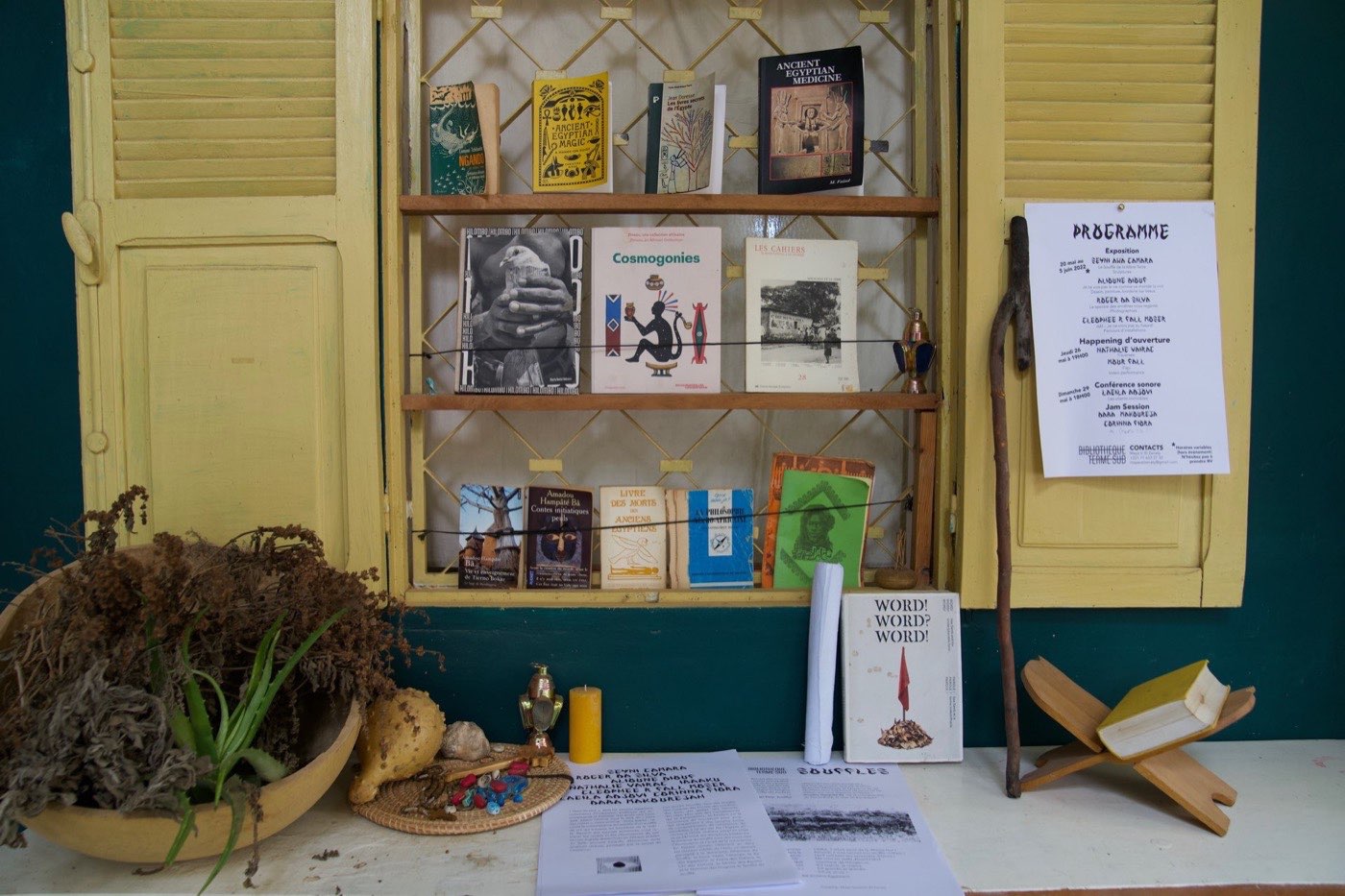
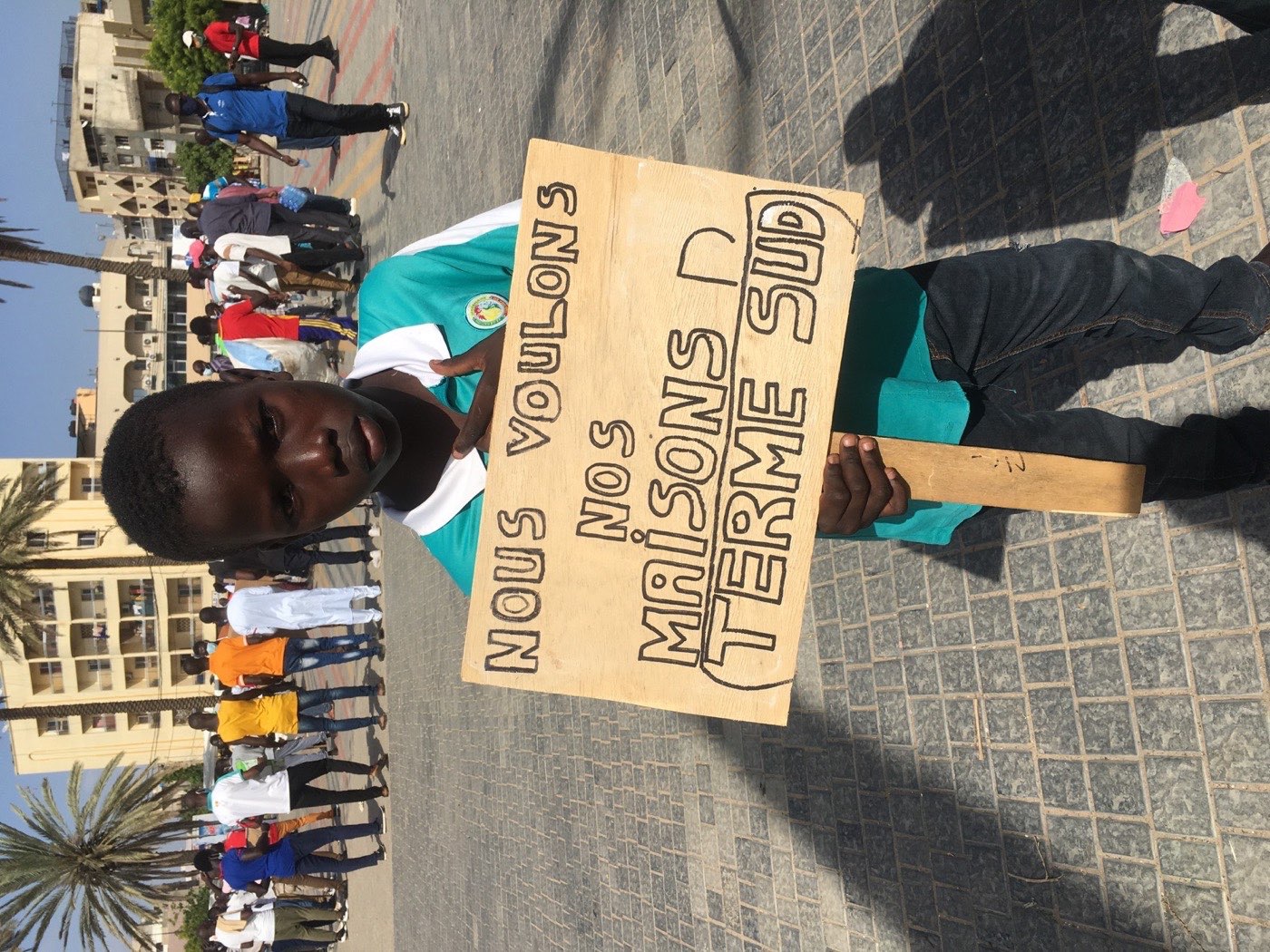
La Bibliothèque Terme Sud est un laboratoire de recherche indépendant pratiquant des méthodologies artistiques et critiques appliquées à la recherche sur le présent. Née pendant la crise du Covid, lorsque j'ai décidé de transformer ma maison à Dakar en bibliothèque de quartier : face à la menace de démolition pesant sur le quartier, la Bibliothèque est devenue de fait un refuge et un centre de résistance

Ancrée dans son contexte et fugitive dans son esprit, la Bibliothèque invite à des collaborations de recherche, accueille des ateliers et résidences, explore des archives anciennes et contemporaines, officielles et fugaces, conçoit et produit des formes de réflexion collaboratives visant à approfondir et à augmenter notre conscience des transformations du réel. Elle restitue le fruit de ses enquêtes sous forme d'œuvres d'art, de textes, d'expositions, de publications, d'ateliers.

Bibliothèque Terme Sud is an independent research laboratory practising artistic and critical methodologies applied to research on the present. Born during the Covid crisis, when I decided to transform my home in Dakar into a neighbourhood library: faced with the threat of demolition hanging over the neighbourhood, the Library became in effect a refuge and a centre of resistance

Contextually grounded and fugitive in spirit, the Library invites research collaborations, hosts workshops and residencies, explores archives both ancient and contemporary, official and ephemeral, conceives and produces collaborative forms of reflection aimed at deepening our awareness of transformations in the real. It restitutes the fruit of its investigations as artworks, texts, exhibitions, publications and workshops.
Bibliothèque vivanteRésistanceFugitivitéOuakam
02

Commissariat · Centre d'art · Médina · Dakar · 2016–2018

Reactivation · Art centre · Dakar

Espace Medina

Le courant de la vie doit couler pour que chacun puisse abreuver sa science

The current of life must flow so that each person can nourish their knowledge

Babacar Sedikh Traoré
2016 – 2018

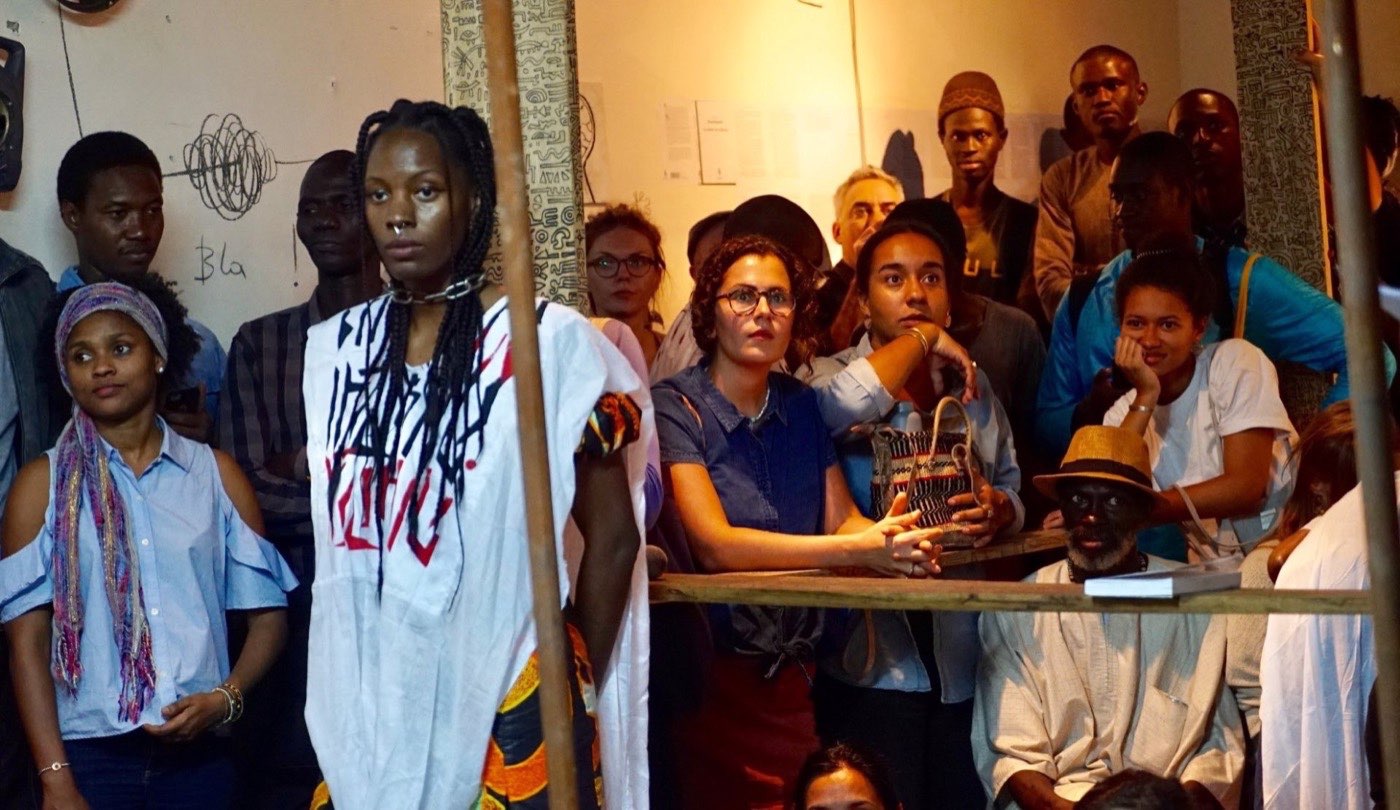
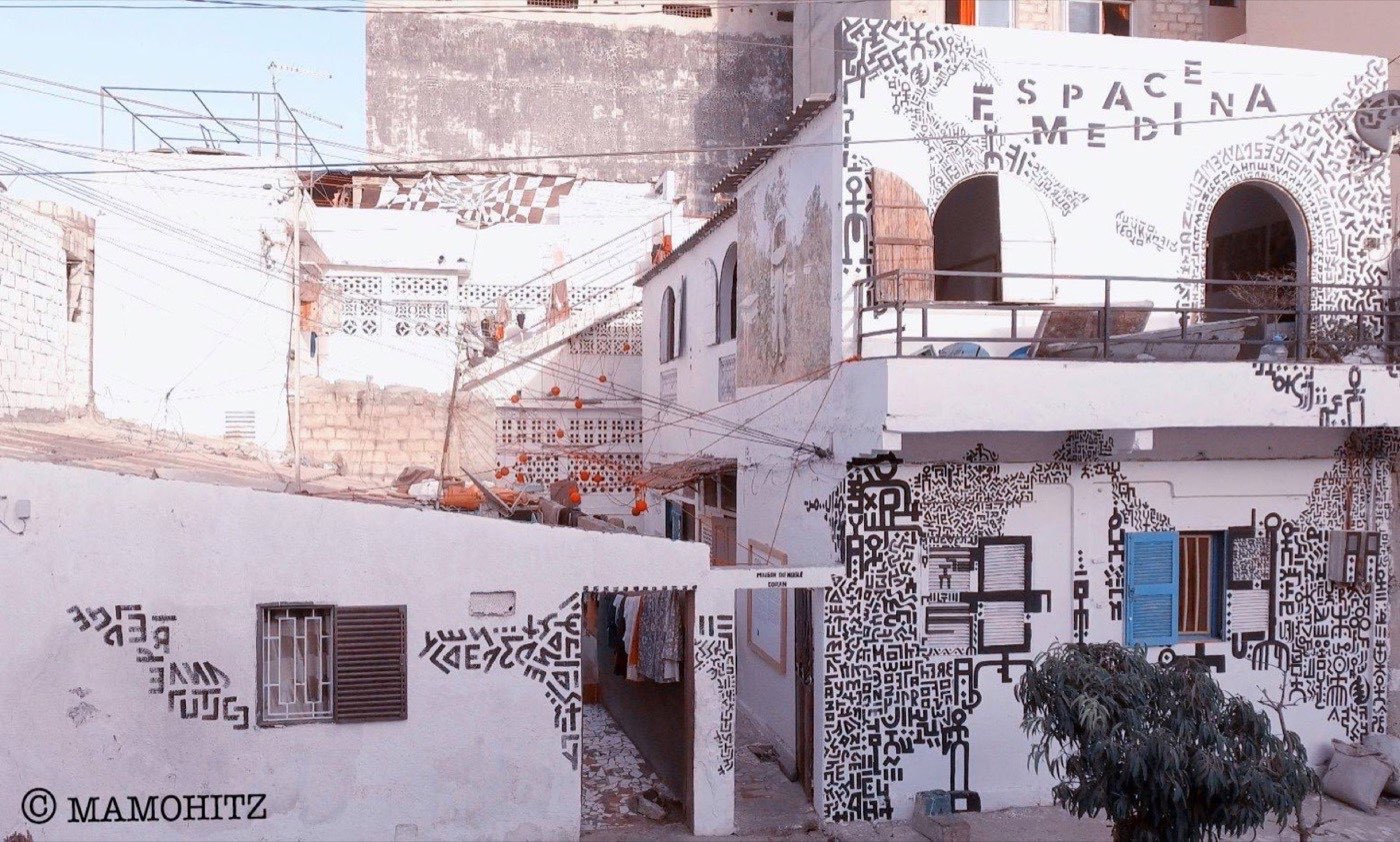
L'âme de l'Espace Medina s'ancre dans un lieu et dans une histoire : celle d'une famille d'artistes et d'intellectuels qui dédièrent, dans leur maison, un espace pour la liberté d'expression, depuis l'aube des années 60. L'Espace Medina s'applique à nouer un dialogue avec un public plus large que celui de l'art, à faire bouger les formes et les langages qui définissent nos manières d'habiter le monde

C'est un lieu qui se pense dans son contexte, à différentes échelles, du micro-local au global. Habiter le monde, c'est ici avant tout habiter la ville et plus encore se déployer à travers un ancrage dans le quartier qui nous accueille : à la lisière de la Gueule Tapée et de la Médina de Dakar. Ici, l'art se confond avec la vie, la ville s'invite à l'intérieur tandis que l'art déborde dans l'espace public. C'est un espace poreux, réceptif au monde environnant, un espace de convivialité où se brancher à l'Afrique contemporaine.

The soul of Espace Medina is anchored in a place and a history: that of a family of artists and intellectuals who dedicated, within their home, a space for freedom of expression since the early 1960s. Espace Medina applies itself to building dialogue with a public broader than the art world, to shifting the forms and languages that define our ways of inhabiting the world

It is a place that thinks itself in its context, at different scales, from the micro-local to the global. To inhabit the world here means above all to inhabit the city — and more specifically to unfold through an anchoring in the neighbourhood that welcomes us: at the edge of Gueule Tapée and the Médina of Dakar. Here, art blends with life, the city enters inside while art spills into public space. It is a porous space, receptive to the surrounding world, a space of conviviality where one connects to contemporary Africa.
Art et vieTransmissionQuartierBabacar Sedikh TraoréCheikhaNow-Now!
03

Collectif · Label · Incubateur · Dakar · 2005–2015

Collective · Publishing house · Incubator · Dakar

Les Petites Pierres

Une pépinière où poussent les projets et se construisent des lieux imaginaires

A nursery where projects grow and imaginary places are built

2005 – 2015

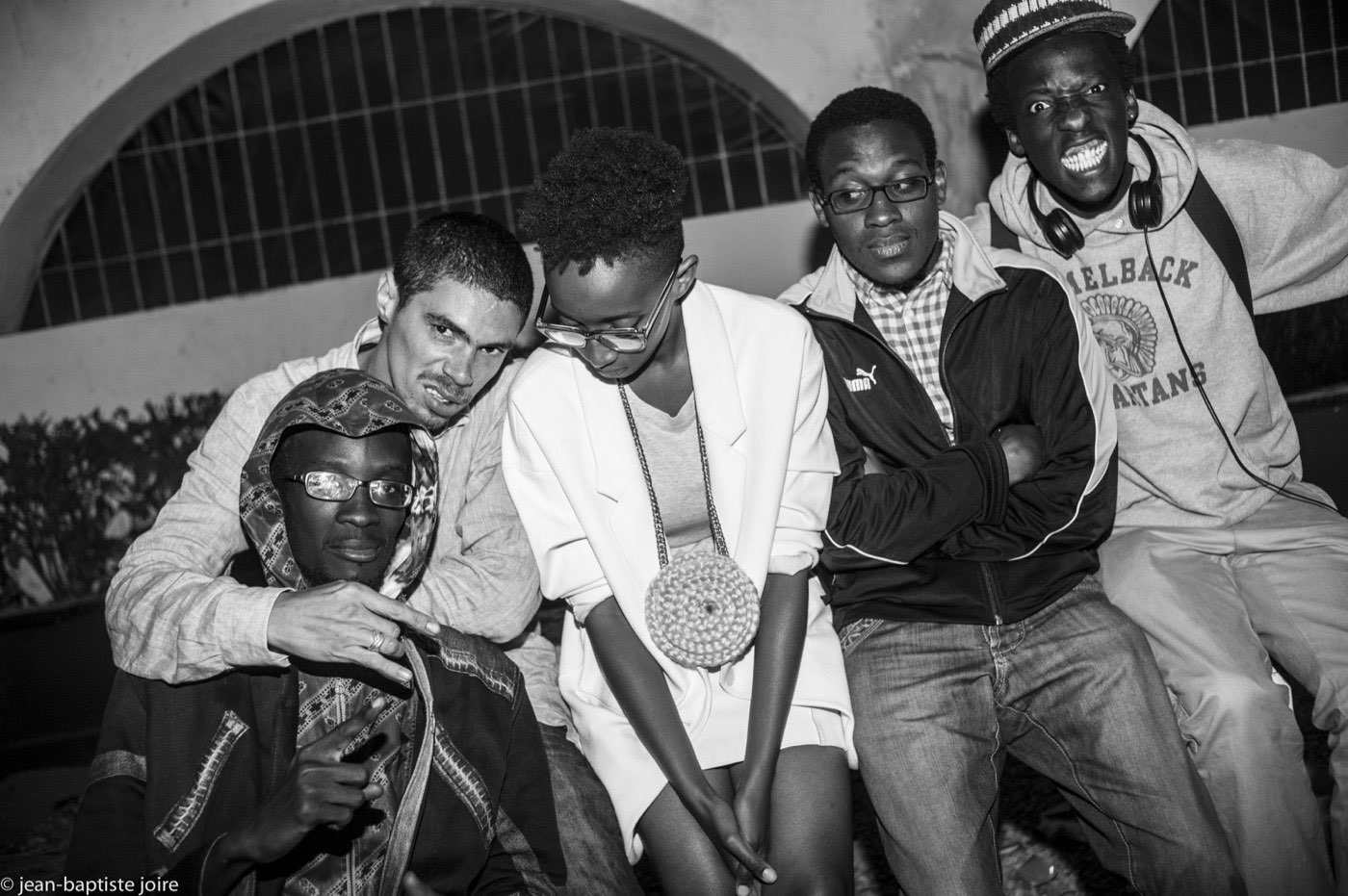
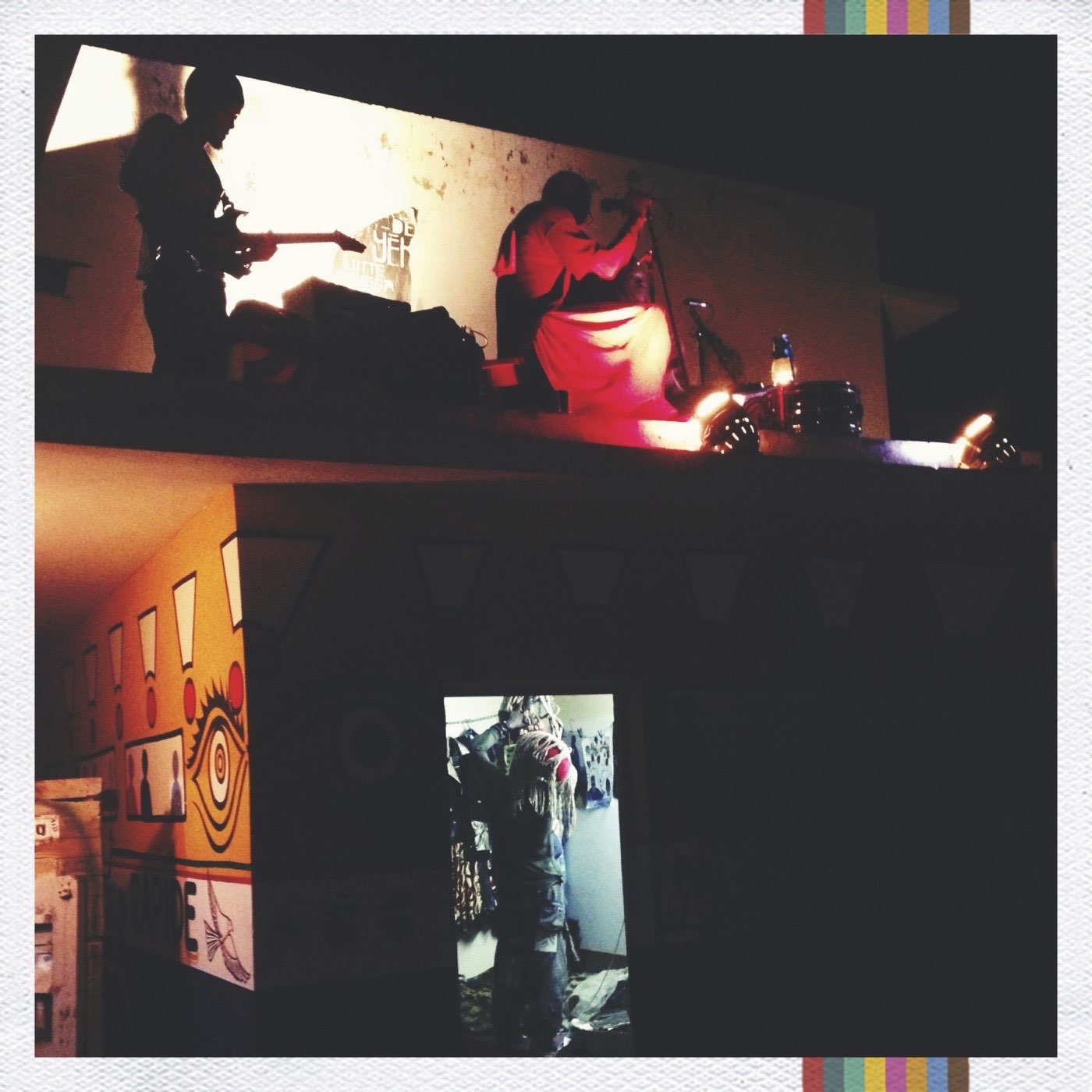
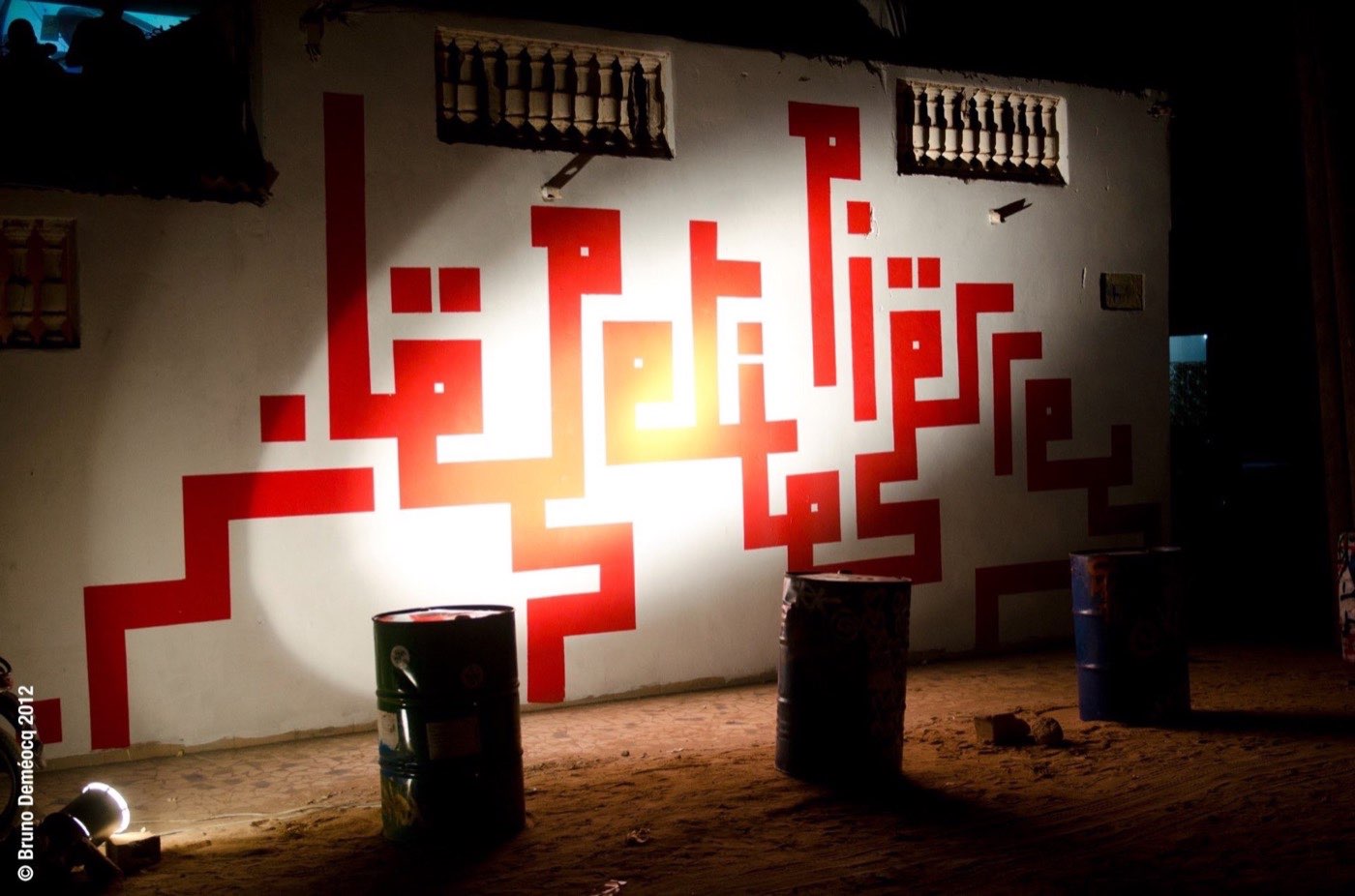
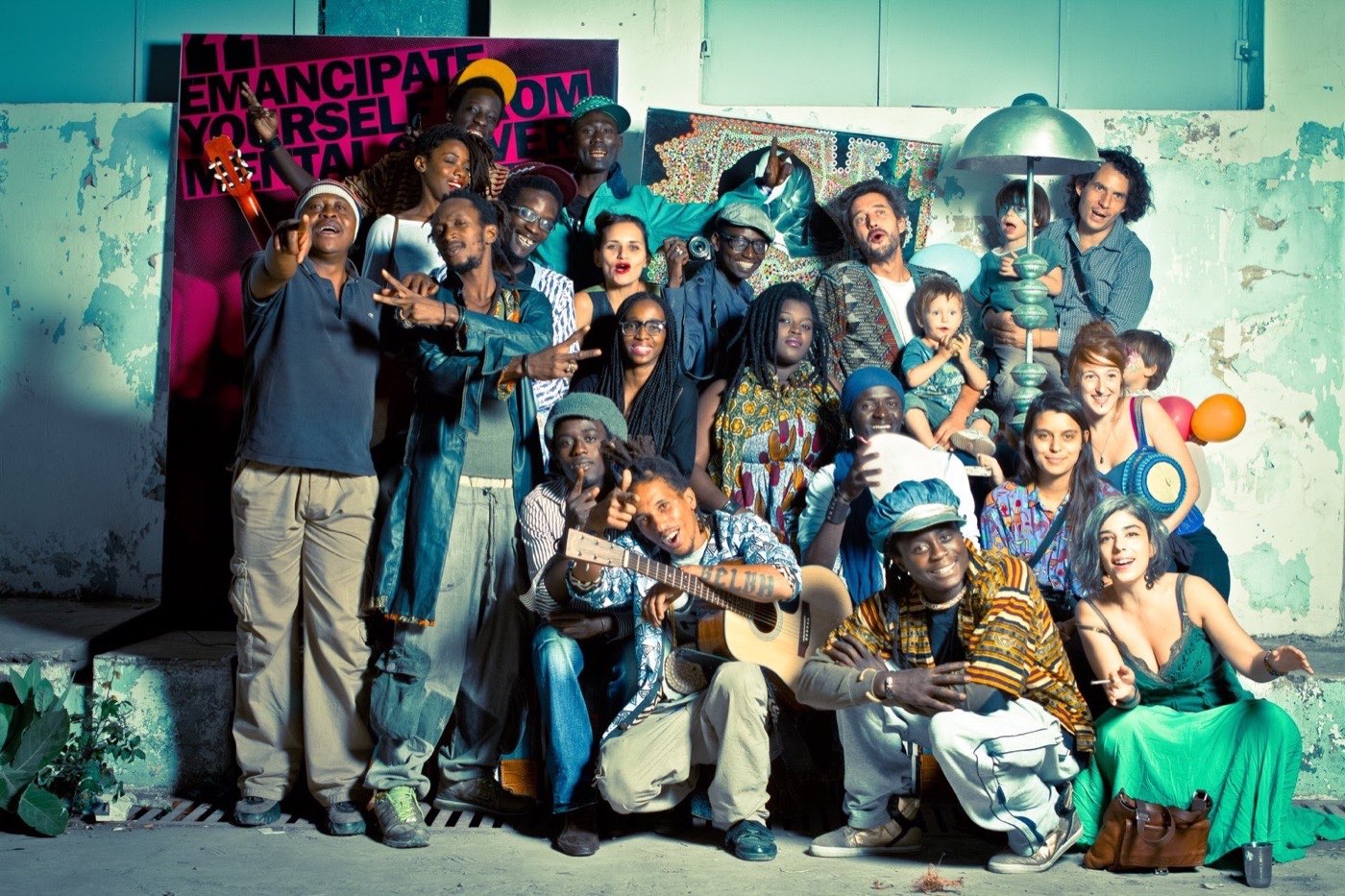
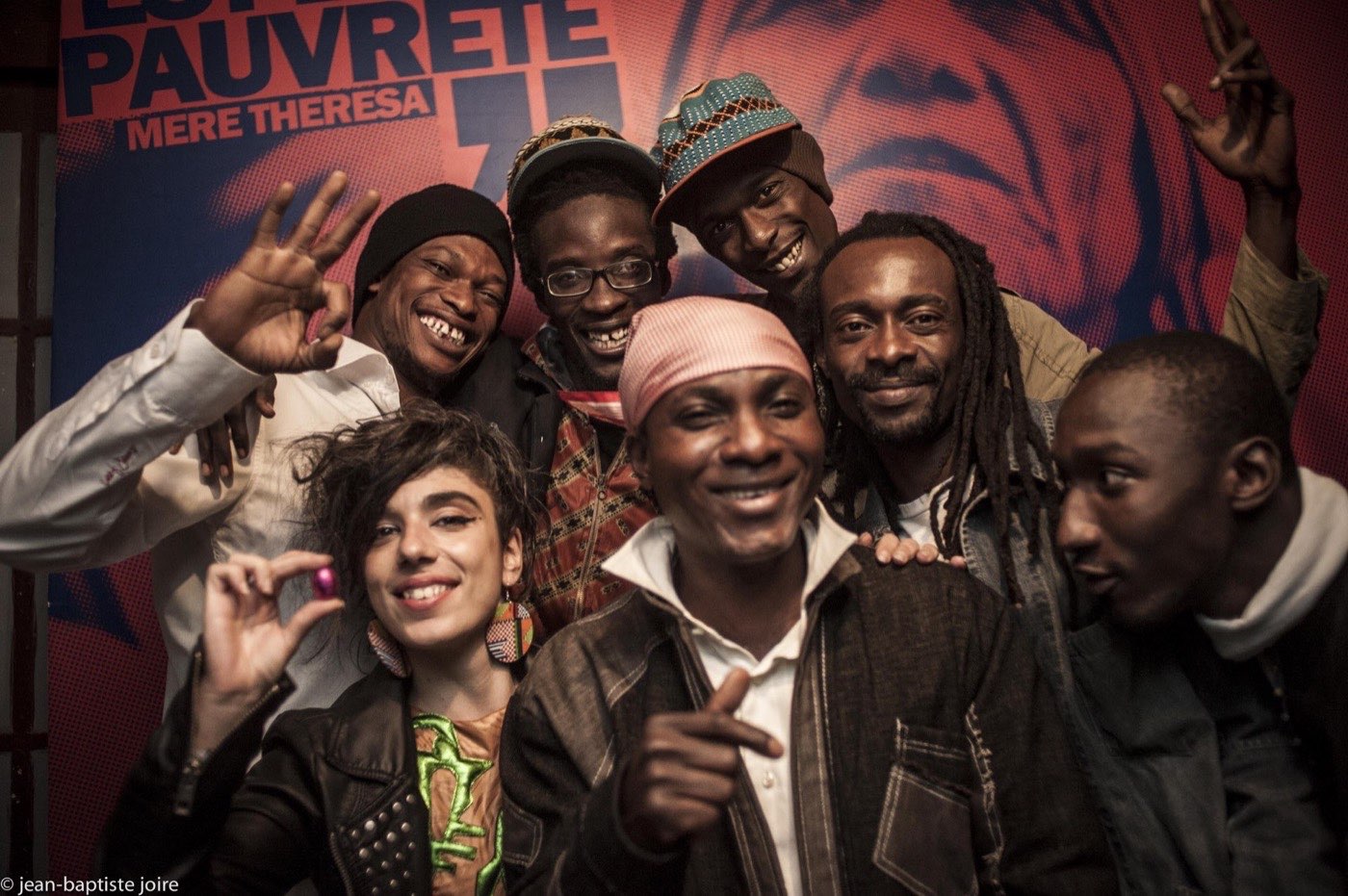
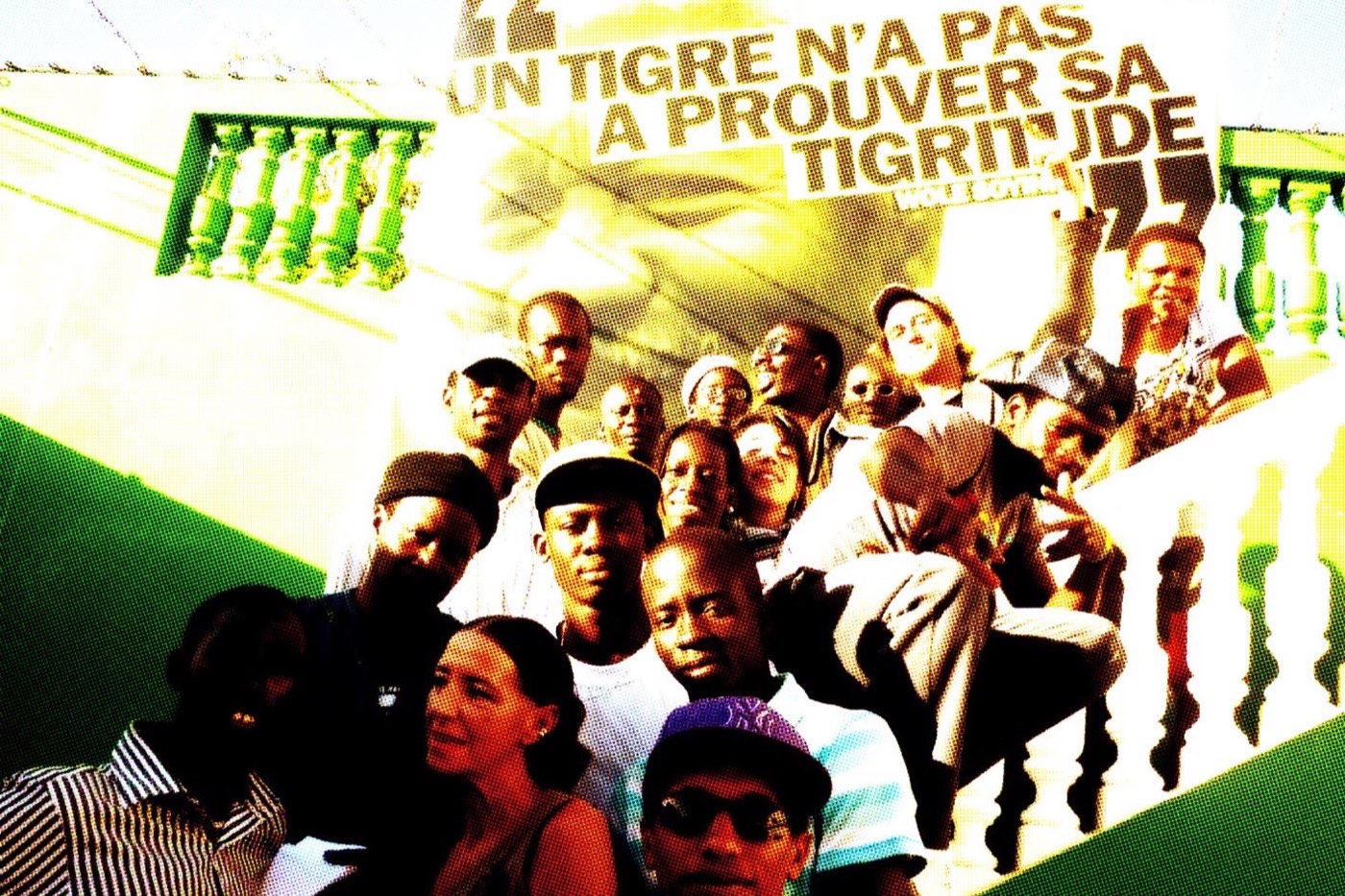
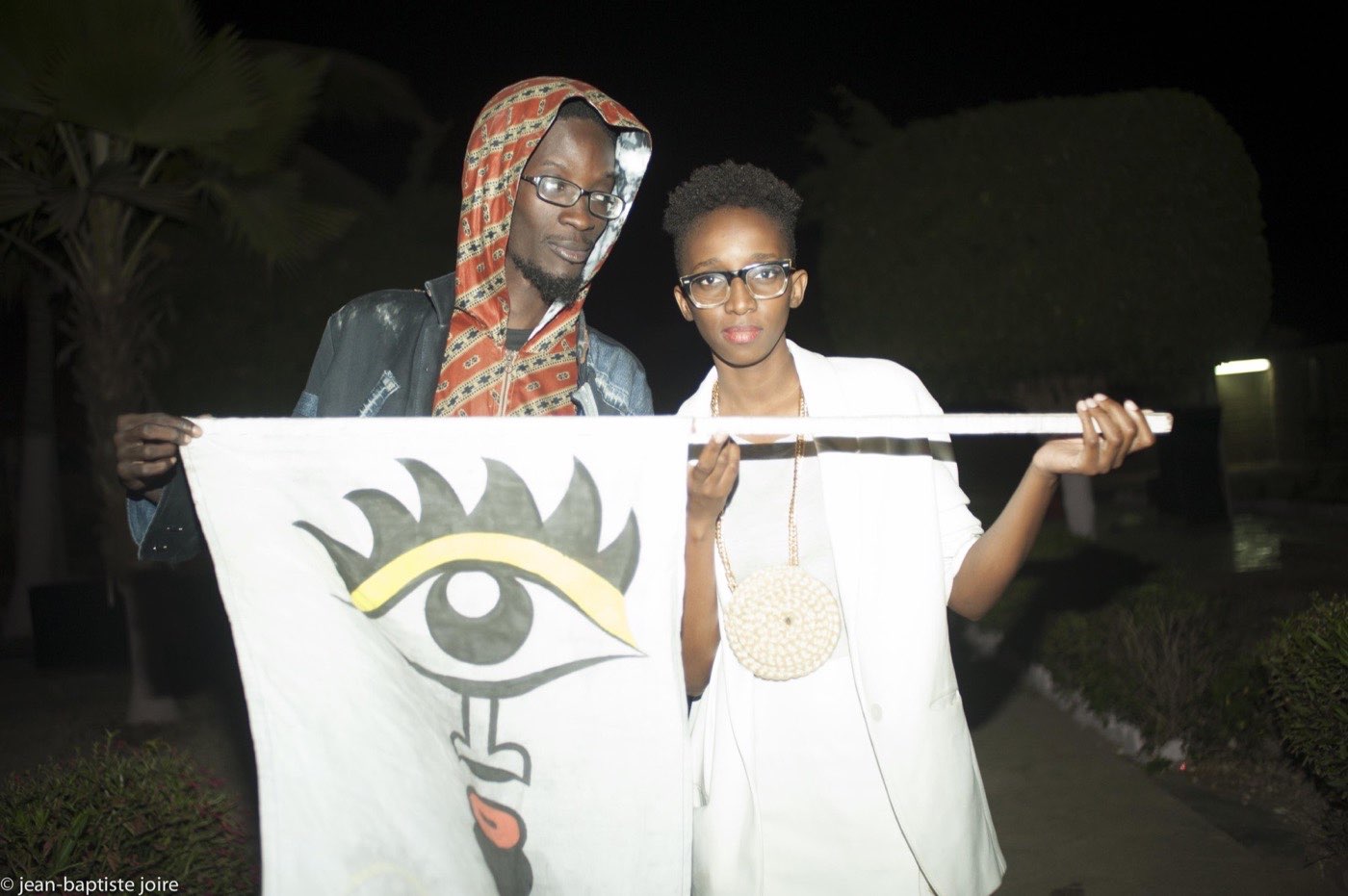
Rassemblés par l'idée de changer le monde petite pierre par petite pierre, le collectif pluridisciplinaire Les Petites Pierres contribue au bouillonnement de la scène artistique au Sénégal de 2005 à 2015. Avec pour base arrière une maison dédiée à l'art et l'activisme — scène, ateliers de mode, studio d'enregistrement, labo photo, concept store, résidences, espaces de répétition et bureau de production — le collectif se définit comme une maison d'édition de projets, un label, un incubateur, une pépinière où poussent les projets et se construisent des lieux imaginaires

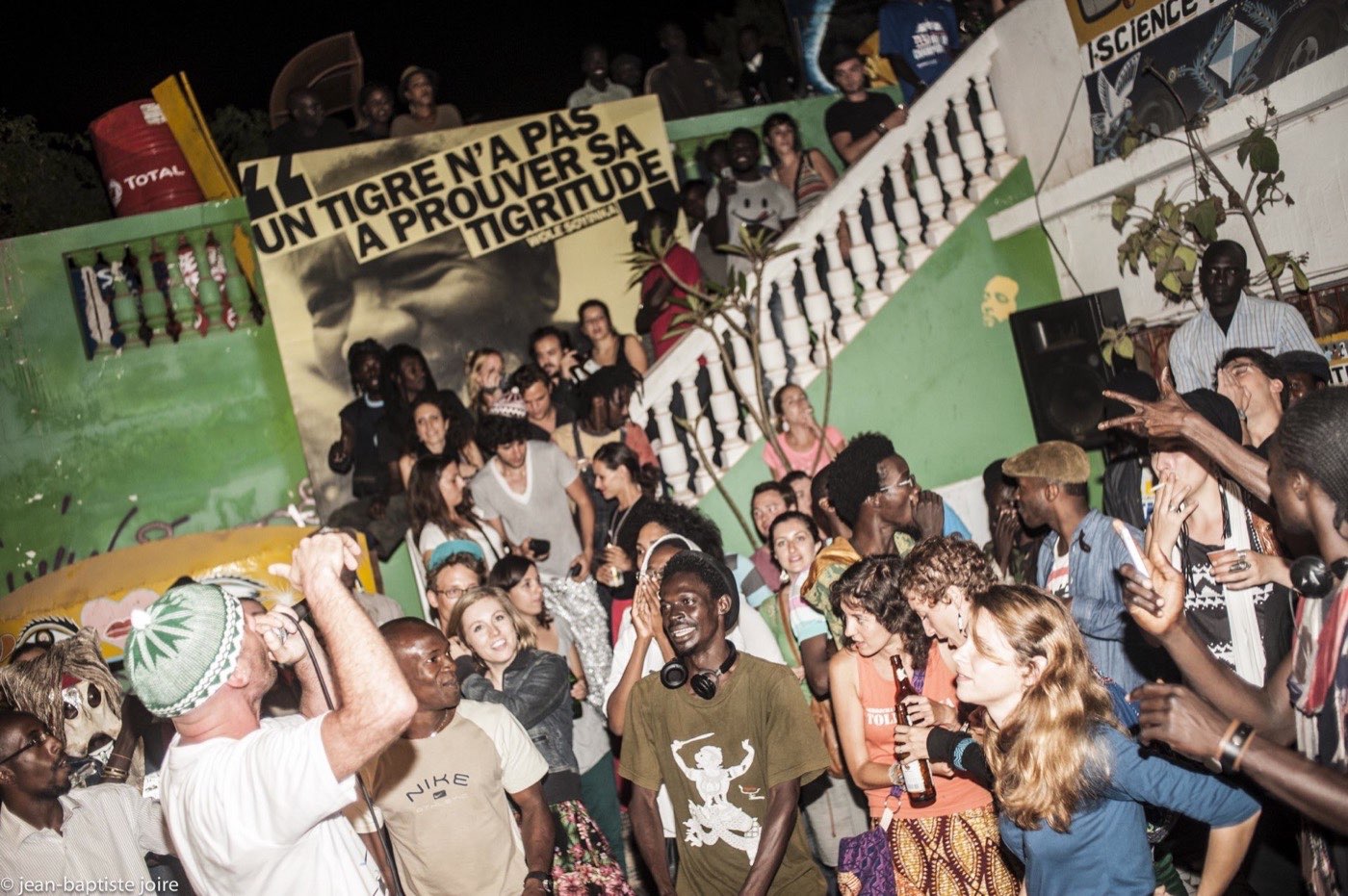
En générant une multitude de synergies et de collaborations multidisciplinaires axées sur la promotion d'une nouvelle génération d'artistes au Sénégal, Les Petites Pierres ont contribué à la production de figures majeures de la scène artistique actuelle. Engagé dans de vastes processus de mobilisations sociales au cœur des quartiers populaires — notamment avec le festival Interférences — le collectif a œuvré à la dissémination de formes esthétiques et de modes opératoires inédits, marquant de son empreinte le tissu culturel de Dakar.

Brought together by the idea of changing the world little stone by little stone, the multidisciplinary collective Les Petites Pierres contributes to the ferment of the artistic scene in Senegal from 2005 to 2015. With as its base a house dedicated to art and activism — stage, fashion workshops, recording studio, photo lab, concept store, residencies, rehearsal spaces and production office — the collective defines itself as a project publishing house, a label, an incubator, a nursery where projects grow and imaginary places are built

By generating a multitude of multidisciplinary synergies and collaborations, Les Petites Pierres contributed to the emergence of major figures of the current art scene. Deeply engaged in social mobilisation in Dakar's working-class neighbourhoods — particularly through the Interférences festival — the collective worked to disseminate unprecedented aesthetic forms and modes of practice, leaving a lasting imprint on Dakar's cultural fabric.
Scène émergenteMusiqueModeArts vivantsArts visuelsCréation collectiveInterférencesOuakam
Commissariat Curating

Recherche-création

Research-creation

La recherche-création fait de la création artistique un mode d'enquête sur le présent. Ancrée dans son contexte et fugitive dans son esprit, cette pratique invite à des collaborations de recherche, explore des archives anciennes et contemporaines, officielles et fugaces, conçoit et produit des formes de réflexion collectives visant à approfondir et augmenter notre conscience des transformations du réel. Le fruit de ces recherches se restitue sous forme d'œuvres d'art, de textes, d'expositions, de publications, d'ateliers

Research-creation makes artistic creation a mode of inquiry into the present. Grounded in its context and fugitive in spirit, this practice invites research collaborations, explores archives both ancient and contemporary, official and ephemeral, conceives and produces collective forms of reflection aimed at deepening our awareness of transformations in the real. The fruit of these inquiries takes the form of artworks, texts, exhibitions, publications and workshops

Axe 1

Axis 1

Décolonisation des savoirs

Decolonisation of Knowledge

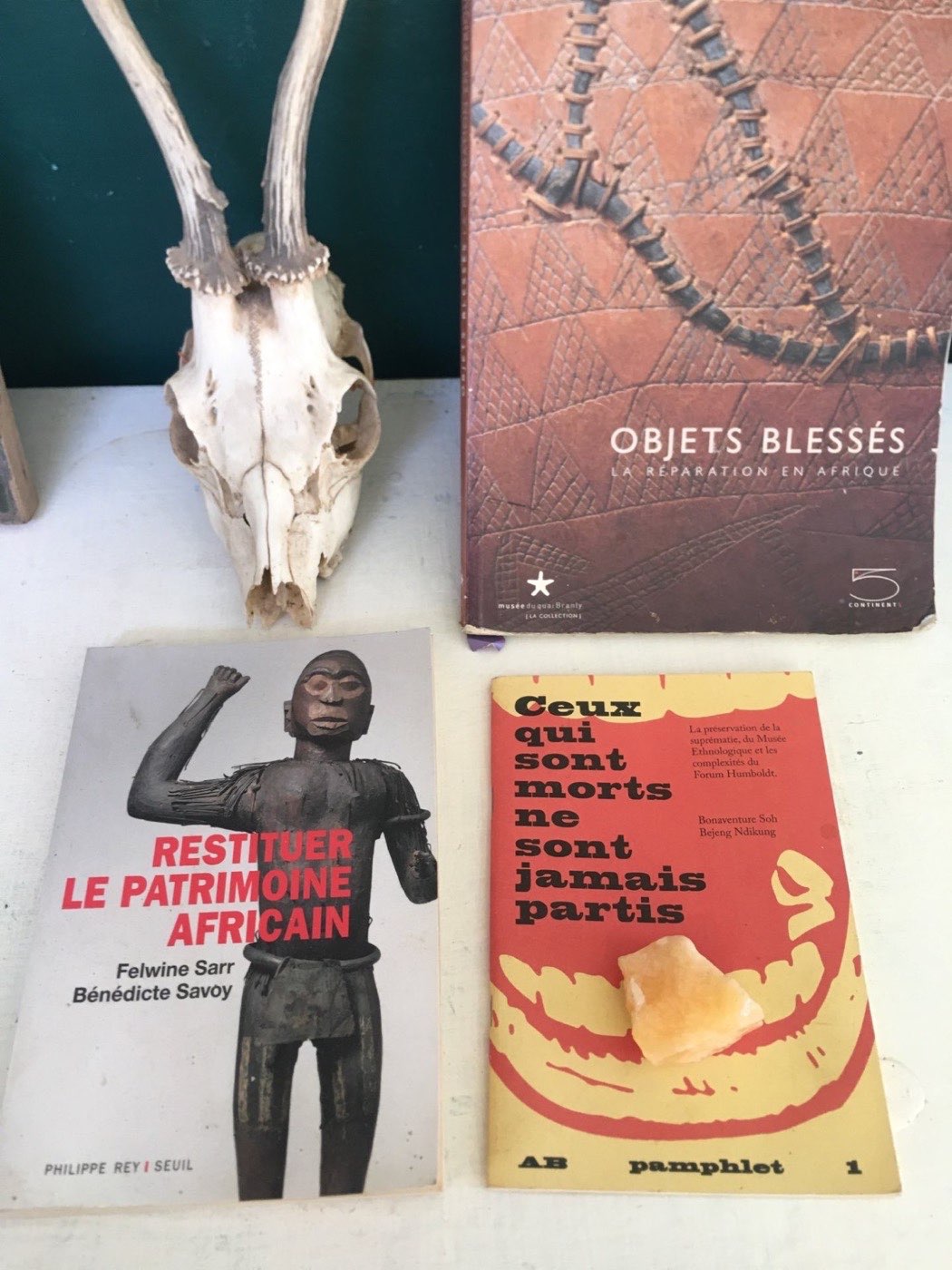
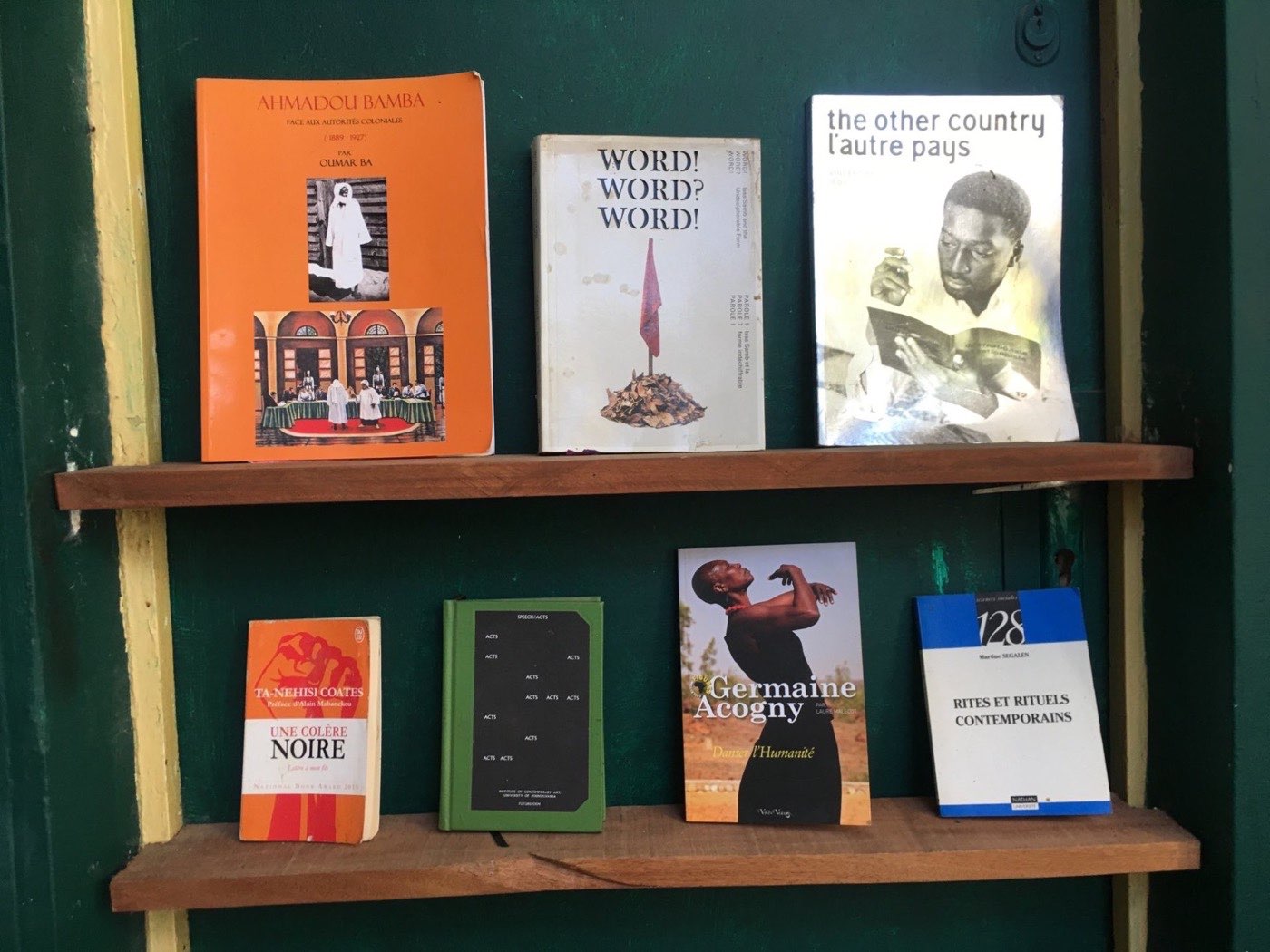
Archives vivantes, bibliothèques fugitives, pratiques de guérison afro-diasporiques. Ces projets explorent les modes de survivance propres aux savoirs colonisés — mémoire encodée dans la musique, l'oralité, le rituel, les langages visuels codifiés — des formes de résistance à l'épistémicide grâce au principe de fugitivité. Développés notamment depuis la Bibliothèque Terme Sud (Dakar, 2020–2023) et dans le cadre du programme New Alphabet School (HKW Berlin, 2019–2022)

Living archives, fugitive libraries, Afro-diasporic healing practices. These projects explore the modes of survival proper to colonised knowledges — memory encoded in music, orality, ritual, codified visual languages — forms of resistance to epistemicide through the principle of fugitivity. Developed notably from Bibliothèque Terme Sud (Dakar, 2020–2023) and within the New Alphabet School programme (HKW Berlin, 2019–2022)

Recherche-création doctorale · Mohamed Amer Meziane · En cours

Doctoral research-creation

Talismania — Une (autre) histoire de la magie

Talismania — An(other) History of Magic

Une archéo-géographie spéculative — un contre-récit au discours euro-évolutionniste

A speculative archaeo-geography — a counter-narrative to the Euro-evolutionist discourse

2025 —

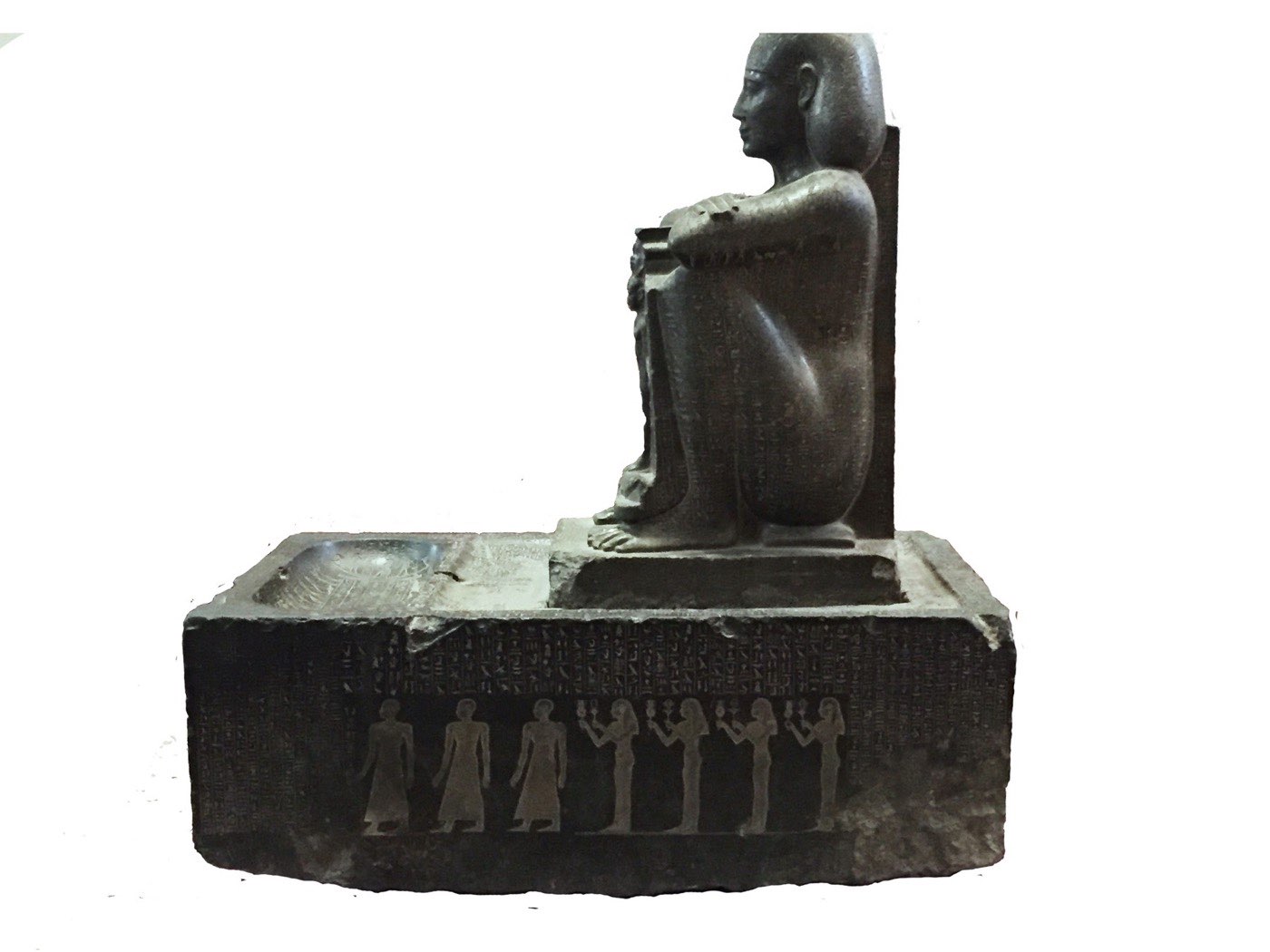
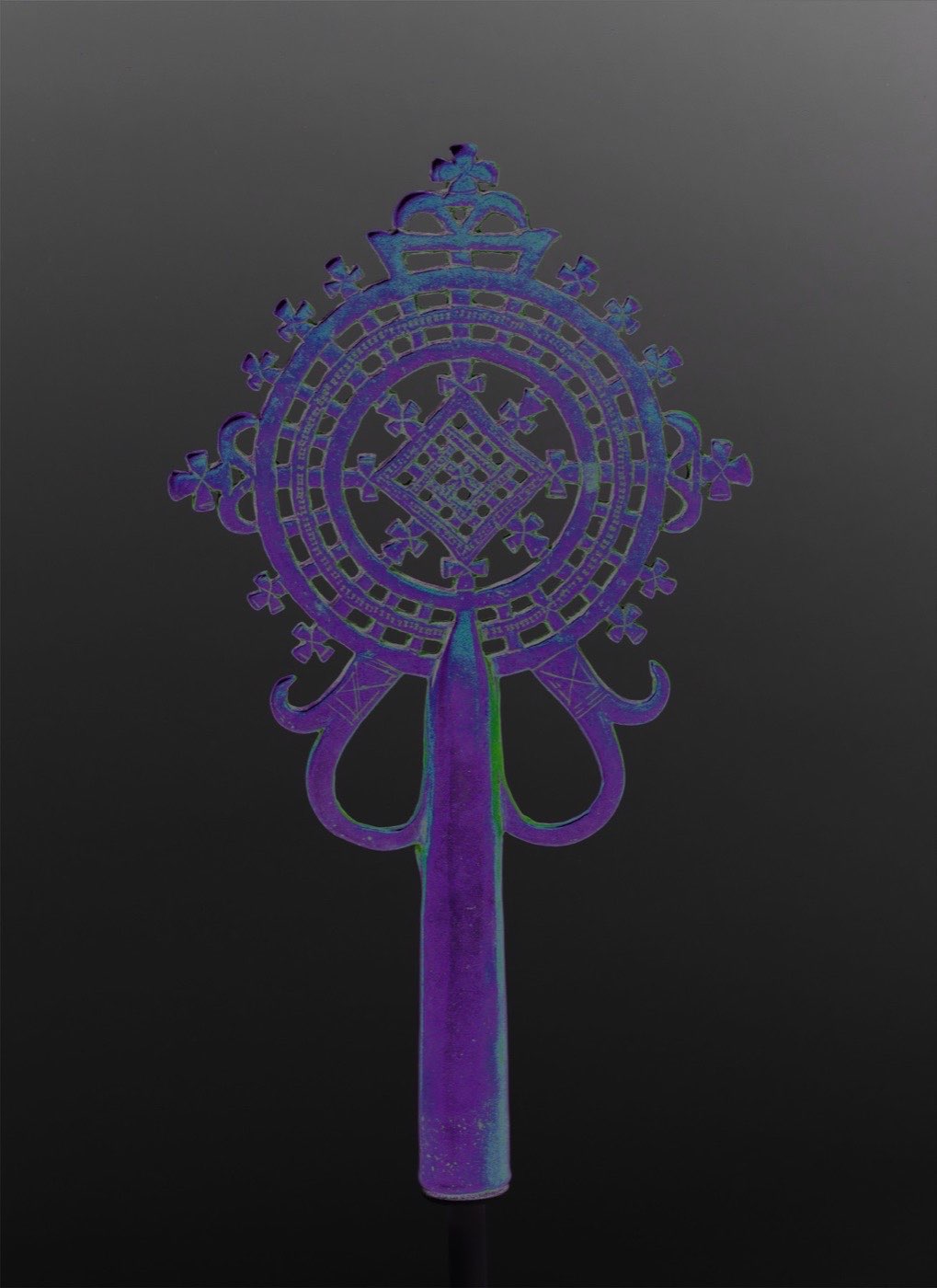
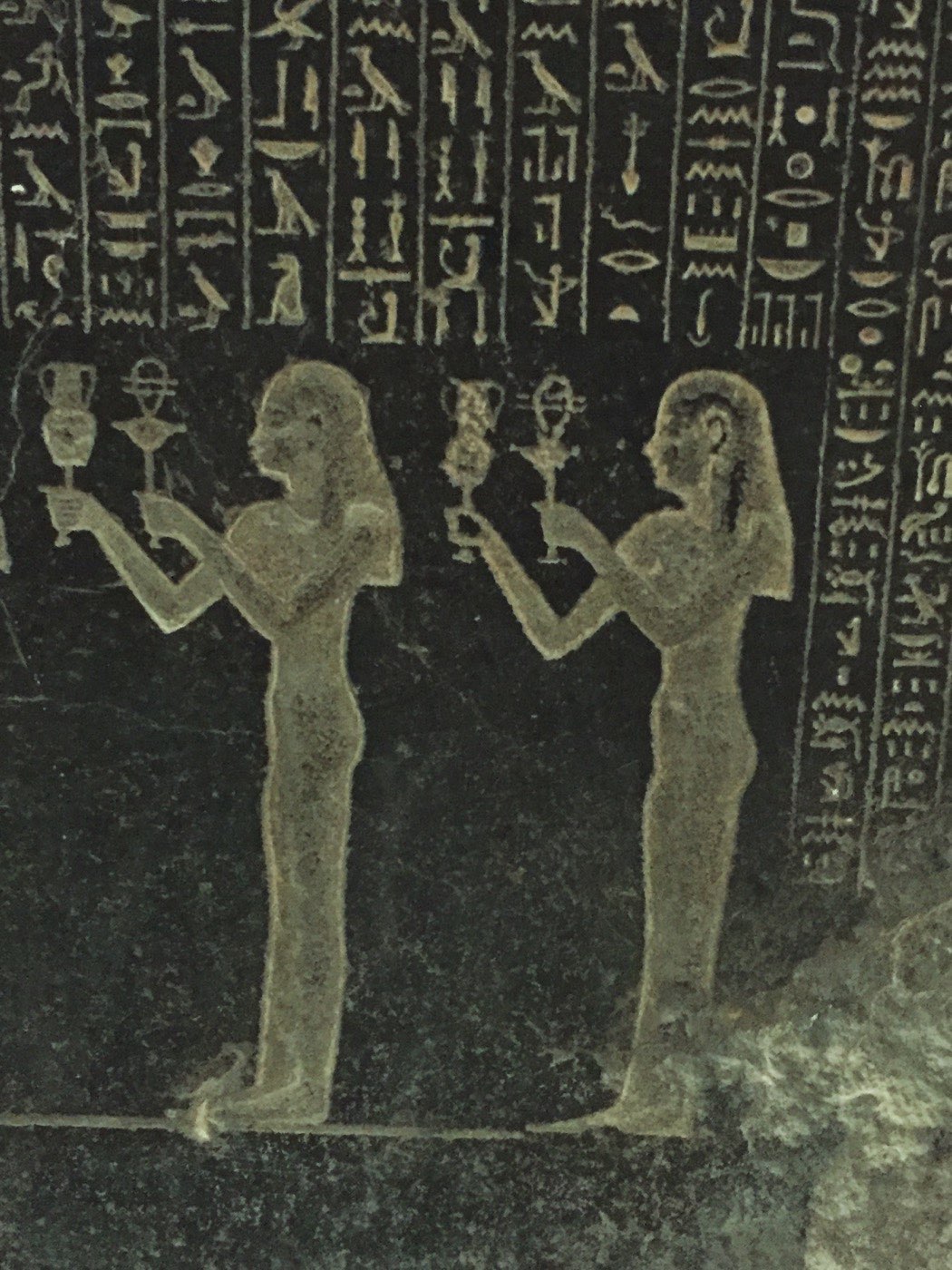
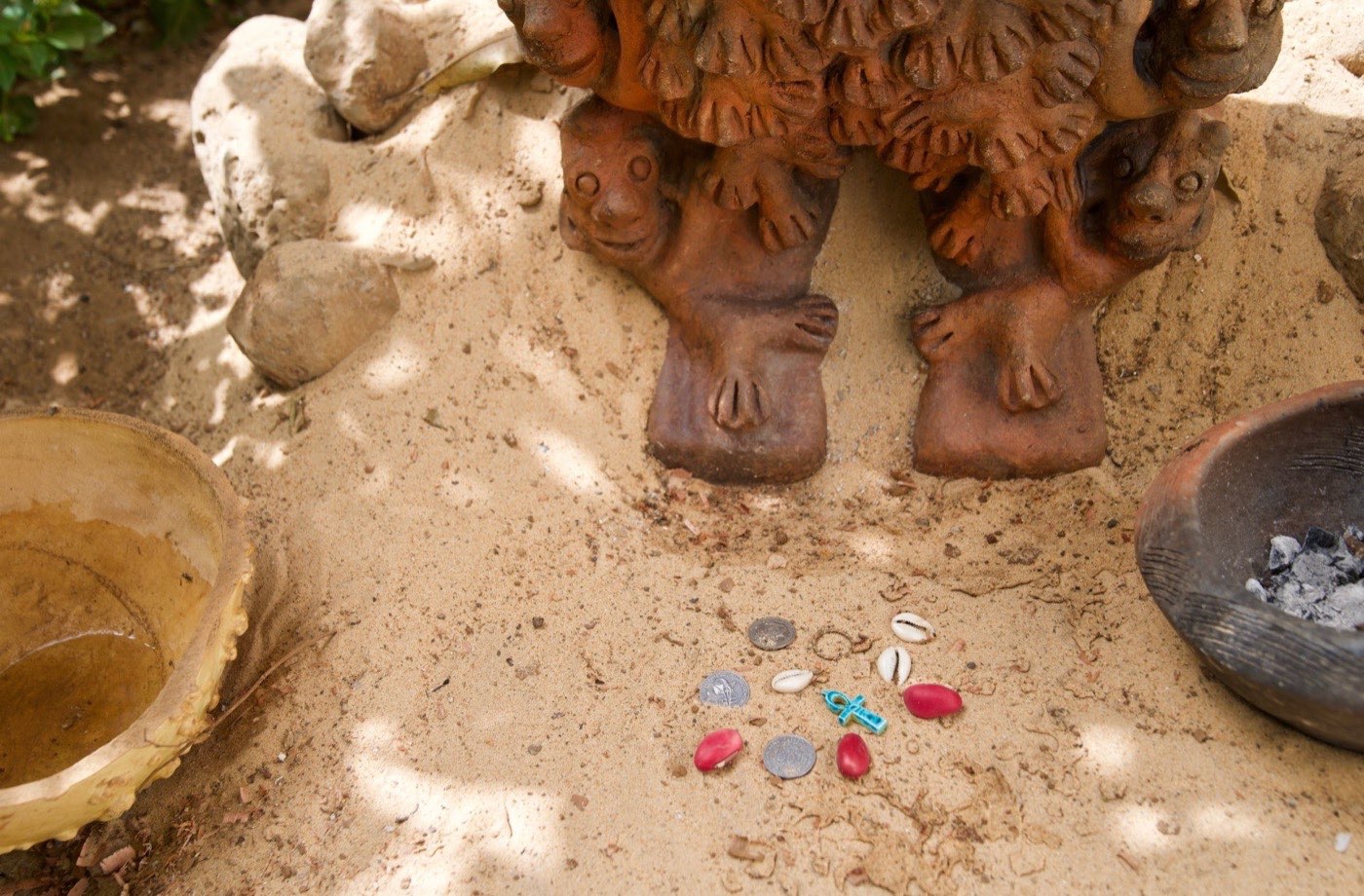
Des stèles magiques de l'Égypte ancienne aux pratiques talismaniques de l'Afrique de l'Ouest contemporaines, TALISMANIA — Une (autre) histoire de la magie interroge ce que la catégorie anthropologique de la « magie » a empêché de lire : ce qui résiste aux coupures que l'histoire des religions dessine, par-delà les périodes et les géographies. L'égyptologie, née dans le sillage de la conquête européenne, a nommé "magie" ce qu'elle ne pouvait ni comprendre, ni contrôler : la persistance d'un paradigme épistémologique admettant le domaine spirituel comme réel, base et finalité de la production de connaissance

Ce projet de recherche-création procède par fabulation critique : raconter une histoire que les archives officielles n'ont pas consignée, ré-agencer et rejouer les traces disponibles pour rendre visible ce qui lui échappe. Il met en résonance des archives égyptiennes, des objets anthropologiques et des œuvres d'artistes contemporains africains et afro-diasporiques afin de dessiner une archéo-géographie spéculative — un contre-récit au récit eurocentrique et euro-évolutionniste, qui révèle, par-delà la diversité des périodes et des géographies, un continuum historique et culturel, une grammaire visuelle et symbolique commune.

Ce projet s'intéresse aux talismans en tant que cosmo-techniques au sens de Yuk Hui — l'unification du cosmos et de la morale à travers des activités techniques — technologies métaphysiques ancestrales dont les savoirs ont circulé de façon fugitive, portés dans l'opacité des rituels, des langages visuels codifiés, des formes orales et performatives, comme autant de stratégies de préservation et de résistance à la puissance épistémicide de la modernité occidentale. Développé en co-direction avec le philosophe Mohamed Amer Meziane (Brown University).

From the magical steles of ancient Egypt to the talismanic practices of contemporary West Africa, TALISMANIA — An(other) History of Magic interrogates what the anthropological category of "magic" has prevented us from reading: what resists the divisions that the history of religions draws, across periods and geographies. Egyptology, born in the wake of European conquest, named "magic" what it could neither understand nor control: the persistence of an epistemological paradigm admitting the spiritual domain as real, the basis and purpose of the production of knowledge

This research-creation project proceeds by critical fabulation: telling a story that official archives have not recorded, re-assembling and replaying available traces to make visible what they conceal. It brings into resonance Egyptian archives, anthropological objects and works by contemporary African and Afro-diasporic artists in order to draw a speculative archaeo-geography — a counter-narrative to the Eurocentric and Euro-evolutionist account, which reveals, across the diversity of periods and geographies, a historical and cultural continuum, a shared visual and symbolic grammar.

This project engages with talismans as cosmo-techniques in the sense of Yuk Hui — the unification of cosmos and morality through technical activities — metaphysical ancestral technologies whose knowledges have circulated in fugitive ways, carried in the opacity of rituals, codified visual languages, oral and performative forms, as so many strategies of preservation and resistance to the epistemicidal power of Western modernity. Developed in co-supervision with philosopher Mohamed Amer Meziane (Brown University).

Cosmo-techniquesÉgyptologie colonialeÉpistémologieFabulation critiqueTalismansCheikh Anta Diop
02

Programme · Bibliothèque Terme Sud · New Alphabet School · HKW Berlin

Programme · Bibliothèque Terme Sud · New Alphabet School · HKW Berlin

A Fugitive Library

Rester insaisissable, toujours en mouvement, créant constamment les conditions de sa propre résistance

Remaining ungraspable, always in motion, constantly generating the conditions of its own resistance to enclosure

Sept. 2022

Comment partager le savoir sans se laisser extraire, exotiser, marchandiser ? Une bibliothèque qui guérit doit être fugitive — définie par sa capacité à rester insaisissable, toujours en mouvement, créant constamment les conditions de sa propre résistance à l'enclosure

Si la fugitivité renvoie d'abord aux communautés maronnes, dans une perspective africaine, c'est précisément cette forme fugitive qui a permis de préserver les savoirs de l'appropriation coloniale — la mémoire encapsulée dans la culture sonore, la transmission orale, les langages visuels codifiés, les rituels et initiations maintenus dans une certaine opacité (Glissant) pour protéger la force vitale face aux menaces de destruction.

À travers des interventions performatives, soniques et visuelles — Cléophée Moser, Mour Fall, Ivonne Gonzalez et Paulina Marquez — A Fugitive Library active des formes de savoir qui suggèrent un éveil des consciences plutôt que la production d'une expertise. Des invitations à honorer les parts vulnérables et obscures de nous-mêmes et de nos mondes. Conçu et coordonné dans le cadre du programme New Alphabet School (HKW Berlin, 2019–2022).

How to share knowledge without being extracted, exoticised, commodified? A library that heals must be fugitive — defined by its capacity to remain ungraspable, always in motion, constantly generating the conditions of its own resistance to enclosure

If fugitivity refers first to maroon communities, from an African perspective it is precisely this fugitive form that has preserved knowledges from colonial appropriation — memory encapsulated in sound culture, oral transmission, coded visual languages, rituals and initiations maintained in a certain opacity (Glissant) to protect the life force against the threats of destruction.

Through performative, sonic and visual interventions — Cléophée Moser, Mour Fall, Ivonne Gonzalez and Paulina Marquez — A Fugitive Library activates forms of knowledge that suggest a rising of consciousness rather than the production of expertise. Invitations to honour the vulnerable and shadow parts of ourselves and our worlds. Conceived and coordinated within the New Alphabet School programme (HKW Berlin, 2019–2022).

OpacitéFormes fugitivesRésistanceInstallation sonore et performative
Photos à venirPhotos coming soon
03

Exposition collective · Bibliothèque Terme Sud · Dak'Art OFF

Group exhibition · Bibliothèque Terme Sud · Dak'Art OFF

Souffles

Écoute plus souvent les Choses que les Êtres. La voix du Feu s'entend, Entends la voix de l'Eau

Listen more often to Things than to Beings. The voice of Fire can be heard, Hear the voice of Water

Birago Diop — Souffles
2022

Les disciplines basées sur la maîtrise du souffle sont des voies vers l'éveil de la conscience. Ka des Égyptiens, Prana des Indiens, Chi des Chinois, Muntu des Bantou, Nommo des Dogons — autant de noms pour une même force vitale qui traverse les frontières du réel. Les artistes sont des passeurs, des veilleurs de nuit : ils ouvrent les portes, lèvent les voiles qui nous séparent de notre réalité profonde

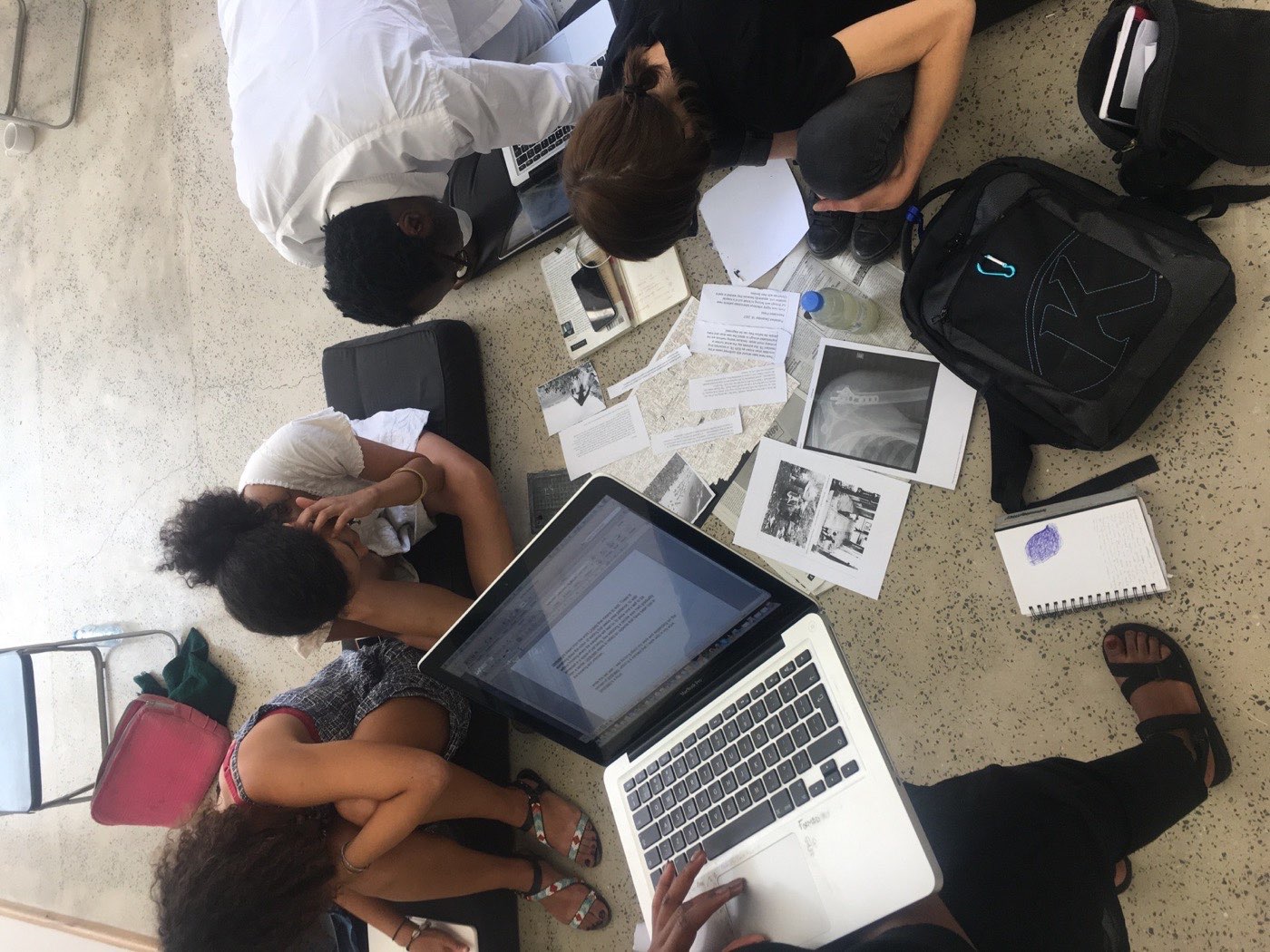
Prenant forme à travers différentes densités de matière — de la terre cuite à la forge, de la photographie au son — Souffles rassemble dans une exposition collective les travaux d'artistes compagnons de route, invités à habiter et à éclairer de leur présence l'espace intimiste de la Bibliothèque Terme Sud. Les créatures sculptées par Seyni Camara sont des émanations du souffle de la Terre. Cléophée R. Moser offre des bains de purification, distille l'énergie des pigments, communique avec l'eau. Laeila Adjovi retrace les fils qui tissent la résistance des cultures à travers la transmission des musiques spirituelles sur les routes de l'Atlantique Noir. Arts visuels, performances, arts soniques et jam sessions.

Disciplines rooted in the mastery of breath are pathways to the awakening of consciousness. Ka of the Egyptians, Prana of the Indians, Chi of the Chinese, Muntu of the Bantu, Nommo of the Dogon — so many names for the same vital force crossing the boundaries of reality. Artists are intermediaries, night watchmen: they open the doors, lift the veils that separate us from our deepest reality

Taking shape through different densities of matter — from terracotta to forge, from photography to sound — Souffles brings together in a group exhibition the work of longtime fellow-traveller artists, invited to inhabit and illuminate with their presence the intimate space of Bibliothèque Terme Sud. Seyni Camara's sculpted creatures are emanations of the Earth's breath. Cléophée R. Moser offers purification baths, distils the energy of pigments, communicates with water. Laeila Adjovi retraces the threads weaving cultural resistance through the transmission of spiritual music along the routes of the Black Atlantic. Visual arts, performances, sonic arts and jam sessions.
Conférence sonoreSculpturePhotographiePerformanceJam sessionSeyni Awa CamaraLaeila AdjoviCléophée Moser
04

Recherche-création · Bibliothèque Terme Sud · New Alphabet School · HKW Berlin

Research-creation · Bibliothèque Terme Sud · New Alphabet School · HKW Berlin

Faju (Healing)

Une traversée à la rencontre d'un archipel de savoirs de la guérison

A crossing towards an archipelago of healing knowledges

2019 – 2022

Nos histoires — individuelles et collectives — sont chargées de cicatrices, de maux structurels, de blessures plus ou moins béantes. Peut-on guérir le collectif sans prendre soin de l'individu ? Peut-on soigner le corps physique sans prendre en compte les dimensions historiques, politiques, symboliques et spirituelles du traumatisme ? FAJU est une traversée à la rencontre d'un archipel de savoirs de la guérison

Ancré dans le contexte du Sénégal contemporain et de ses cultures, dans une perspective panafricaine et transatlantique, FAJU retrace une cartographie des savoirs ancestraux, spirituels et thérapeutiques. Sa forme est une bibliothèque vivante, animée et fugitive — un espace de réflexion collaborative voué à cultiver le patrimoine initiatique africain et à ouvrir des champs de possibilités pour de nouvelles formes de pédagogies de la réparation et de la transformation.

Quatre actes : à la Bibliothèque Terme Sud, à l'Espace Medina, sur la route vers Toubab Diallaw, et sur l'île de Marlodj — où s'enchaînent performances, conversations, projections et moments de terrain. Avec Laeila Adjovi, Cheikha, Mour Fall, Corinna Fiora, Karim Goessinger, Ibaaku, Kya Loum, Lionel Manga, Cléophée Moser, Tabita Rezaire, Alioune Samb, Nathalie Vairac, Wangui Wa Kamonji. En partenariat avec la HKW Berlin (New Alphabet School), Ecoversities Alliance, Goethe Institut Sénégal.

Our histories — individual and collective — are laden with scars, structural ailments, more or less open wounds. Can we heal the collective without caring for the individual? Can we tend to the physical body without accounting for the historical, political, symbolic and spiritual dimensions of trauma? FAJU is a journey through an archipelago of healing knowledges

Rooted in the context of contemporary Senegal and its cultures, from a Pan-African, transatlantic and pluriversal perspective, FAJU traces a cartography of ancestral, spiritual and therapeutic knowledges. Its form is a living, animated and fugitive library — a space for collaborative reflection dedicated to cultivating African initiatory heritage and opening fields of possibility for new forms of pedagogies of repair and transformation.

Four acts: at Bibliothèque Terme Sud, at Espace Medina, on the road to Toubab Diallaw, and on the island of Marlodj — where performances, conversations, screenings and field experiences unfold. With Laeila Adjovi, Cheikha, Mour Fall, Corinna Fiora, Karim Goessinger, Ibaaku, Kya Loum, Lionel Manga, Cléophée Moser, Tabita Rezaire, Alioune Samb, Nathalie Vairac, Wangui Wa Kamonji. In partnership with HKW Berlin (New Alphabet School), Ecoversities Alliance, Goethe Institut Sénégal.

Bibliothèque vivanteSénégalKenyaGuyaneÉgypteBéninTabita RezaireIbaakuNathalie VairacLaeila AdjoviWangui Wa KamonjiAbdourahman Seck
Photos à venirPhotos coming soon
05

Commissariat · PartCours 2018 · Espace Medina · Soutien Fondation Josef et Anni Albers

Curating · PartCours 2018 · Espace Medina · Supported by Josef and Anni Albers Foundation

Bibliothèque Performative — Écritures africaines de Soi

Performative Library — African modes of self writing

Les étapes charnières du chemin parcouru par la Raison Noire, rayons d'une archive à la lumière de laquelle le présent livre son sens

The key milestones in the journey of Black Consciousness, shelves of an archive in whose light the present yields its meaning

2018

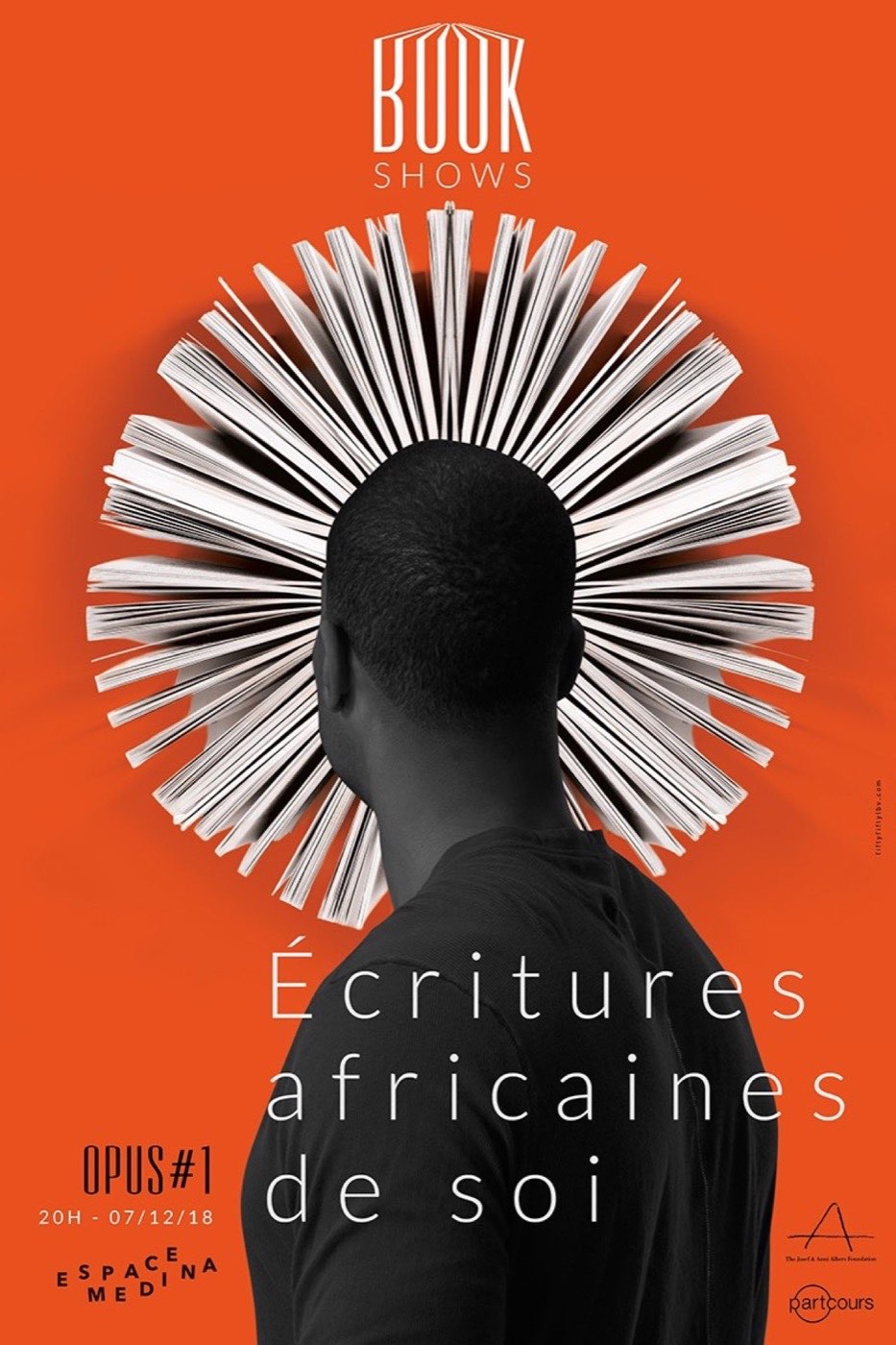
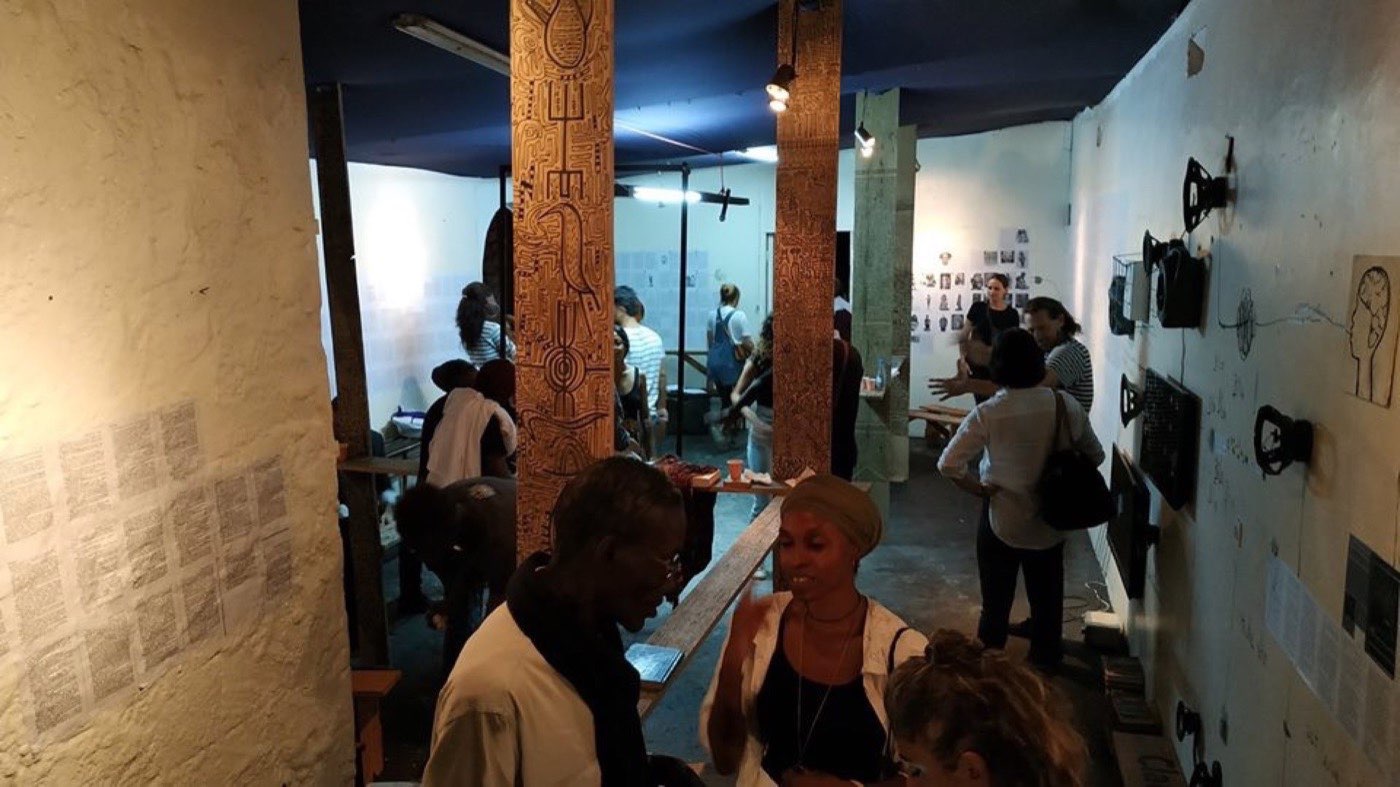
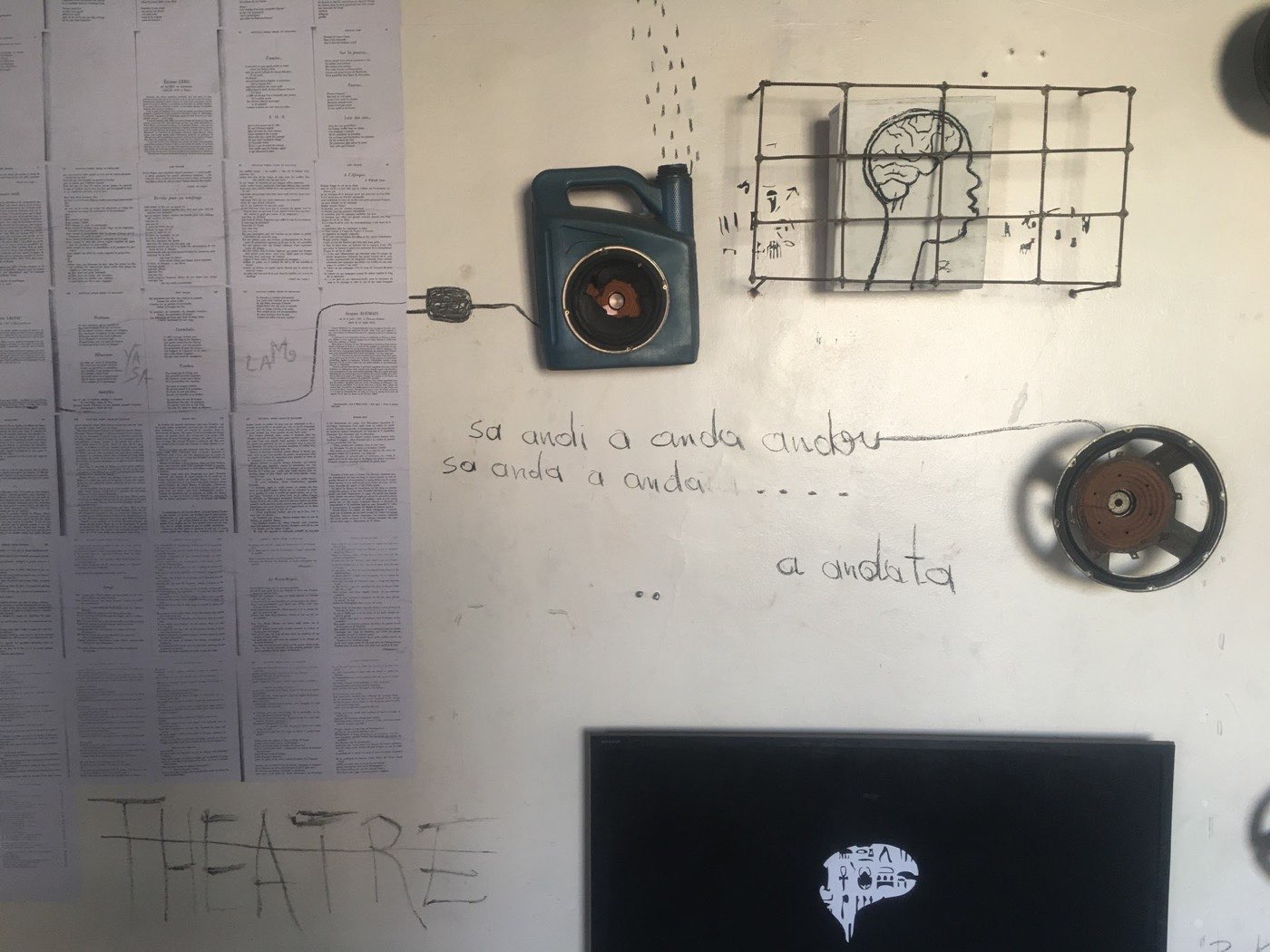
Cette pratique repense, dans le champ de l'art, les formes qui régissent la production et la diffusion des savoirs — activant autour de l'objet-livre des dispositifs nouveaux, affranchis des méthodes et catégories inhérentes aux formats classiques. La bibliothèque devient ici un espace en mouvement, qui s'active et se construit de manière performative

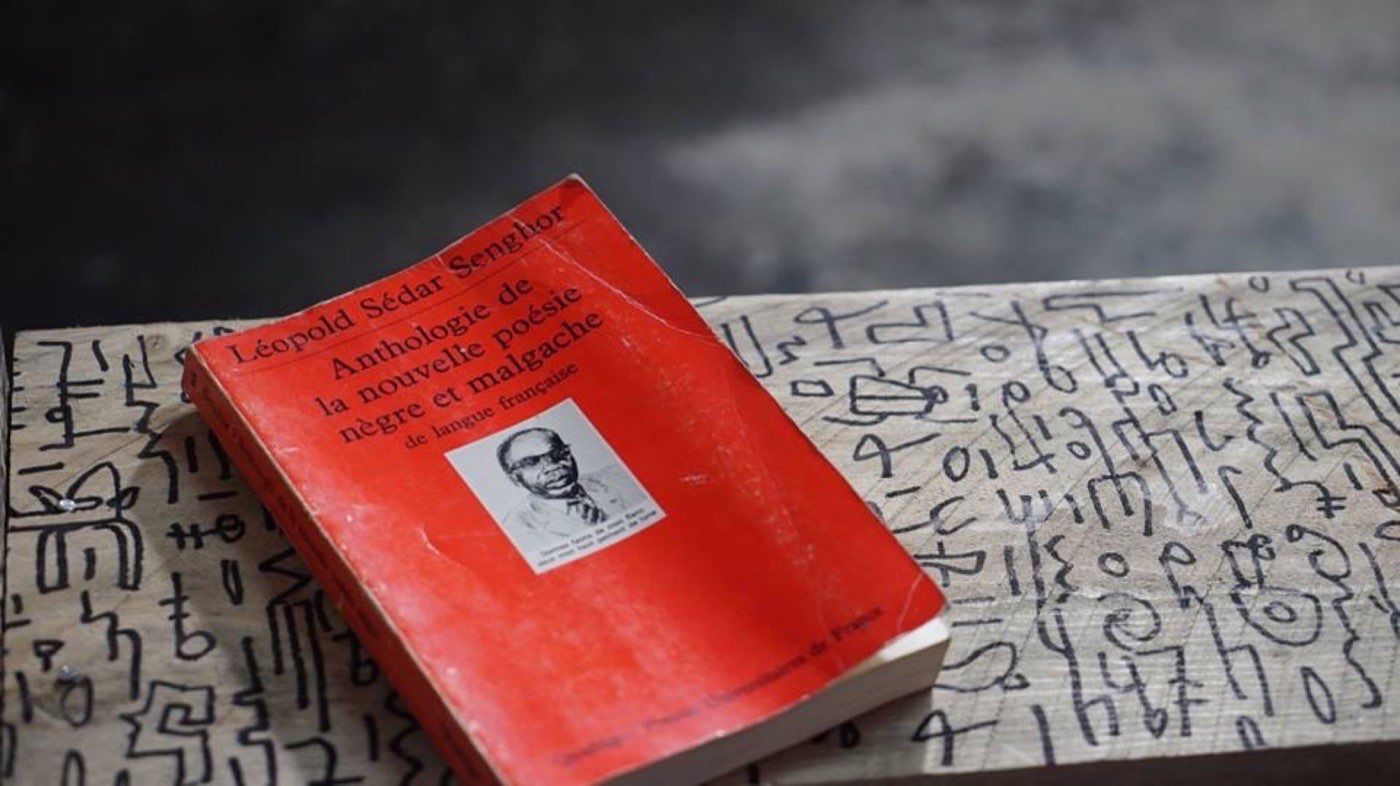
Entre la fin du XIXe et le début du XXIe siècle, l'Afrique et sa diaspora ont produit des textes interprétatifs d'une puissance rare. Ces textes — idéologiques, scientifiques ou littéraires — participent de ce qu'Achille Mbembe a appelé les « écritures africaines de soi ». Cette première saison des BookShows s'articule autour de quelques-uns des plus puissants d'entre eux : étapes charnières du chemin parcouru par « la Raison Noire », rayons d'une archive à la lumière de laquelle le présent livre son sens. Lectures critiques, installations artistiques, archives et éléments sonores composent une bibliothèque subjective, interprétative, vivante.

This practice rethinks, within the field of art, the forms governing the production and dissemination of knowledge — activating new devices around the book-object, freed from the methods and categories inherent to classical formats. The library becomes here a space in motion, which activates and constructs itself in a performative way

Between the late 19th and early 21st centuries, Africa and its diaspora produced interpretive texts of rare power. These texts — ideological, scientific or literary — partake in what Achille Mbembe has called "African writings of the self." This first season of BookShows is built around some of the most powerful among them: pivotal stages in the path traced by "Black Consciousness," shelves of an archive in whose light the present yields its meaning. Critical readings, artistic installations, archives and sonic elements compose a subjective, interpretive, living library.

CommissariatÉcritures africaines de soiAchille MbembeEspace MedinaJosef & Anni Albers Foundation

Exposition · RAW Académie · Angazi but I'm Sure · Chimurenga · Raw Material Company · Dakar

Exhibition · RAW Académie · Angazi but I'm Sure · Chimurenga · Raw Material Company · Dakar

Zig Zag

ZIG ZAG comme méthode de recherche et comme manière d'être, qui rompt avec la raideur de la ligne droite

ZIG ZAG as a research method and a way of being, breaking with the rigidity of the straight line

2017

« Angazi, but I'm sure » (je ne sais pas, mais j'en suis sûr) : une expression sud-africaine qui se contredit intentionnellement. Elle affirme l'expérience vécue, l'improvisation et l'imagination comme formes de connaissance à part entière. Programme de clôture de la RAW Académie session 2, dirigée par Ntone Edjabe et ses camarades de Chimurenga, the Panafrican Space Station

Au démarrage, « Angazi but I'm sure », on n'était déjà pas sûrs de bien comprendre. Et puis, le ZIG ZAG a commencé. ZIG ZAG entre une multitude de formes, de sources et de systèmes de connaissances. ZIG ZAG comme méthode de recherche et comme manière d'être, qui rompt avec la raideur de la ligne droite. Une promenade qui invite à déplacer les repères pour explorer de plus larges surfaces d'expériences et de savoirs. ZIG ZAG comme une succession de plis entre différentes dimensions et perceptions du réel. ZIG ZAG comme motif, représentation graphique et métaphorique d'une inscription singulière dans le monde. ZIG ZAG restitue sous une forme libre, un instantané des recherches et réflexions engagées dans le cadre de la Raw Académie dirigée par Chimurenga.

"Angazi, but I'm sure" (I don't know, but I'm sure): a South African expression that intentionally contradicts itself. It affirms lived experience, improvisation and imagination as forms of knowledge in their own right. Closing programme of RAW Académie session 2, directed by Ntone Edjabe and his Chimurenga colleagues, the Panafrican Space Station

At the outset, "Angazi but I'm sure" — we were already not sure we quite understood. And then, the ZIG ZAG began. ZIG ZAG between a multitude of forms, sources and knowledge systems. ZIG ZAG as a research method and a way of being, breaking with the rigidity of the straight line. A walk that invites us to shift our bearings and explore wider surfaces of experience and knowledge. ZIG ZAG as a succession of folds between different dimensions and perceptions of reality. ZIG ZAG as pattern, graphic and metaphorical representation of a singular inscription in the world. ZIG ZAG freely restitutes a snapshot of the research and reflections undertaken within the RAW Académie directed by Chimurenga.

Zig-zagProduction de savoirsFelwine SarrKodwo EshunLionel MangaPanafrican Space StationCartographieArchive

Axe 2

Axis 2

Poésie urbaine & fabrique du politique

Urban Poetry & the Making of the Political

Dans la continuité de recherches menées sur le mouvement Set Setal (Dakar, 1990) — jeunes, femmes et artistes armés de pelles et de pinceaux, réinventant l'espace public en le couvrant de fresques et de sculptures — ces projets font de la ville un terrain de jeu et un laboratoire. Art dans la cité, avec la cité : disséminations artistiques dans les quartiers, performances participatives, interventions in situ, musées à ciel ouvert. La ville comme espace où se génère le potentiel de subversion nécessaire à l'avènement d'une société plus juste et plus libre

Building on research into the Set Setal movement (Dakar, 1990) — young people, women and artists armed with shovels and paintbrushes, reinventing public space by covering it with murals and sculptures — these projects make the city a playground and a laboratory. Art in the city, with the city: artistic disseminations in working-class neighbourhoods, participative performances, in situ interventions, open-air museums. The city as a space where the potential for subversion necessary for a more just and free society is generated

01

Laboratoire · Kakatar Studio · Dakar–Bruxelles · 2017–2021

Research-creation · Bibliothèque Terme Sud · Dakar–Brussels

Lieu Commun / Niaye Thioker

Apprendre à regarder, lire, écouter, questionner, réinventer le monde qui nous entoure

Learning to look, read, listen, question, reinvent the world around us

2017 – 2021

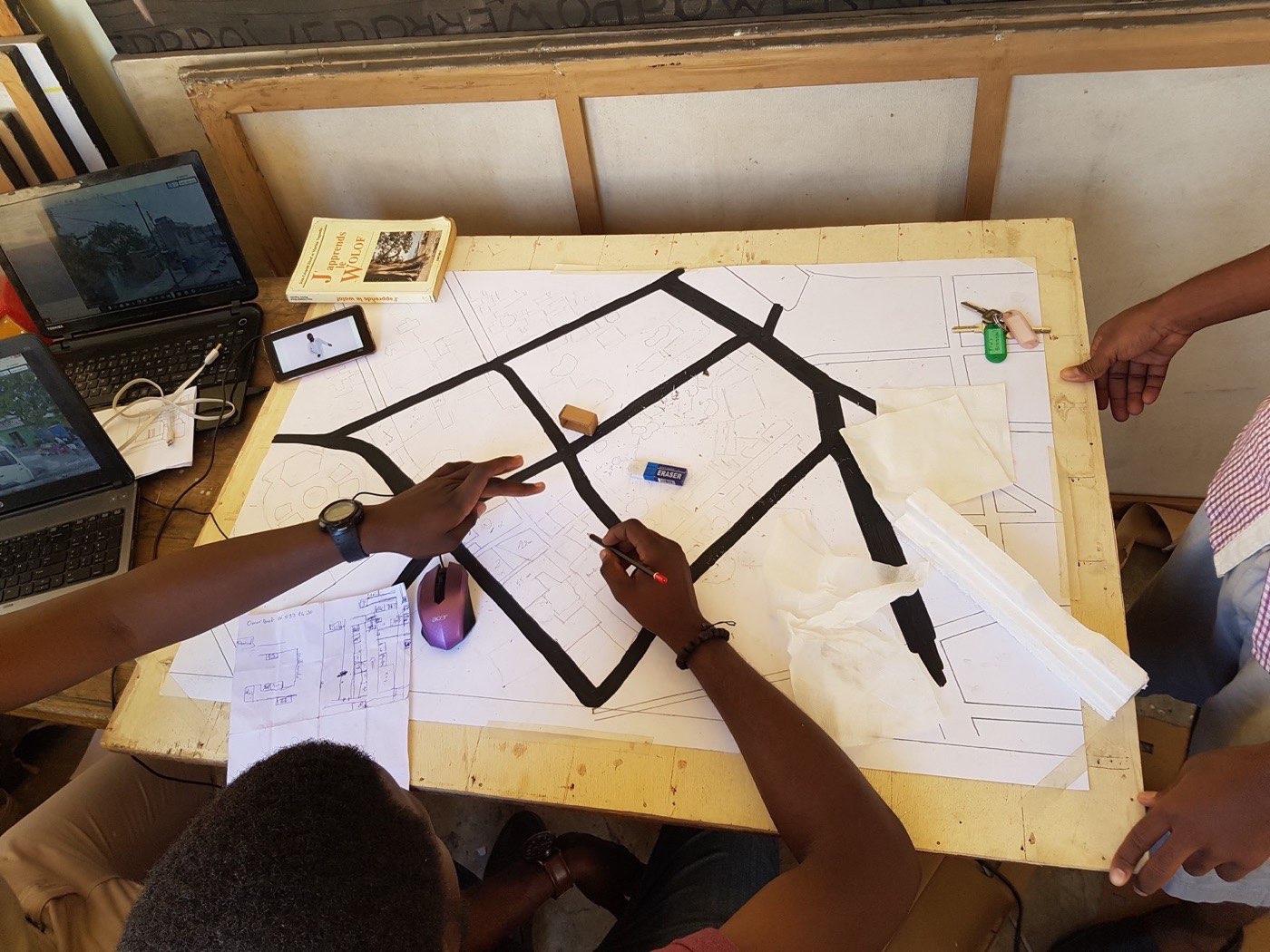
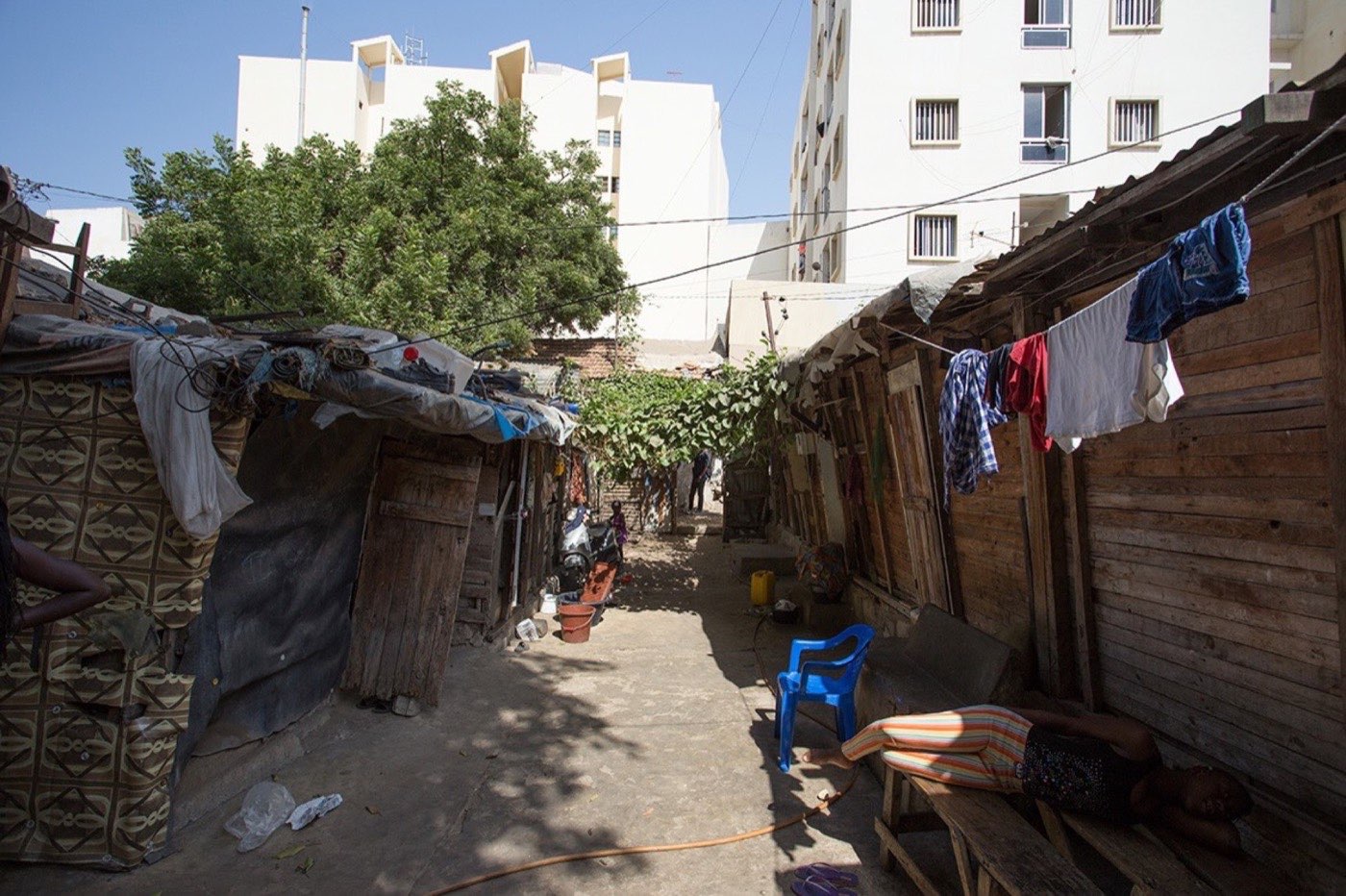
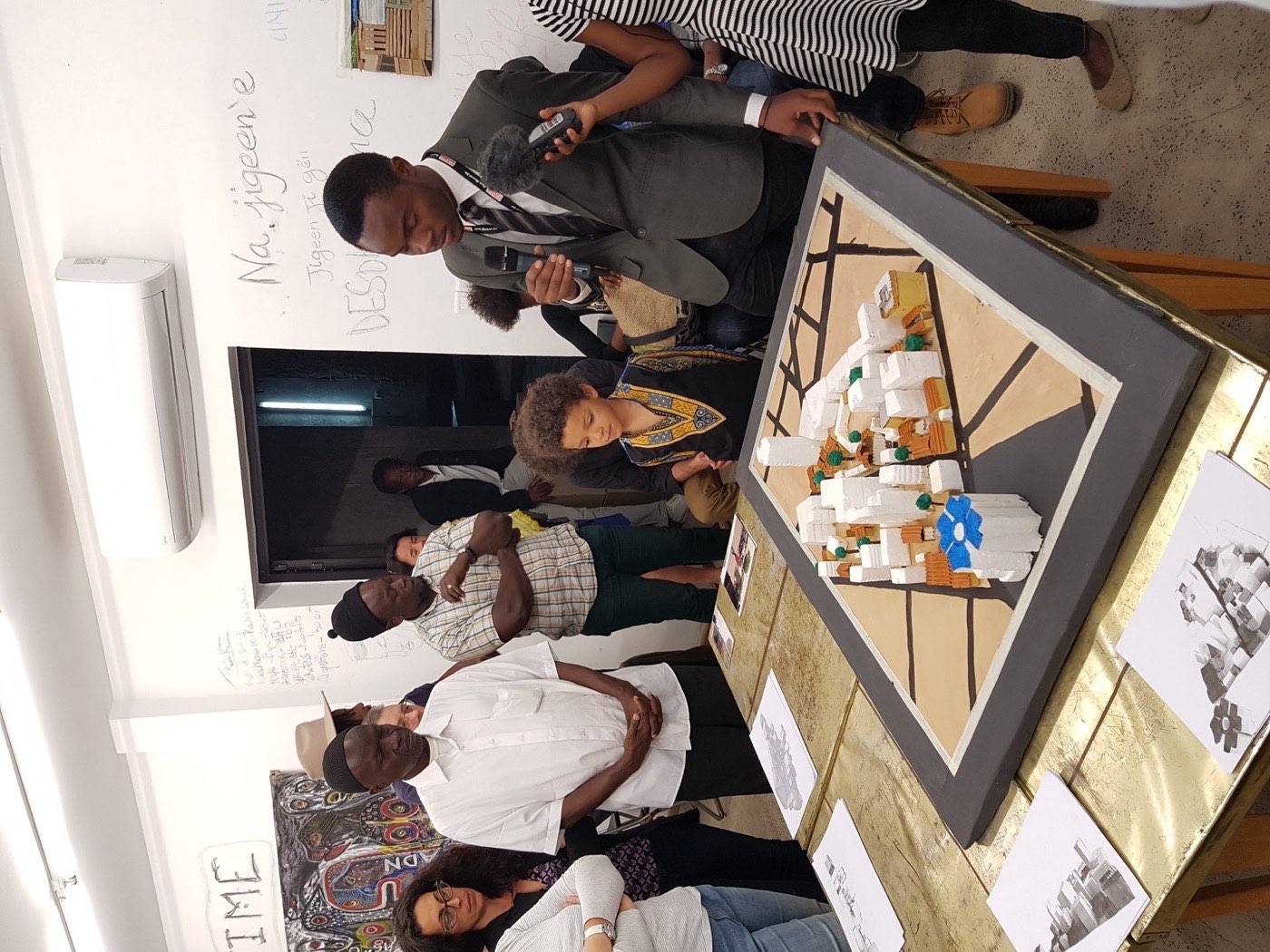
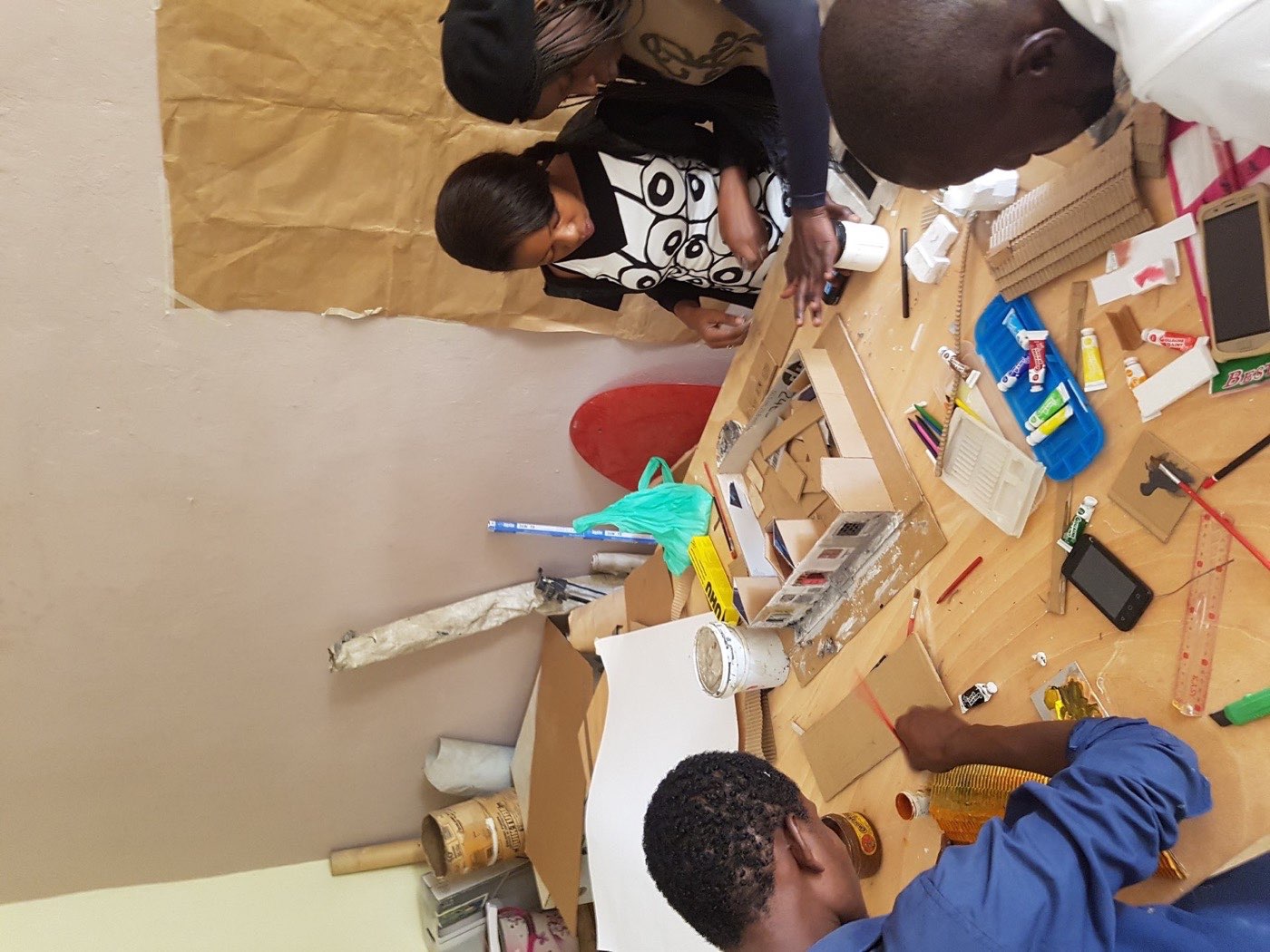
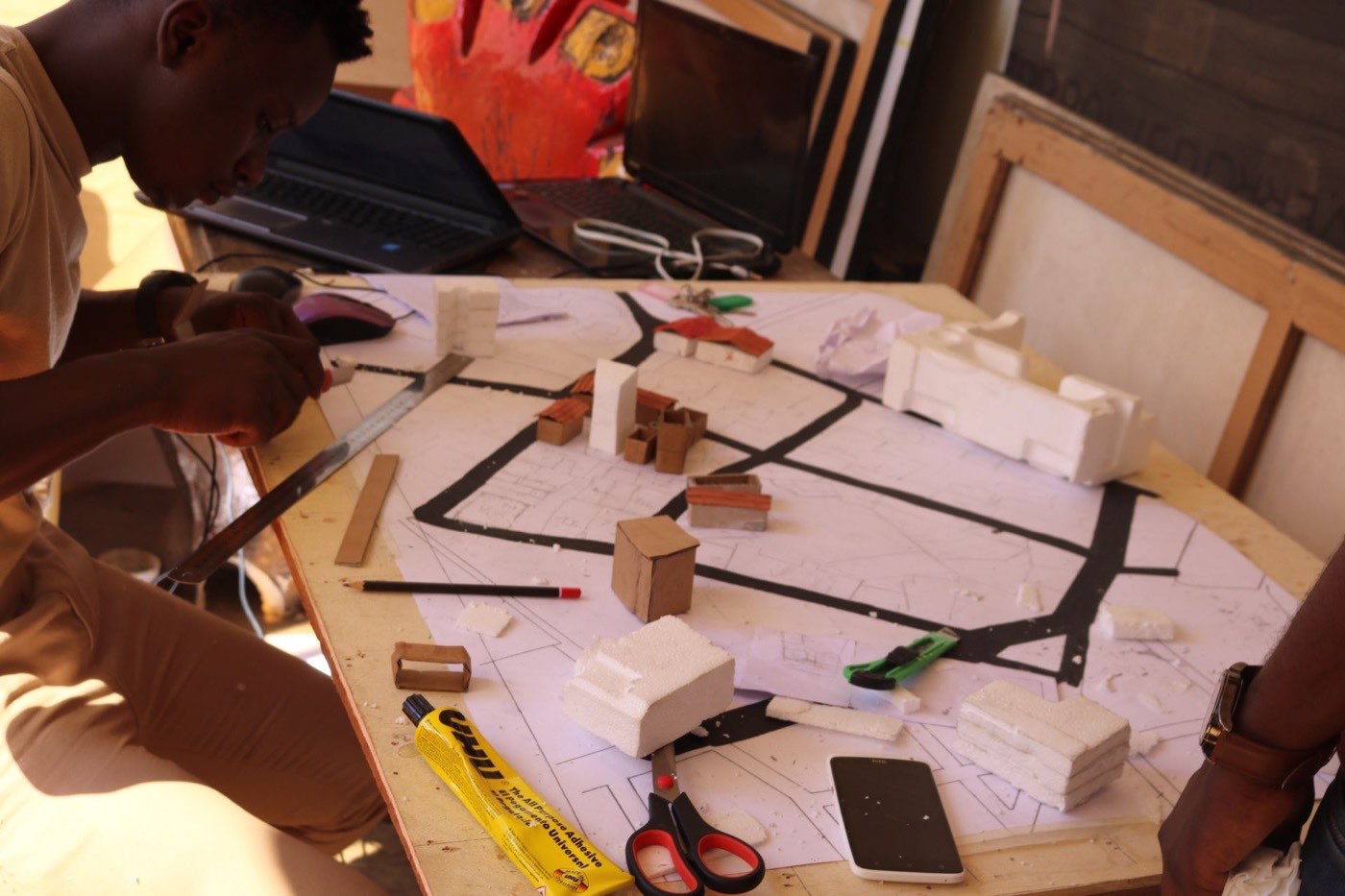
Comment passer de consommateur passif à producteur critique, agent de transformation du réel ? Au cœur de la fabrique urbaine, Lieu Commun est un laboratoire de recherche pour la production et le partage de formes alternatives de savoirs en lien avec la ville.

Apprendre à regarder, lire, écouter, questionner, transformer, réinventer le monde qui nous entoure, décrypter les enjeux politiques, sociaux, économiques, environnementaux, sociétaux qui conditionnent les individus dans leur vie quotidienne : Lieu Commun engage une exploration du territoire urbain comme espace d'expérimentation, d'éducation et de recherche à travers l'art, grâce à autant de pratiques que la vidéo, la photographie, l'architecture, la cartographie, la création sonore, les arts plastiques, la performance, l'écriture, la collecte d'archives et la réalisation de films d'animation.

Projet de long terme à l'initiative de Kakatar Studio, en collaboration avec les Ateliers Graphoui, soutenu par la Délégation Wallonie-Bruxelles et la GIZ. Lieu Commun a notamment été programmé dans le cadre d'Urbi, Biennale Dak'Art 2018, et a donné lieu à la publication Niaye Thioker, Lieu Commun : La prairie des perdrix aux Éditions Vive Voix (Dakar–Bruxelles, 2019).

How to move from passive consumer to critical producer, agent of transformation of the real? At the heart of the urban fabric, Lieu Commun is a research laboratory for the production and sharing of alternative forms of knowledge connected to the city — through art, archives, film and sound

Learning to look, listen, question, transform and reinvent the world around us. Urban territory as a space for experimentation and education — video, photography, cartography, sound creation, visual arts, performance, writing, archive collection. A long-term project initiated by Kakatar Studio, in collaboration with Ateliers Graphoui, supported by the Wallonie-Bruxelles Delegation and the GIZ. Lieu Commun was notably programmed as part of the Urbi programme at the Dak'Art Biennial 2018, and gave rise to the publication Niaye Thioker, Lieu Commun: La prairie des perdrix, Éditions Vive Voix (Dakar–Brussels, 2019).

Archive urbaineMémoire populaireQuartiers en sursisÉditions Vive VoixRosa LuxembourgAteliers GraphouiGIZ
02

Commissariat · Biennale Dak'Art 2018 · Simon Njami · Dakar

Curating · Dak'Art Biennial 2018 · Simon Njami's team

Urbi — dans la ville

La ville non comme un monde réalisé, mais un monde possibilisé

The city not as a realised world, but a world made possible

Dak'Art 2018

Chaque ville serait l'alphabet différent d'un même langage partagé par tous les citadins du monde. Pour comprendre Dakar, il faudrait pouvoir la déchiffrer à la manière d'un linguiste : sa logique grammaticale, ses symboles, son champ sémantique, sa musicalité. Programme hors les murs ancré dans les quartiers, Urbi donne enfin la parole à la ville afin qu'elle se raconte par elle-même, dans son propre langage

Dakar se conjugue au temps de la transformation — à l'Heure Rouge : l'intervalle où les enjeux qui structurent nos existences sont portés à incandescence, au stade ultime de leur transformation alchimique. La ville est une métaphore de l'impermanence, sa réalité n'est que transitoire, mouvement, traversée. Point d'objet définitif, mais des cristallisations fugaces, brillants intervalles de processus longs et souterrains — qui nous offrent à voir la ville non comme un monde réalisé, mais un monde « possibilisé ». Urbi propose de pénétrer au cœur de la fabrique de la ville à travers des propositions artistiques portées par des acteurs profondément ancrés dans leurs quartiers — qui préexistent à la Biennale et lui survivent. Le programme rassemble entre autres Le Super KM de Maurice Pefura, Sandaga Circus de Madiaw Ndiaye, Lieu Commun de Kakatar Studio, Spacecraft de Kër Thiossane.

Every city is a different alphabet of the same language shared by all city-dwellers. To understand Dakar, one would need to decipher it like a linguist: its grammatical logic, its symbols, its semantic field, its musicality. Rooted in Dakar's neighbourhoods, Urbi gives voice to the city so that it tells its own story, in its own language

Dakar exists in the time of transformation — at the Red Hour: the interval where the stakes structuring our existence are brought to incandescence, at the ultimate stage of their alchemical transformation. The city is a metaphor for impermanence, its reality purely transitory, movement, passage. No definitive object, but fugitive crystallisations, brilliant intervals of long and subterranean processes — offering us to see the city not as a realised world, but a "possibilised" world. Urbi proposes to penetrate the heart of the city's fabric through artistic propositions carried by actors deeply rooted in their neighbourhoods — who predate the Biennial and outlive it. The programme brings together among others Le Super KM by Maurice Pefura, Sandaga Circus by Madiaw Ndiaye, Lieu Commun by Kakatar Studio, Spacecraft by Kër Thiossane.

Hors les mursArt dans la villeDisséminationHeure RougeZig-zagKër ThiossaneKakatar StudioYataal Art
03

Direction artistique · Les Petites Pierres · Dakar · 2012–2014

Artistic direction · Les Petites Pierres · Dakar

Interférences

La ville devient terrain de jeu et laboratoire, où l'art replacé au cœur de la fabrique sociale génère de nouvelles formes du vivre ensemble

The city becomes a playground and laboratory, where art placed at the heart of the social fabric generates new forms of living together

2012 – 2014

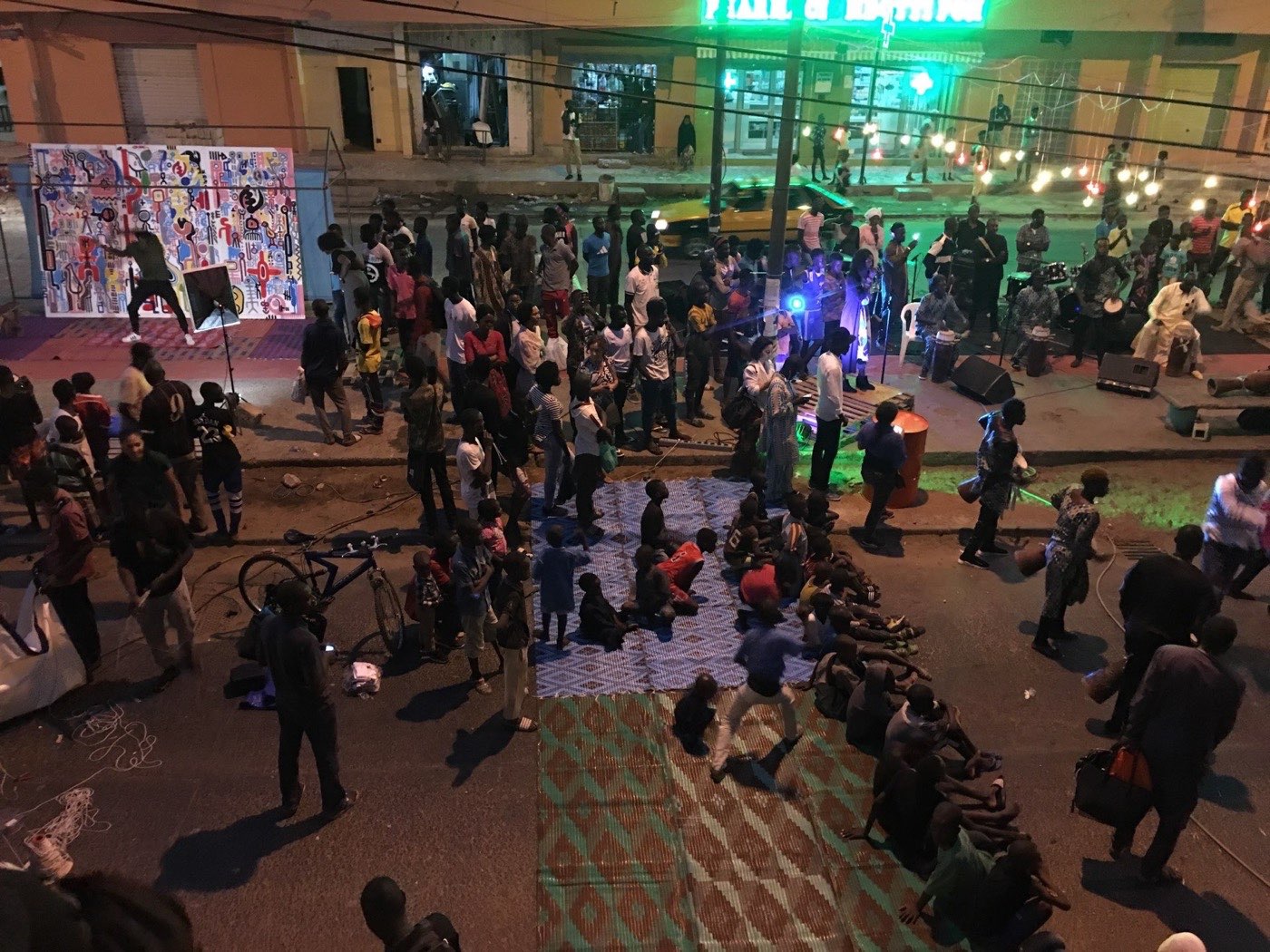
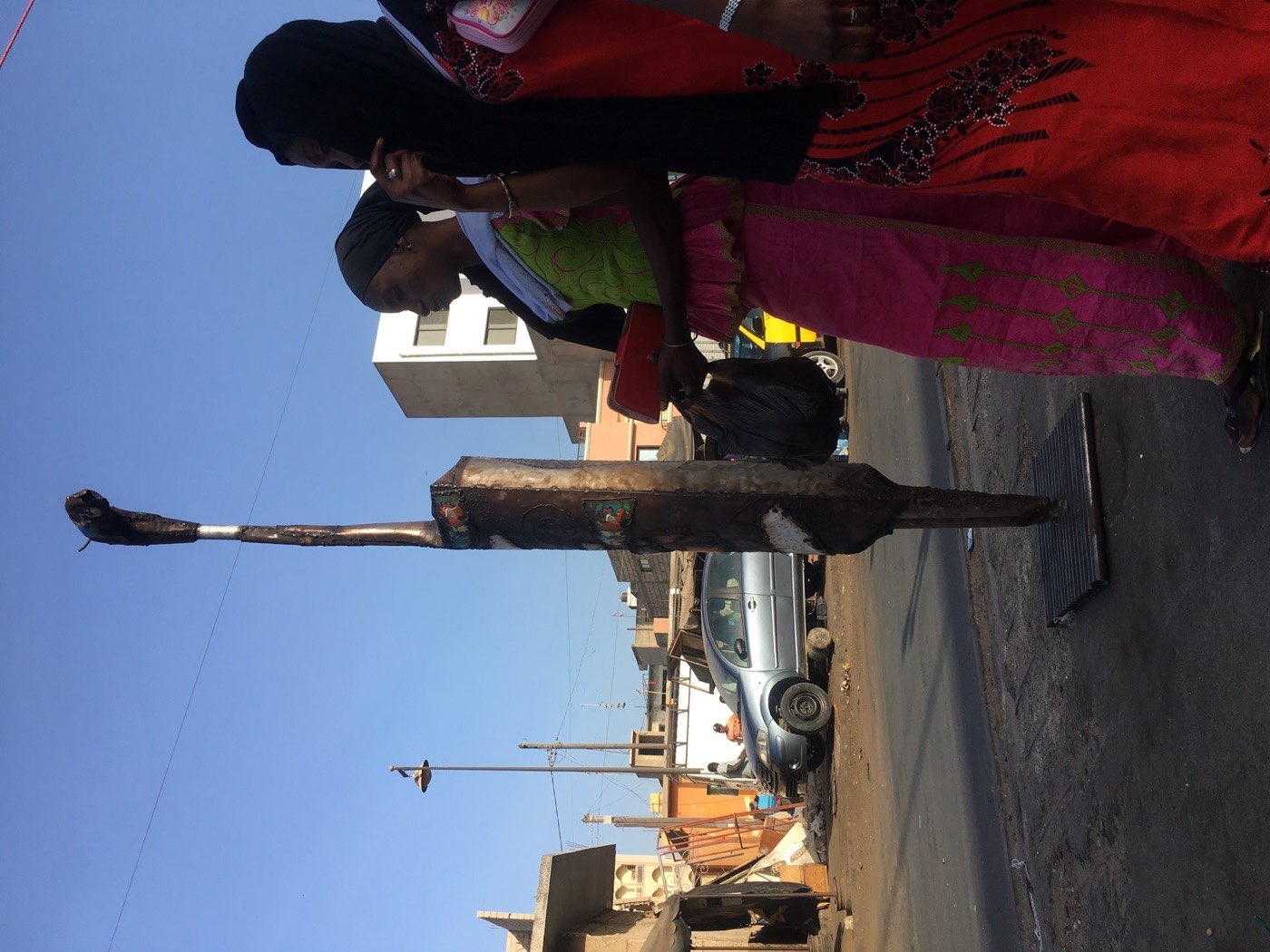
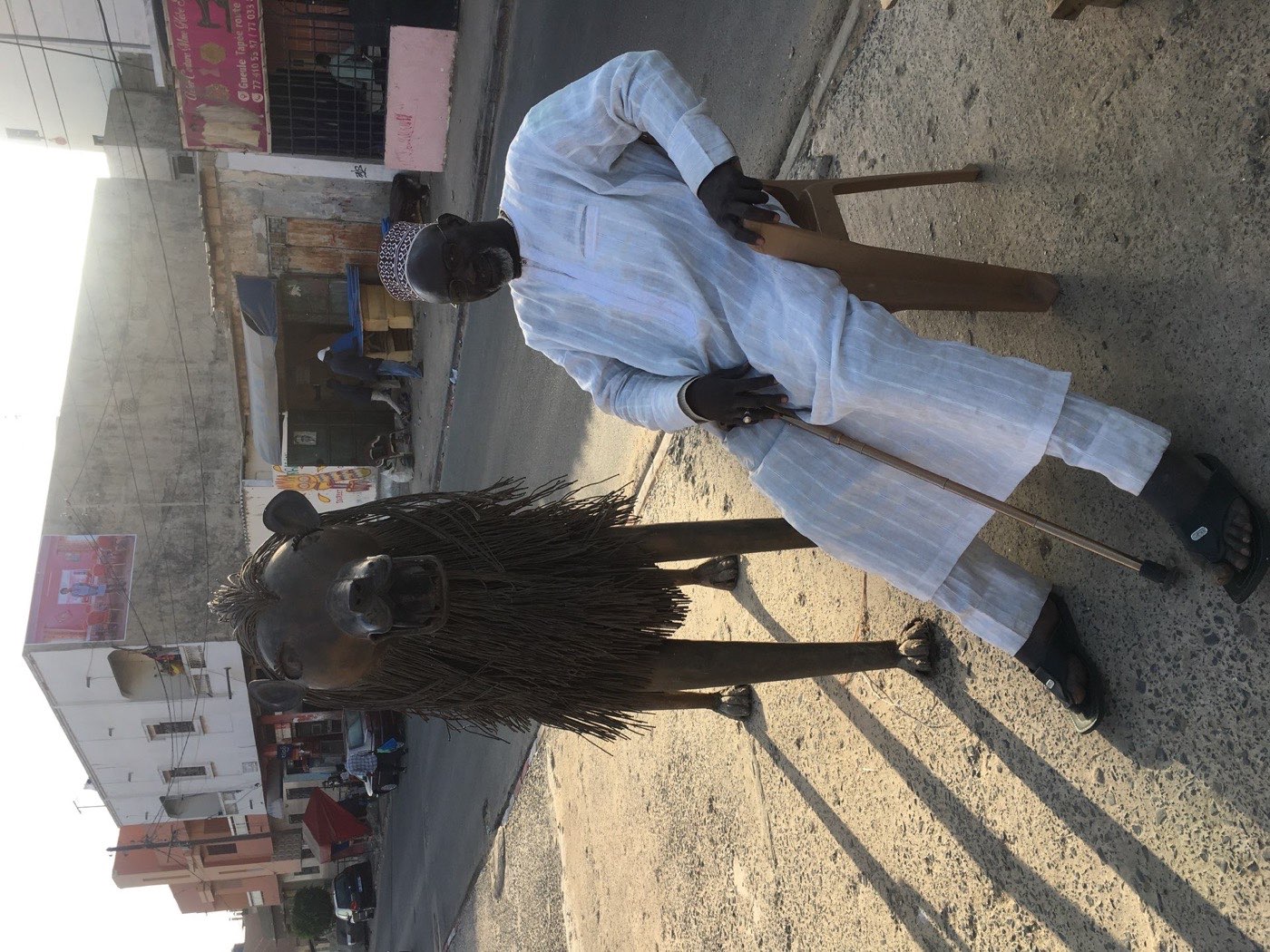
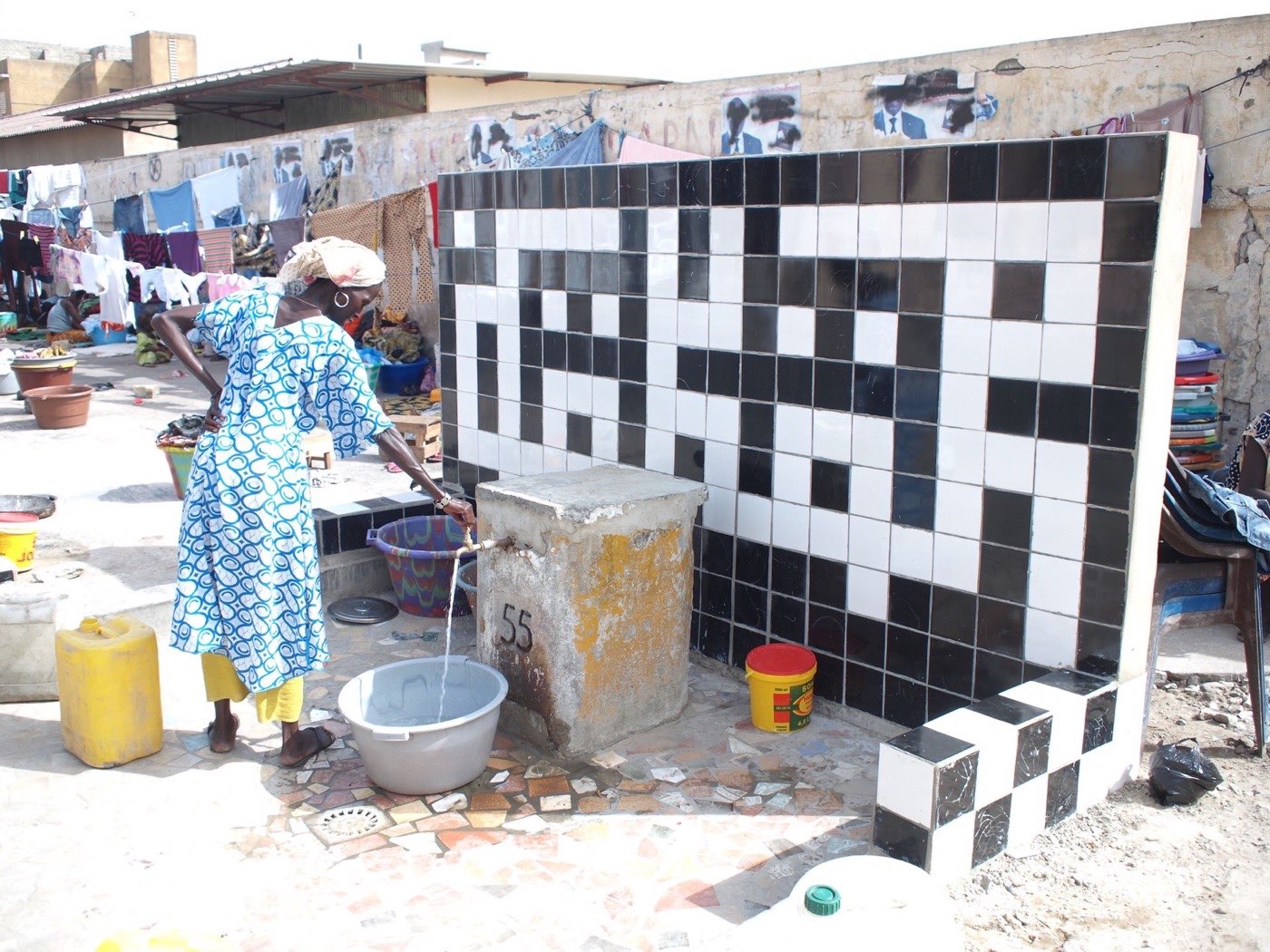
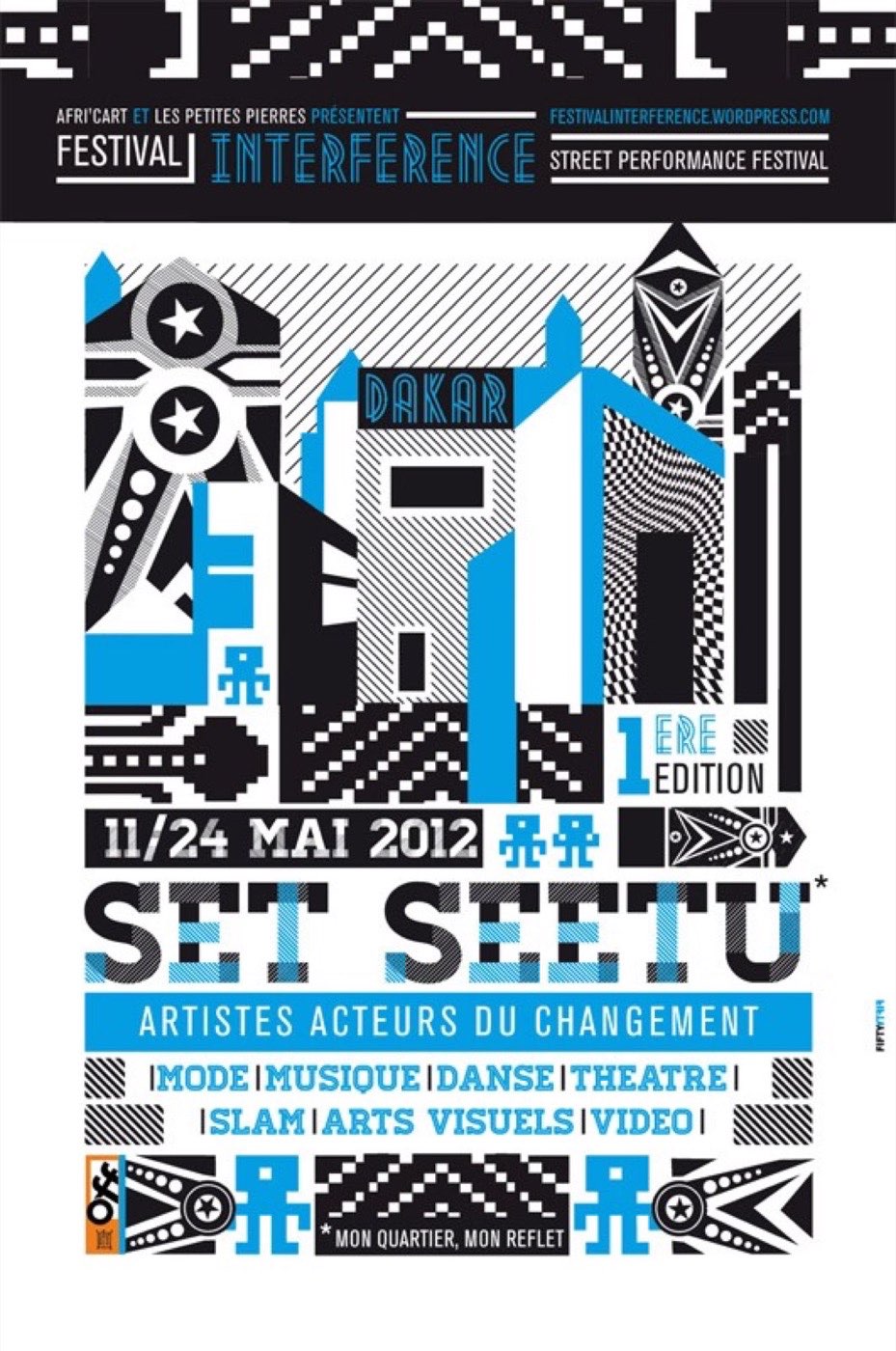
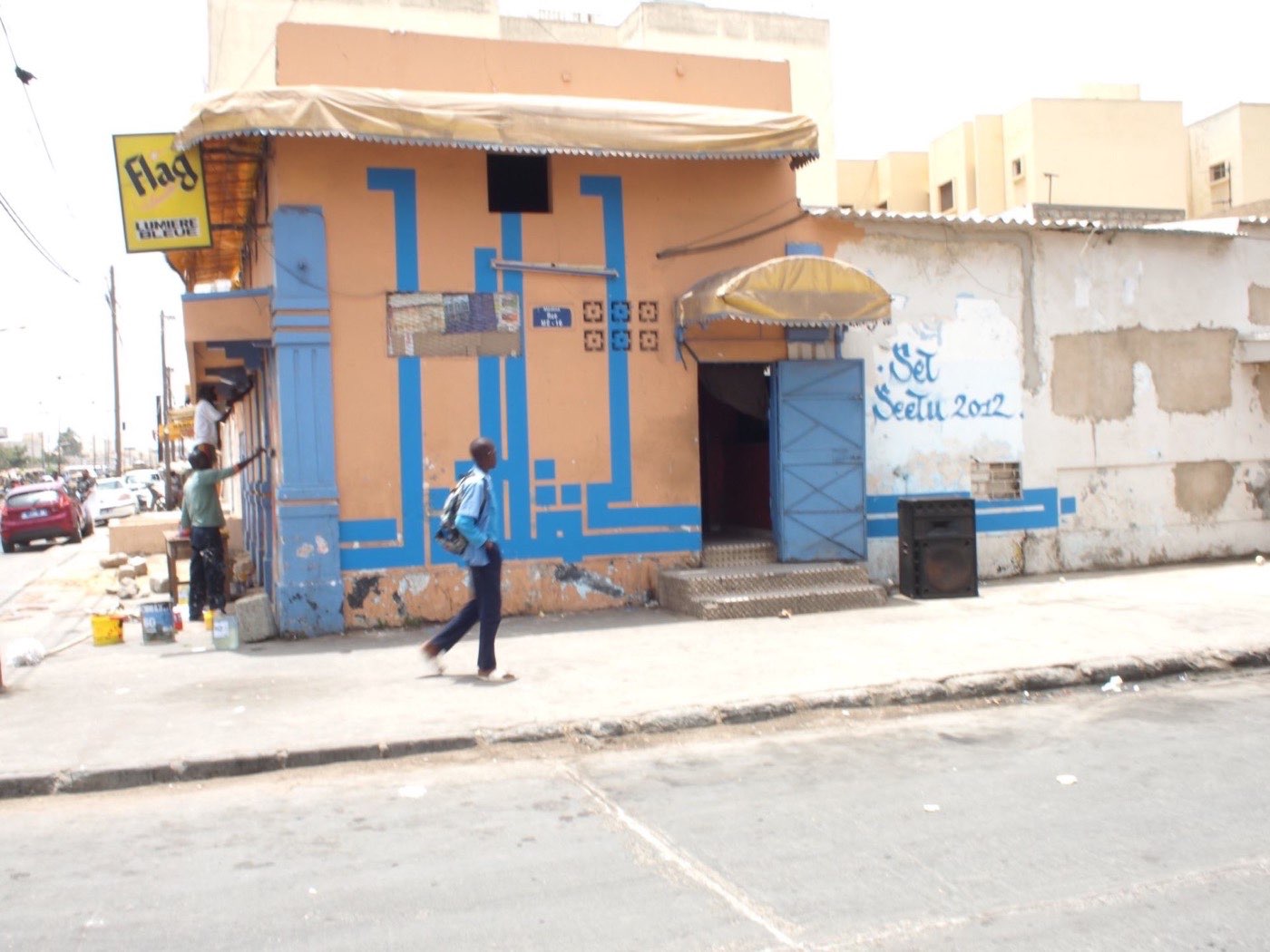
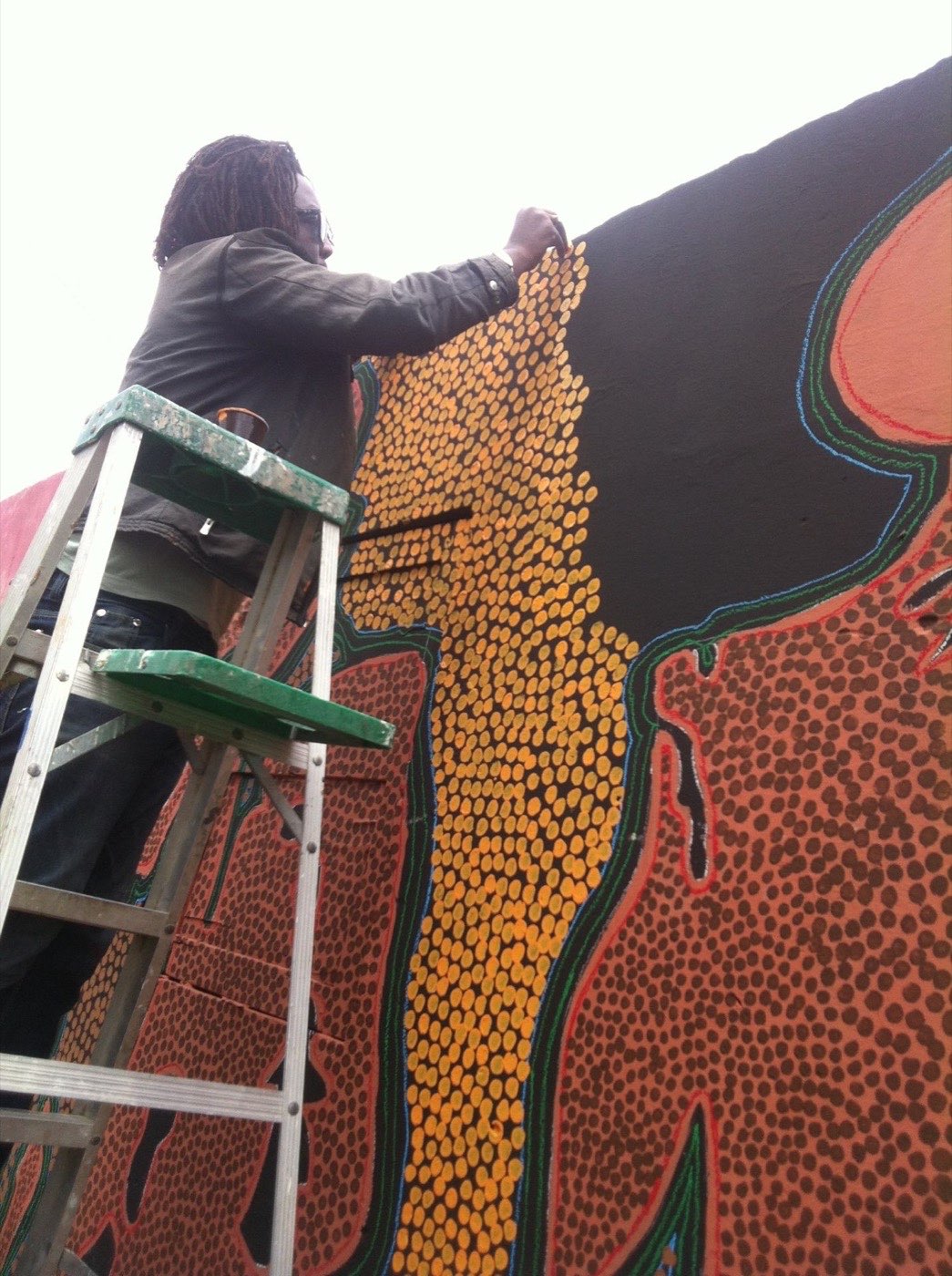
Au printemps 1990, le mouvement Set Setal inonde Dakar : nettoyage collectif, fresques murales, sculptures sur les ronds-points — les habitants réinventent l'espace public, armés de pelles et de pinceaux. Interférences s'inscrit dans cette lignée : arts de la cité, dans la cité, au cœur des quartiers populaires de Dakar

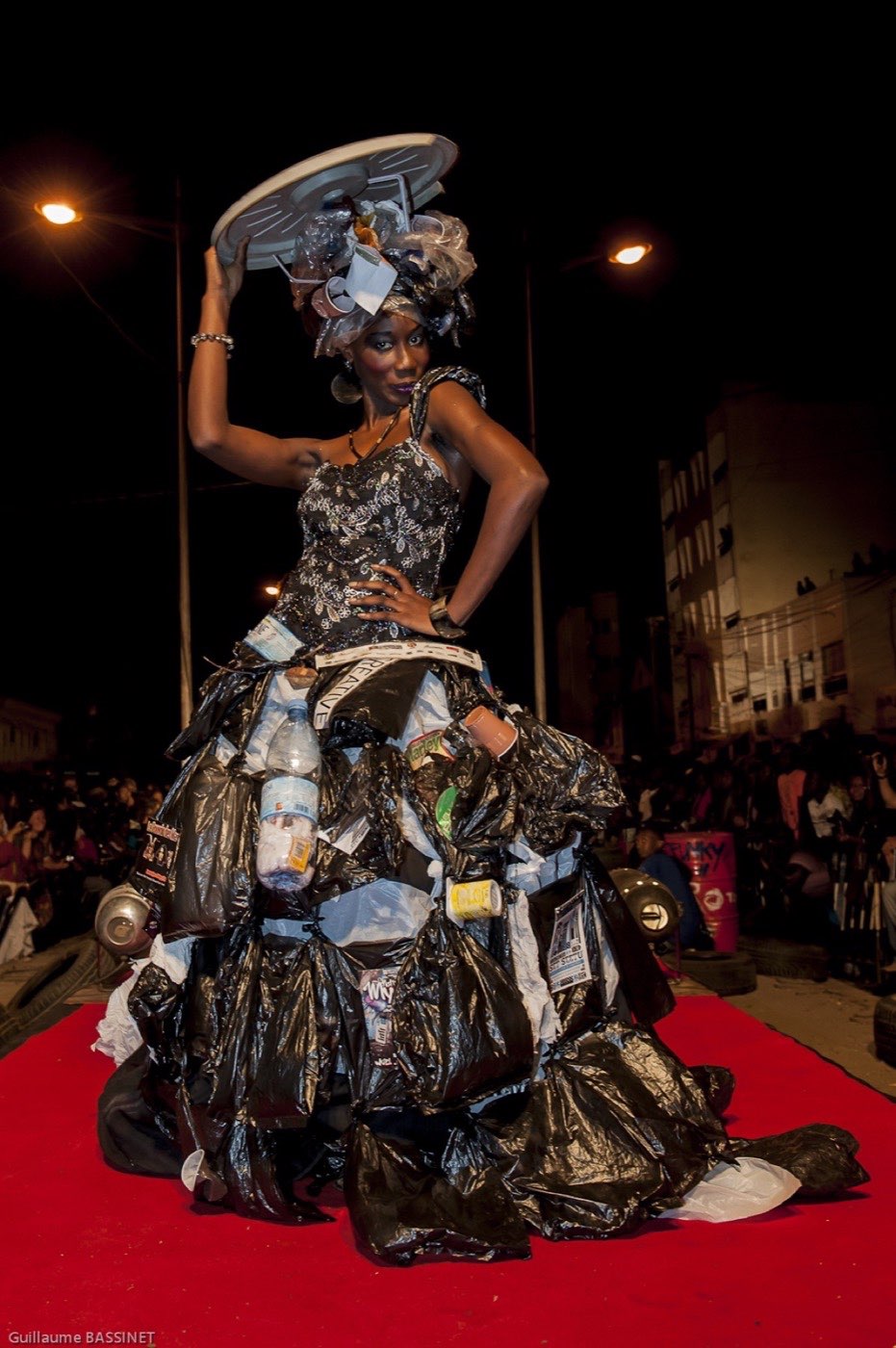
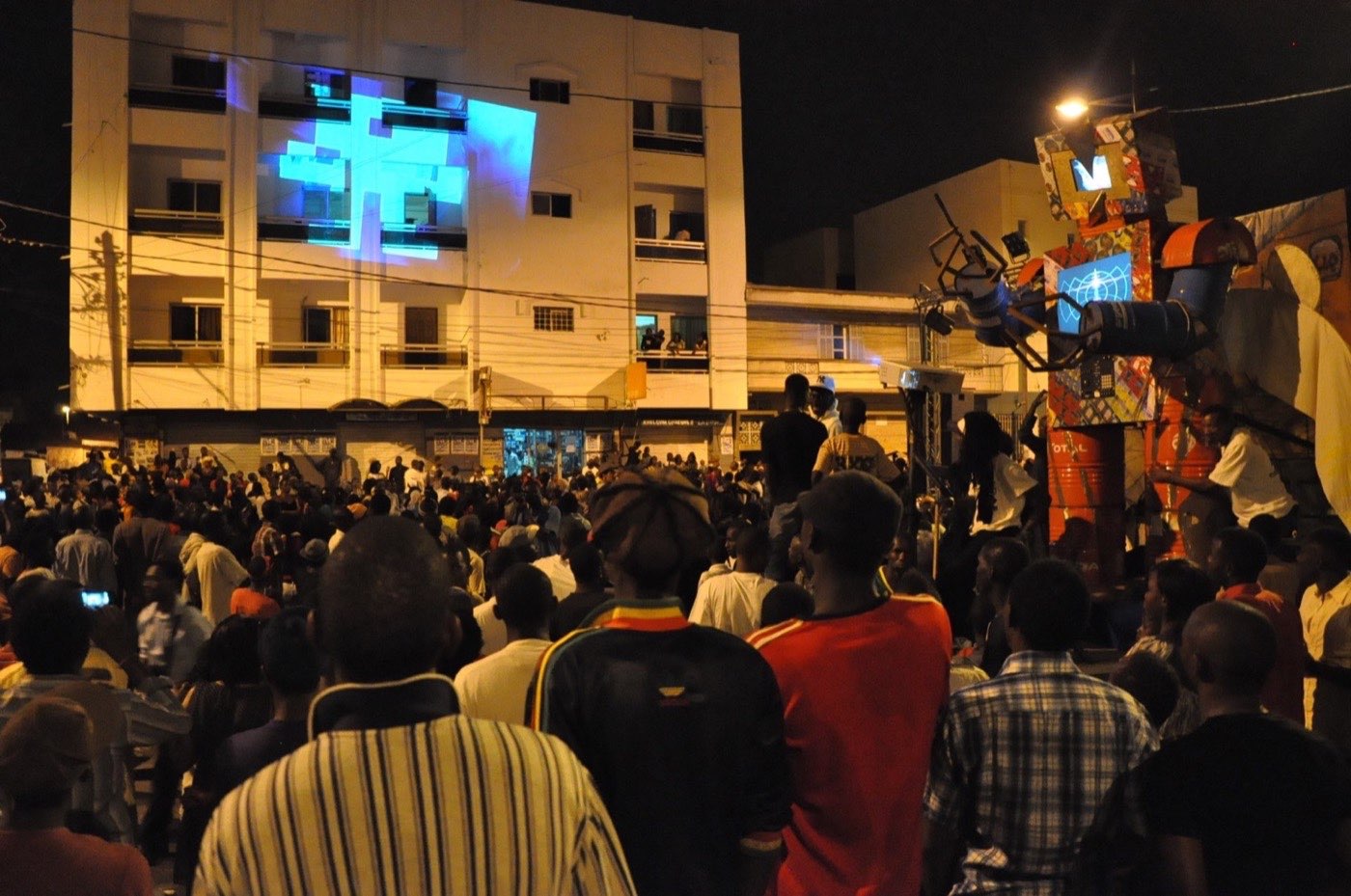
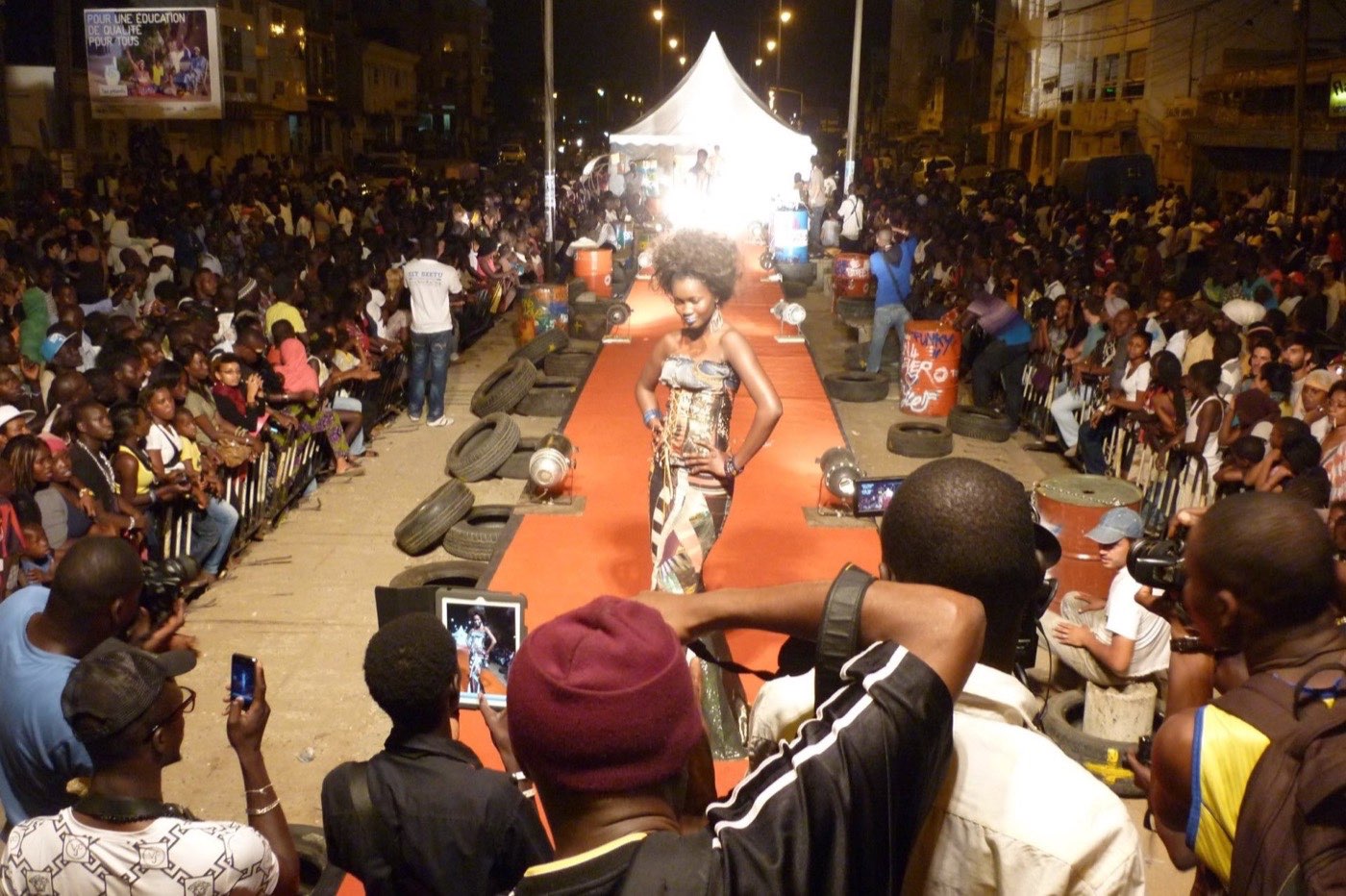
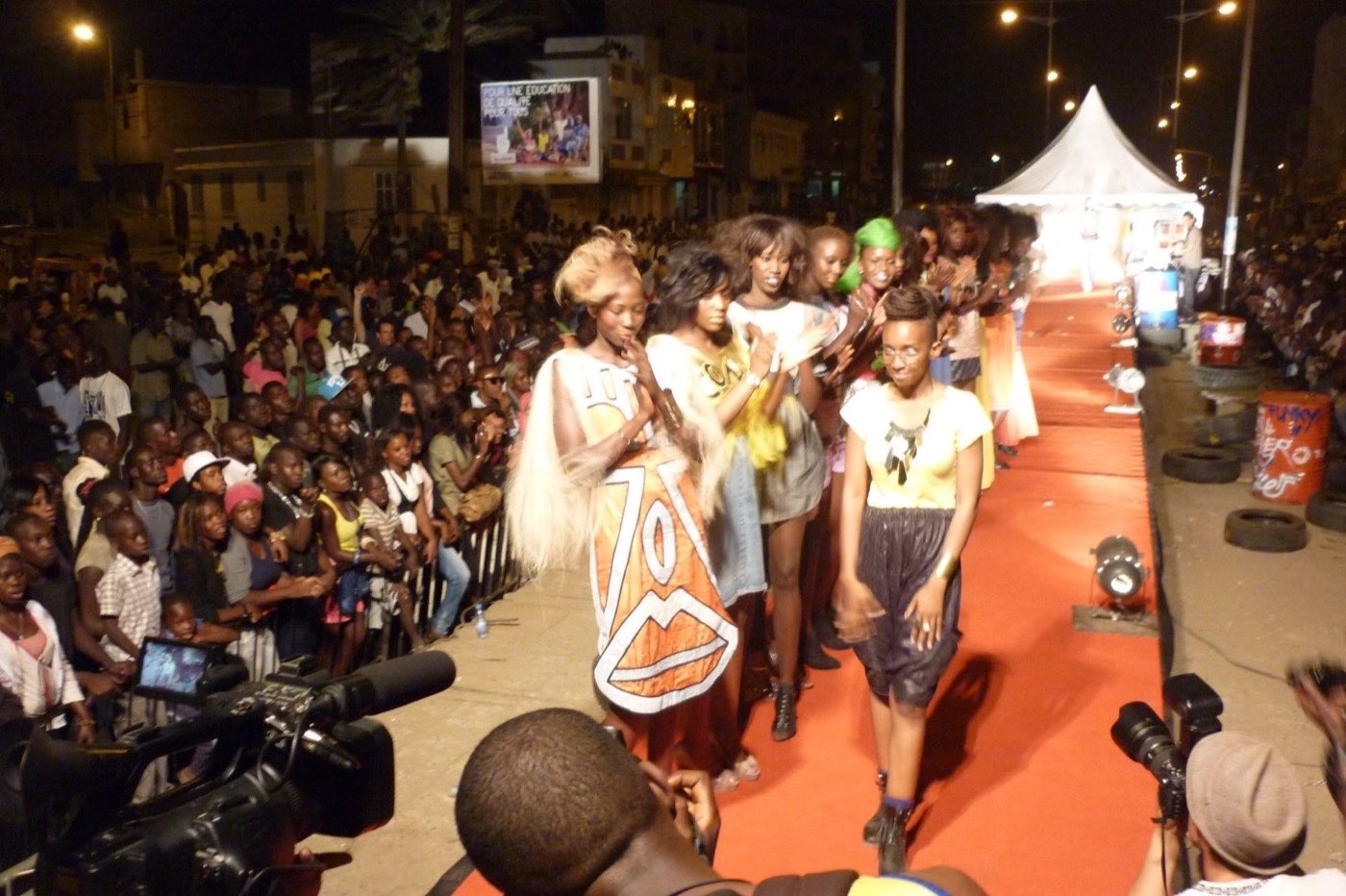
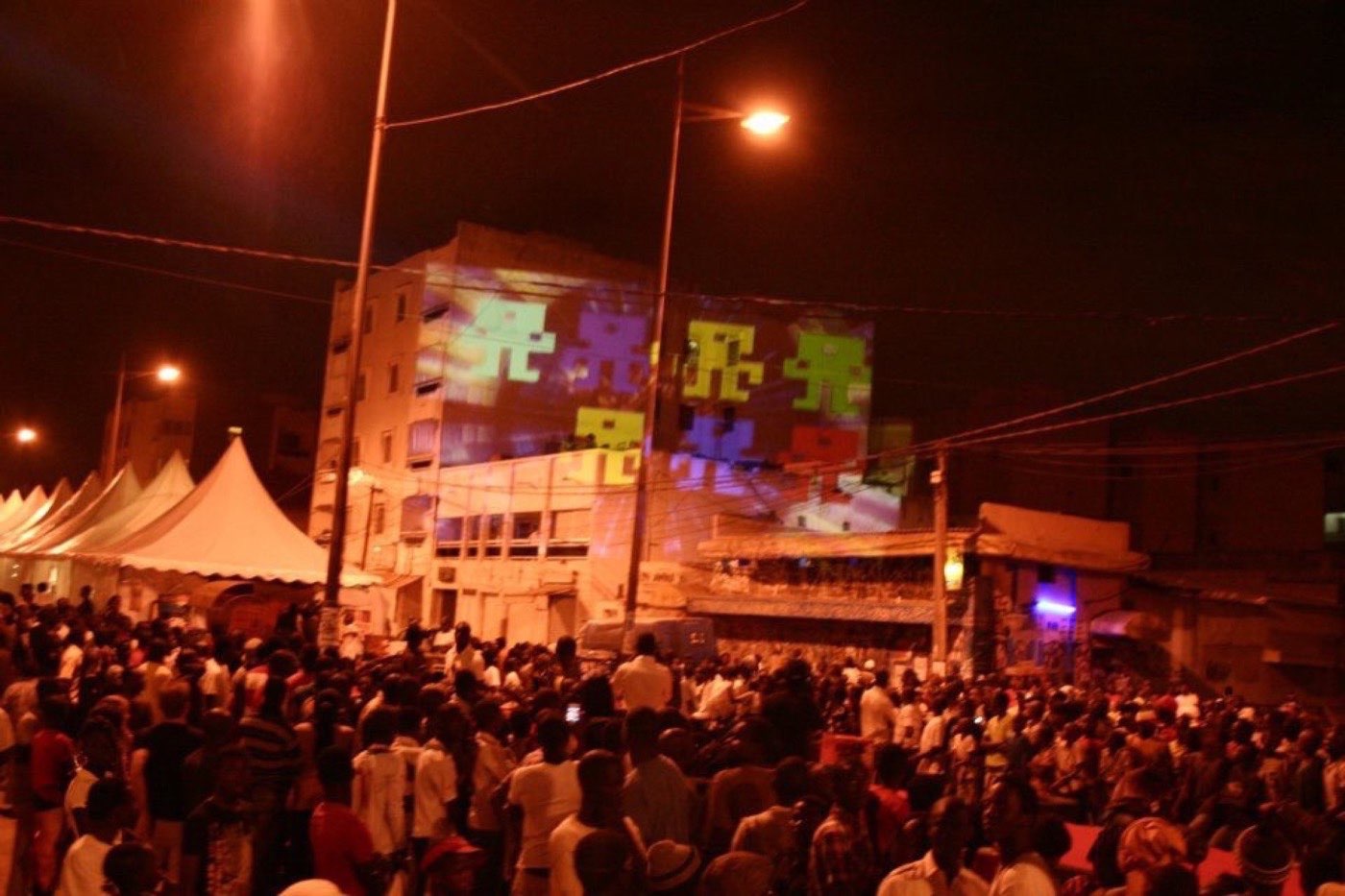
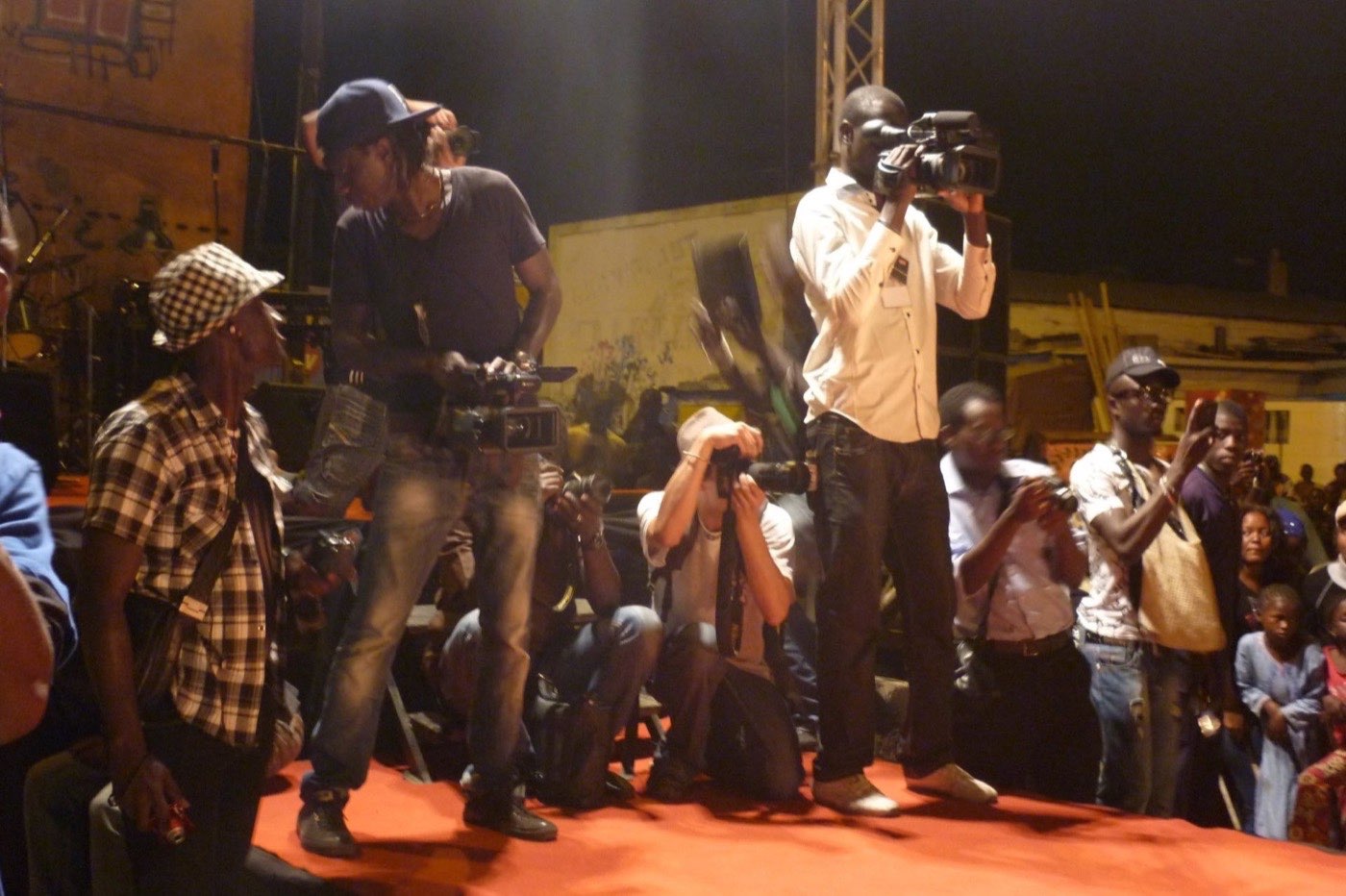
Festival pluridisciplinaire et international, Interférences accueille en résidence des artistes d'Afrique et d'ailleurs pour développer des scénographies urbaines et interventions artistiques in situ : du street art à l'urbanisme, de la performance participative aux installations collectives, de l'art d'investigation à l'anthropologie urbaine. La ville devient terrain de jeu et laboratoire, où l'art replacé au cœur de la fabrique sociale génère de nouvelles formes du vivre ensemble. Incubateur de synergies artistiques, culturelles et sociales, Interférences mobilise citadins, publics et artistes autour de projets activateurs de création collective, vecteurs de dialogue et foyers de nouvelles pratiques.

In the spring of 1990, the Set Setal movement flooded Dakar: collective cleaning, murals, sculptures on roundabouts — residents reinvented public space, armed with shovels and paintbrushes. Interférences follows in this lineage: arts of the city, within the city, at the heart of Dakar's working-class neighbourhoods

A multidisciplinary international festival, Interférences hosts artists in residence from Africa and beyond to develop urban scenographies and in situ artistic interventions: from street art to urban planning, participative performance to collective installations, investigative art to urban anthropology. The city becomes a playground and laboratory, where art placed at the heart of social fabric generates new forms of living together. An incubator of artistic, cultural and social synergies, Interférences mobilises city-dwellers, audiences and artists around projects that activate collective creation, foster dialogue and generate new practices.

FestivalSet SetalStreet artPerformanceEspace publicRésidence d'artistesQuartiers populaires
04

Interférences · Yataal Art · Médina · Dakar · 2014

Curating · Interférences · Les Petites Pierres · Dakar

Street Art Museum & Street Studio

2014

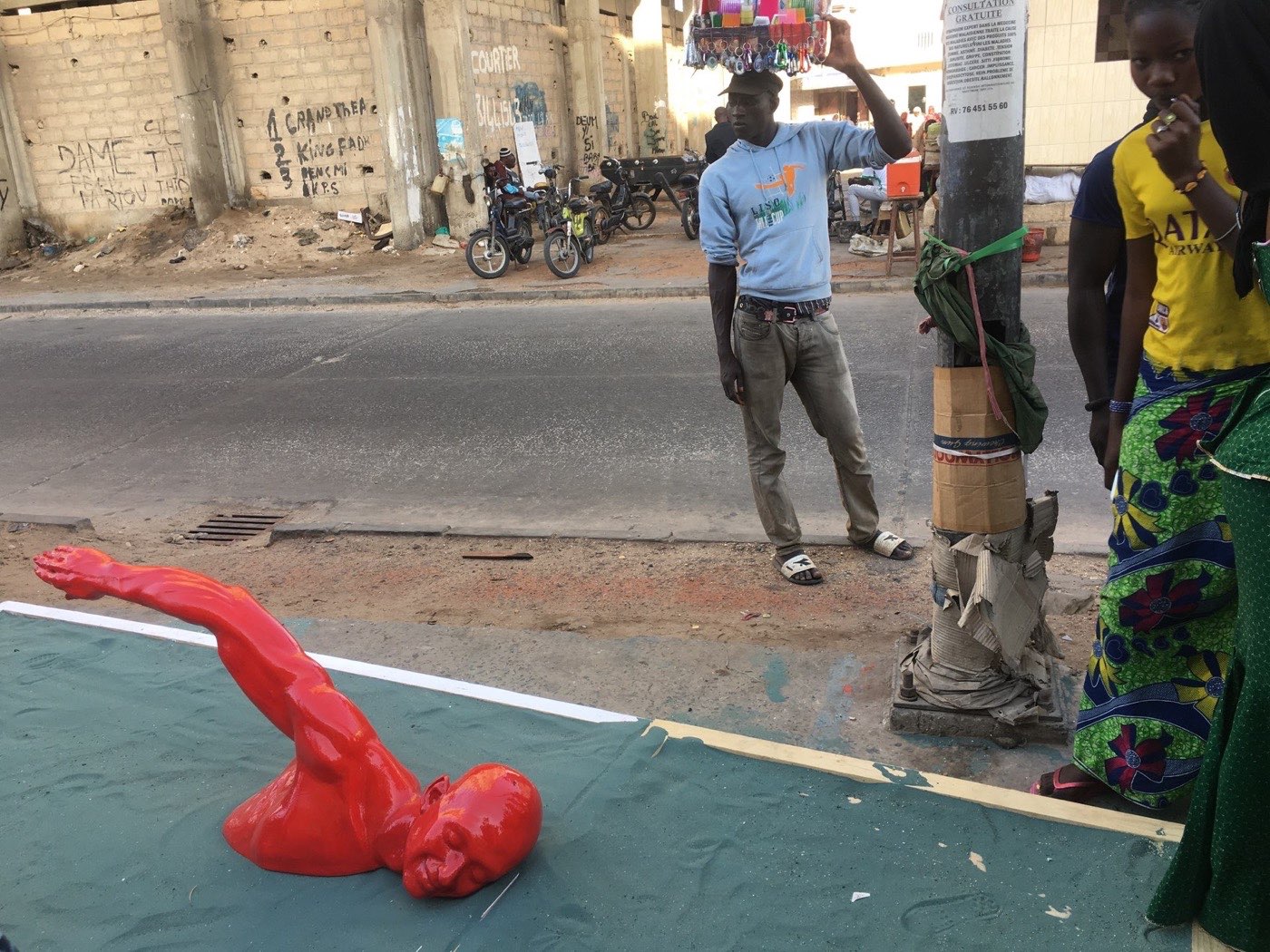
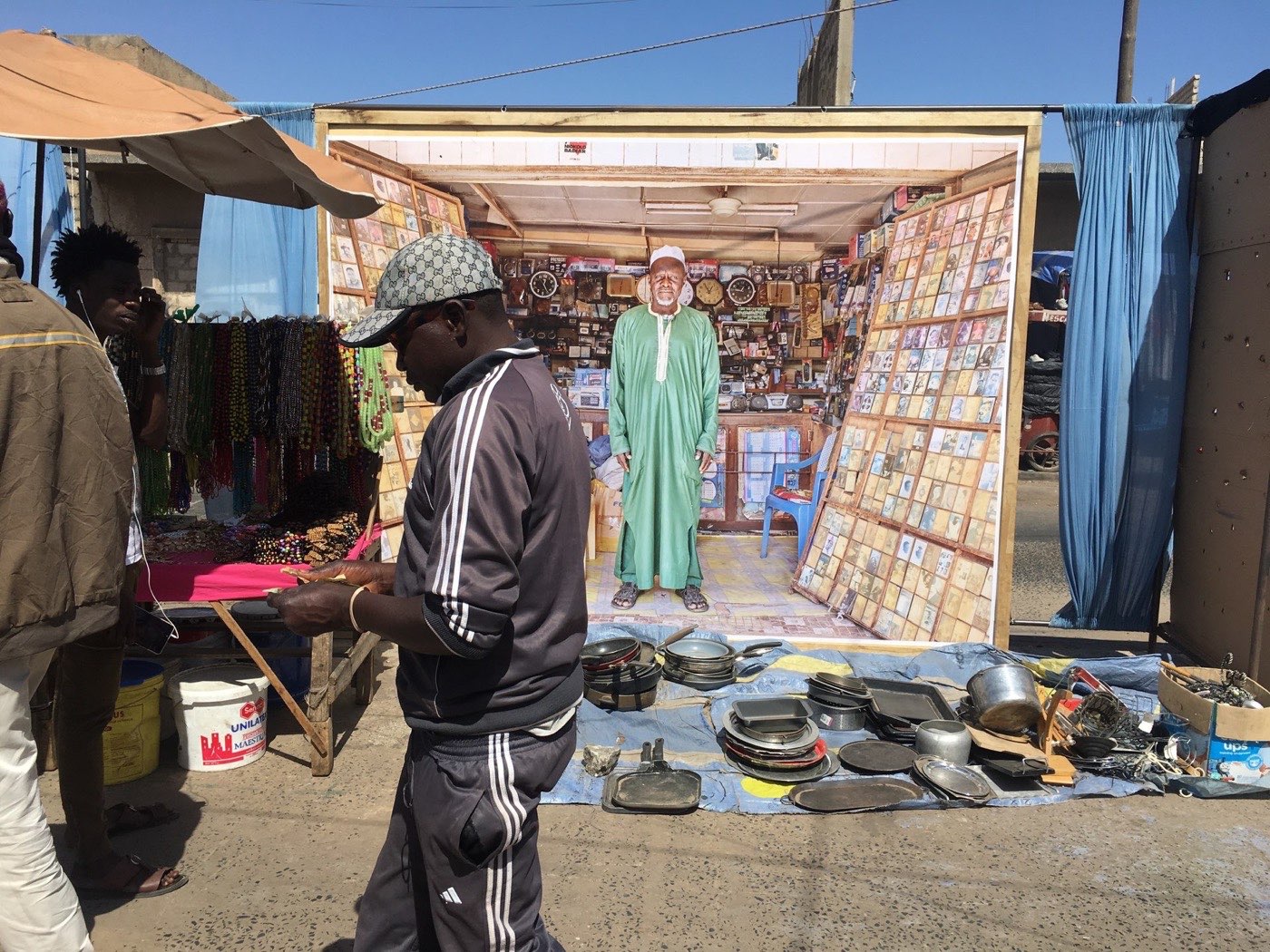
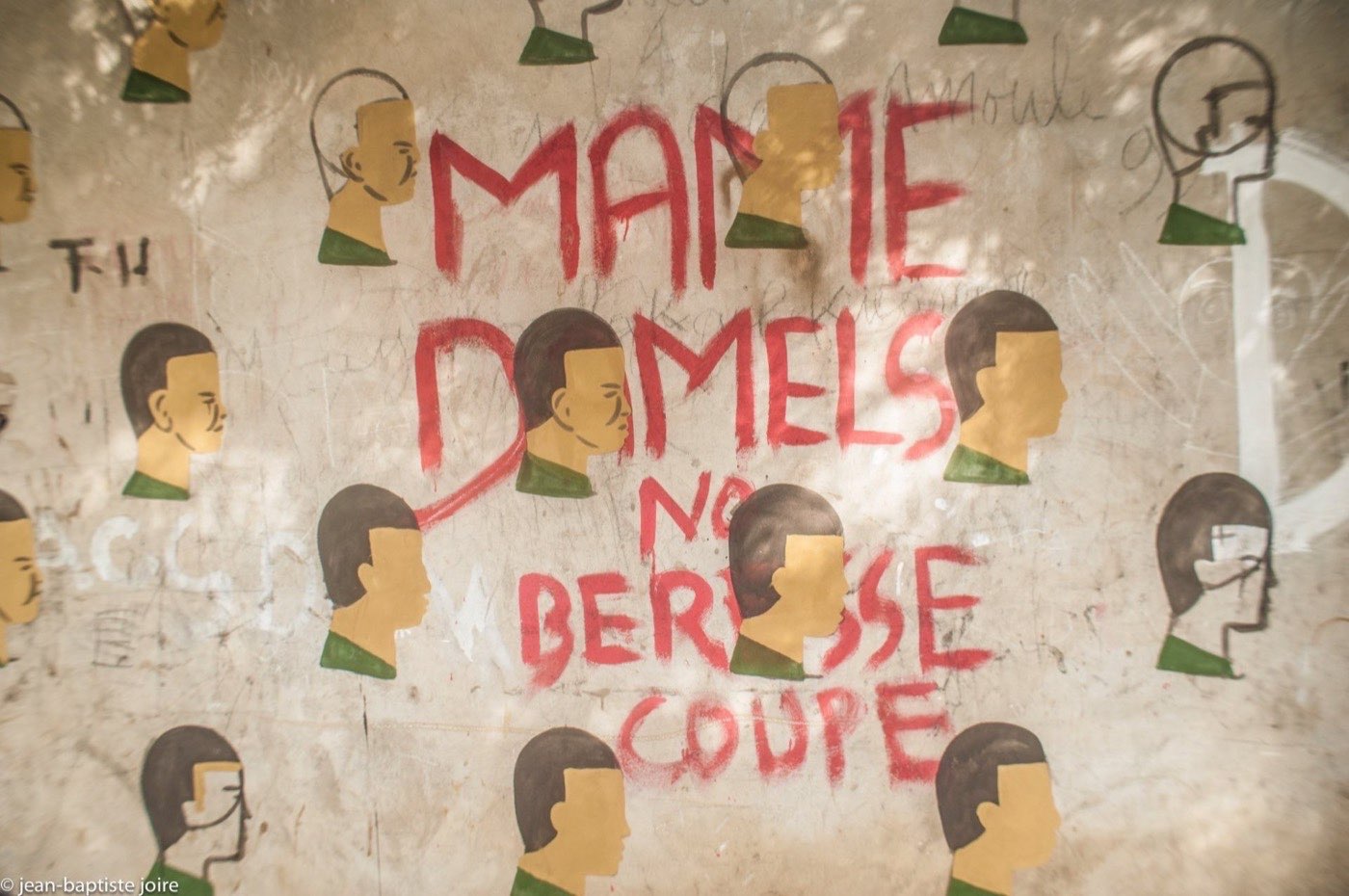
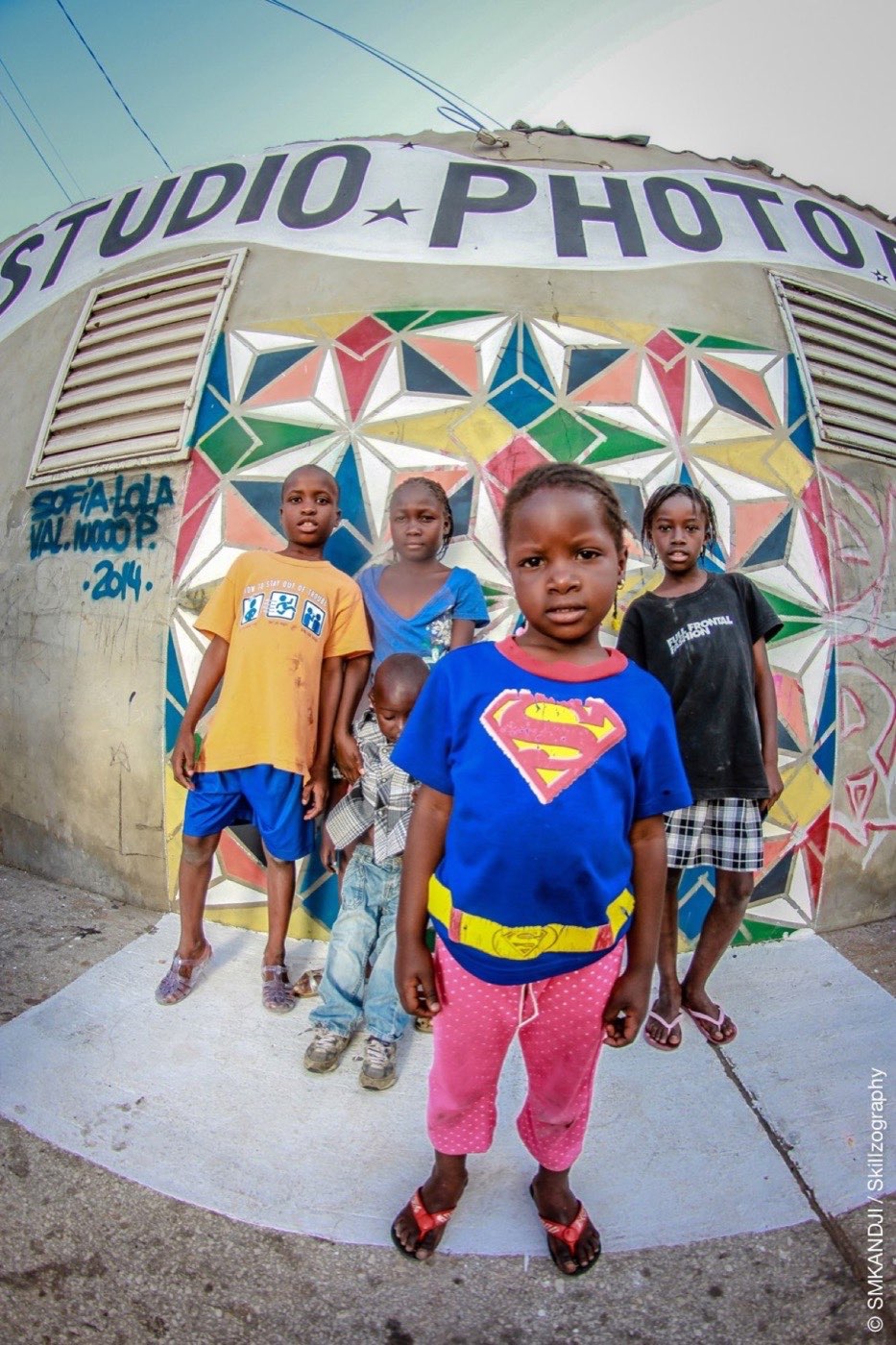
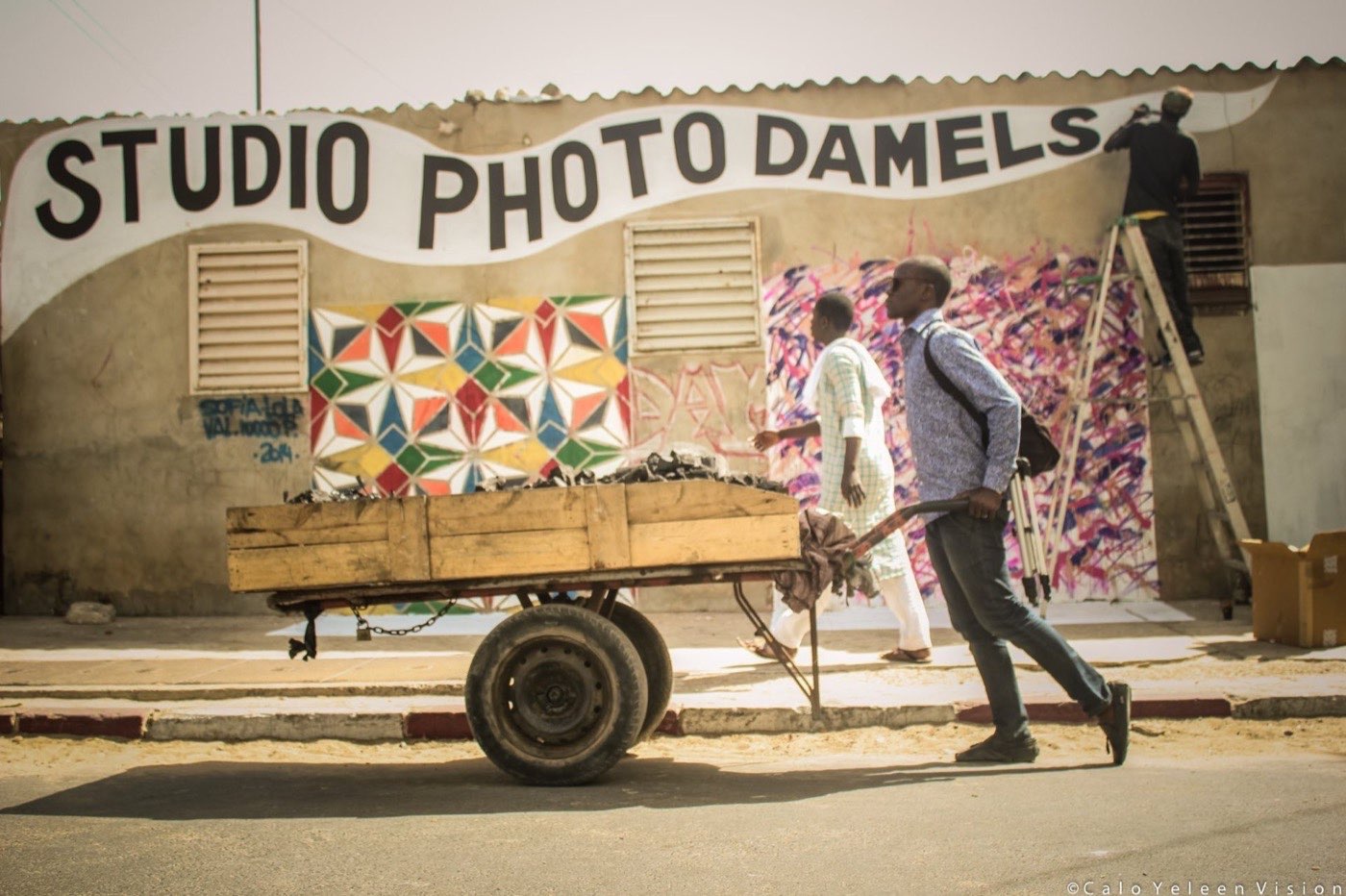
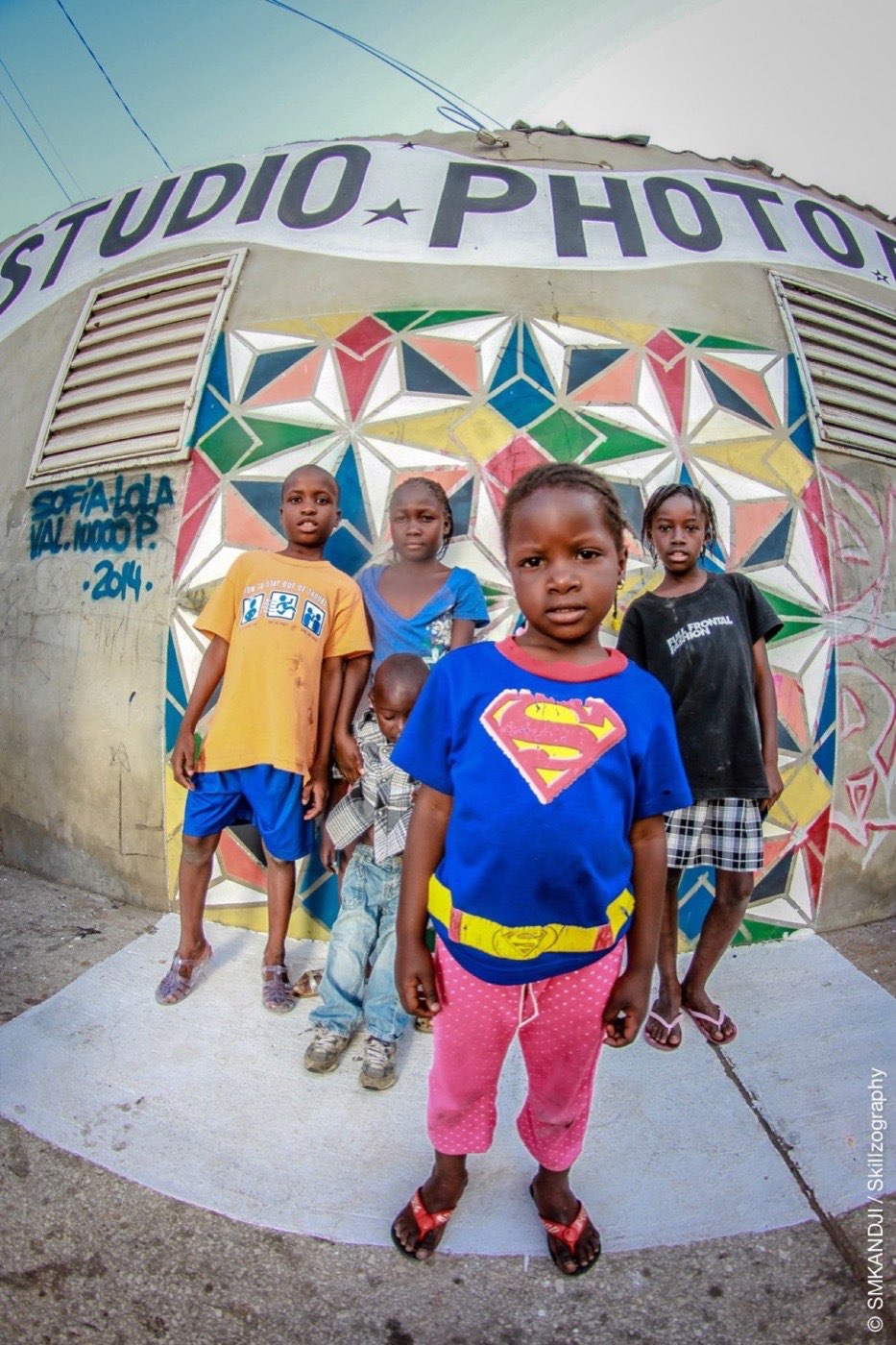
Le Street Art Museum est un musée à ciel ouvert, son accès est libre et gratuit, il n'y a pas d'horaires et il ne ferme jamais ses portes. Des artistes du monde entier viennent poser leur empreinte dans ce creuset de la culture urbaine à Dakar. C'est une proposition curatoriale radicale : ici les murs de la ville remplacent ceux des galeries, les œuvres existent dans leur contexte original : la rue

L'association Yataal Art — du wolof « élargir » — insuffle à son quartier un nouveau visage. Les habitants offrent volontiers leurs façades, rivalisant pour exhiber les plus belles œuvres. Des artistes d'Espagne, d'Italie, de Palestine, du Canada et du Sénégal ont contribué à faire de ce quartier le premier musée à ciel ouvert de street art en Afrique. Le Street Studio prolonge cette dynamique : un studio photo participatif installé dans le quartier.

The Street Art Museum is an open-air museum — free and open access, no set hours, it never closes. Artists from all over the world come to leave their mark in this crucible of urban culture in Dakar. A radical curatorial proposition: here the walls of the city replace gallery walls, the works exist in their original context: the street

The Yataal Art association — from the Wolof "to widen" — gives its neighbourhood a new face. Residents willingly offer their façades, competing to display the most beautiful works. Artists from Spain, Italy, Palestine, Canada and Senegal have contributed to making this neighbourhood the first open-air street art museum in Africa. The Street Studio extends this dynamic: a participative photo studio installed in the neighbourhood.

Musée à ciel ouvertStreet artEspace publicQuartierStudio photo participatif
05

Interférences · Les Petites Pierres · Médina · Dakar · 2013–2014

Collective performance · Interférences · Les Petites Pierres · Dakar

Demain dans nos 2 mains

2013 – 2014

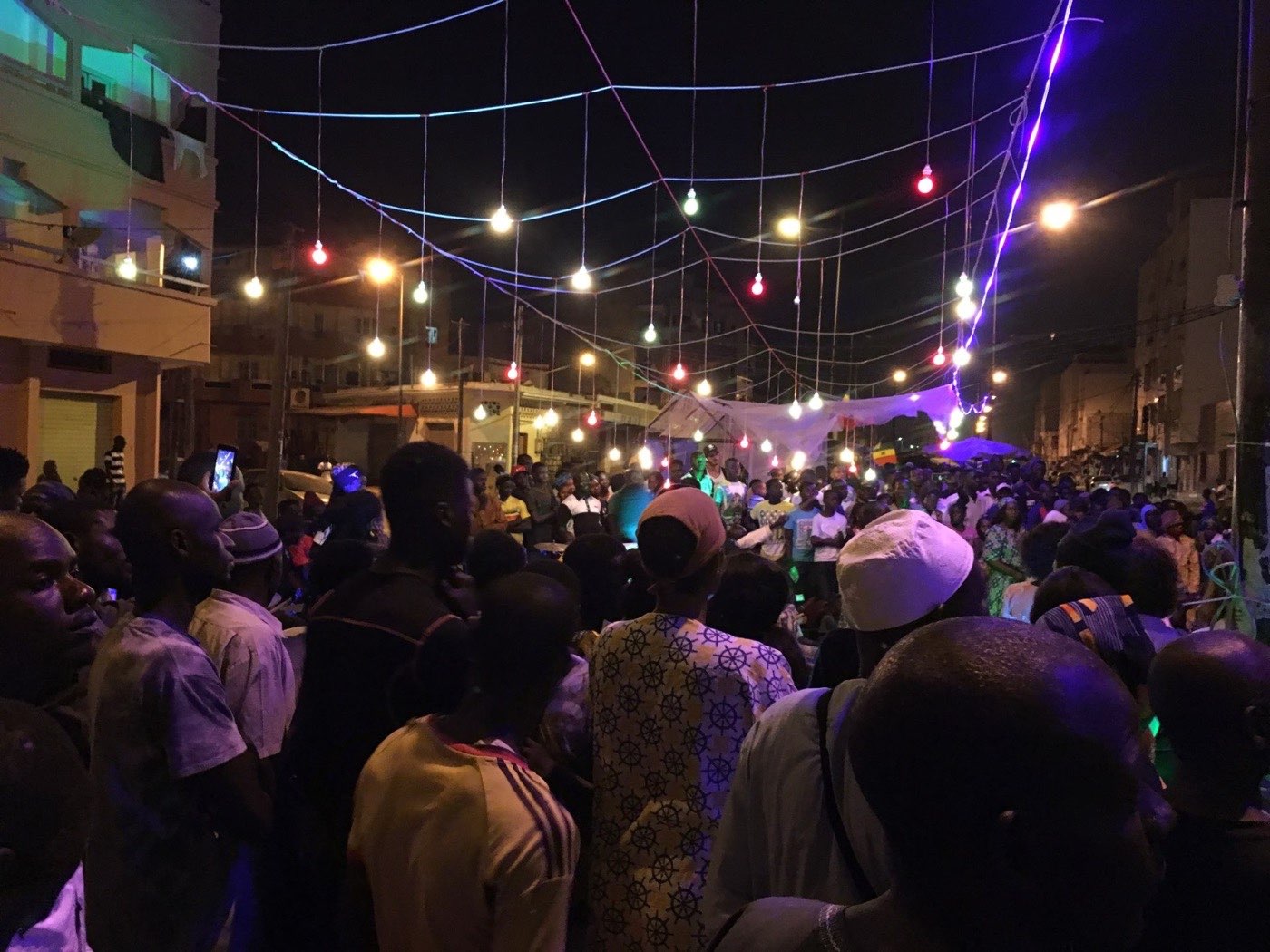
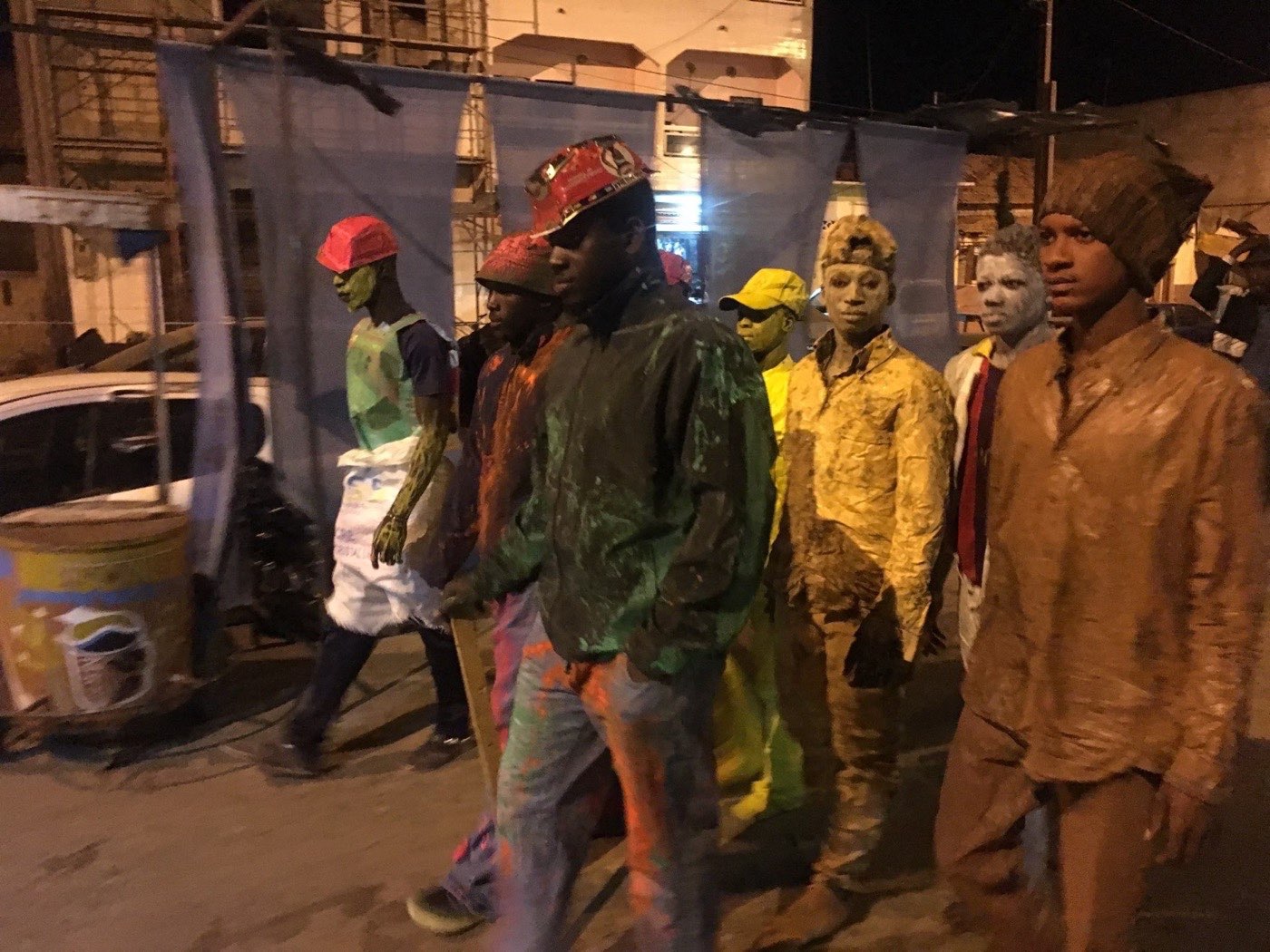
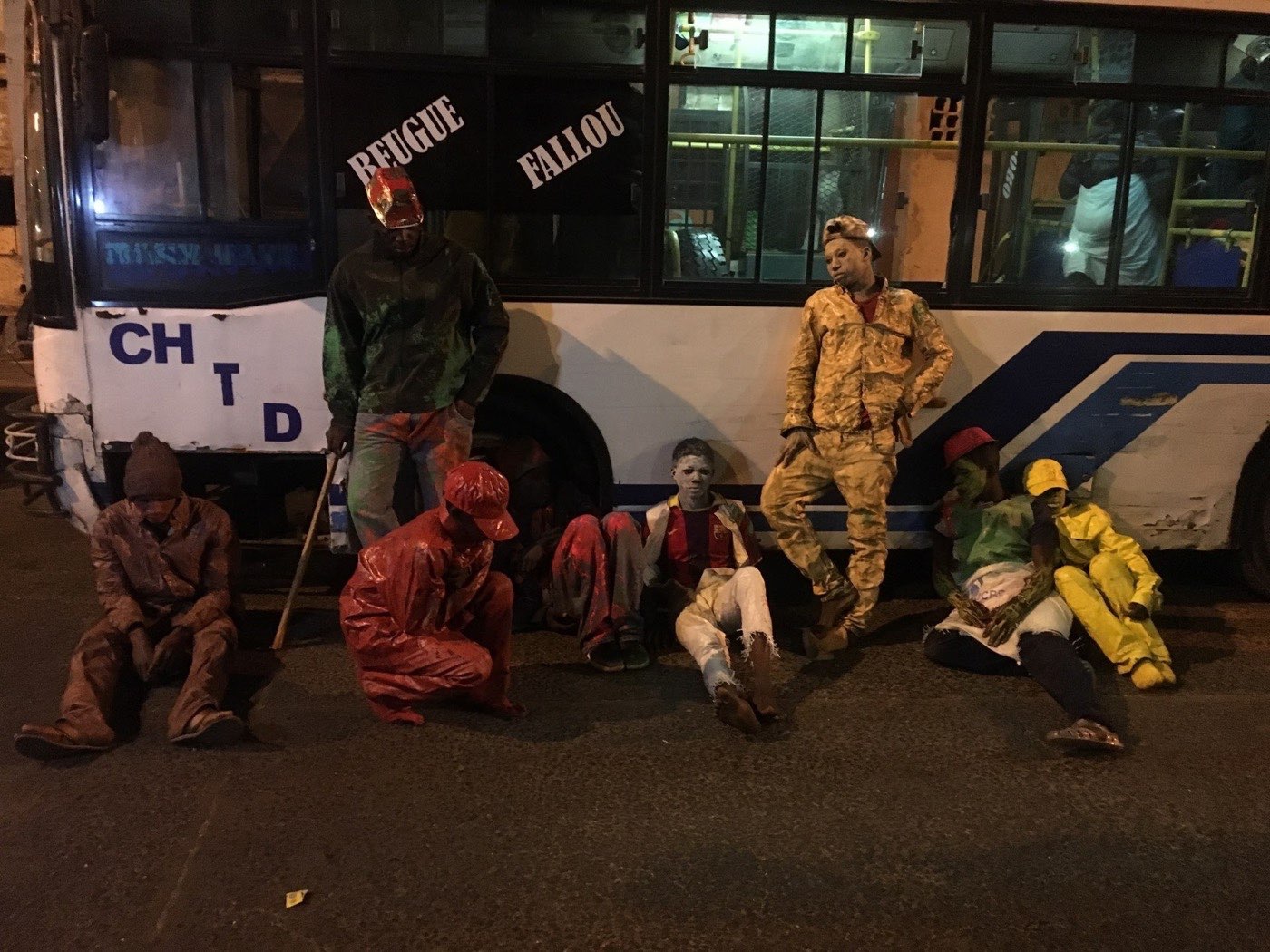
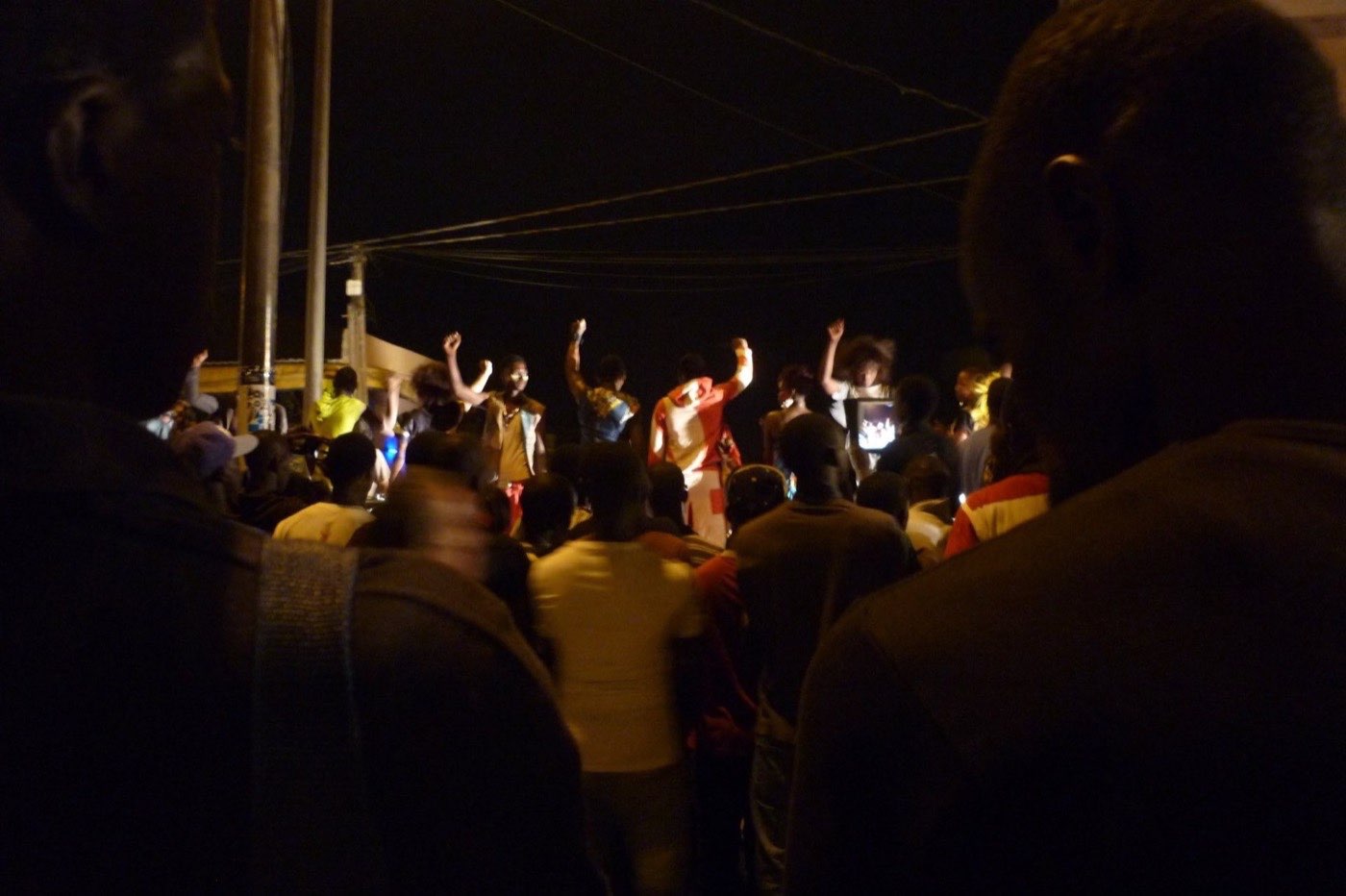
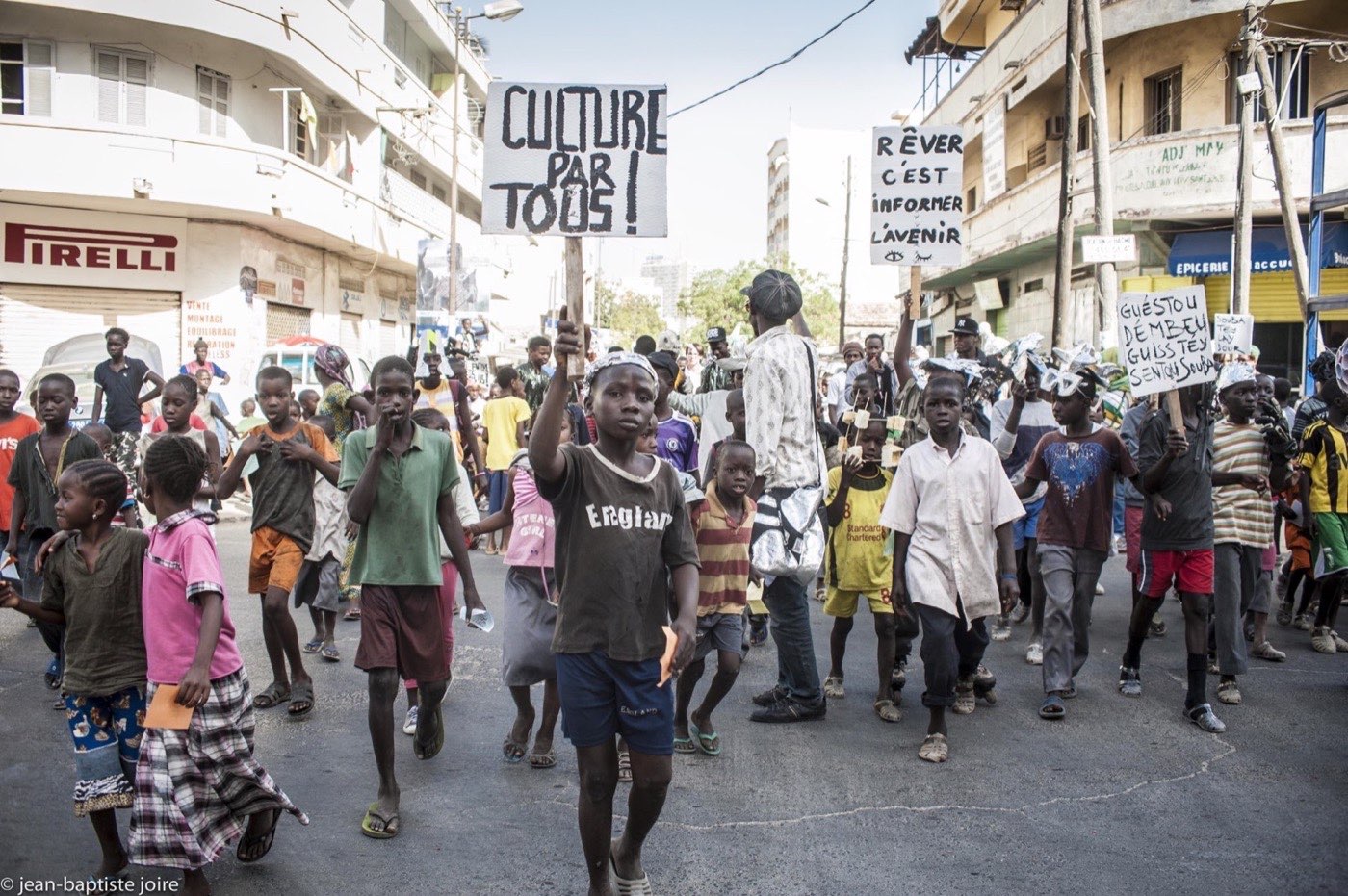
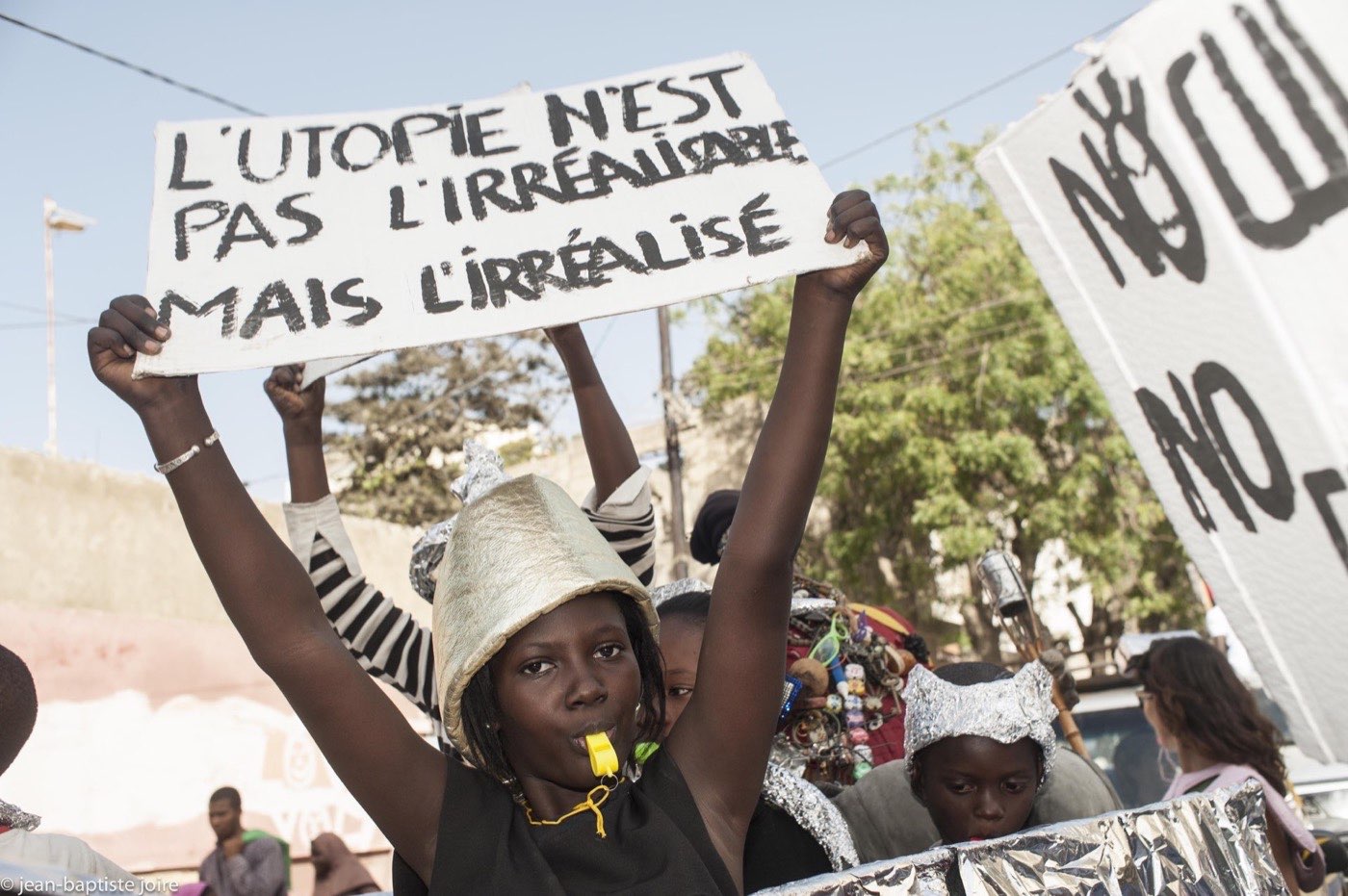
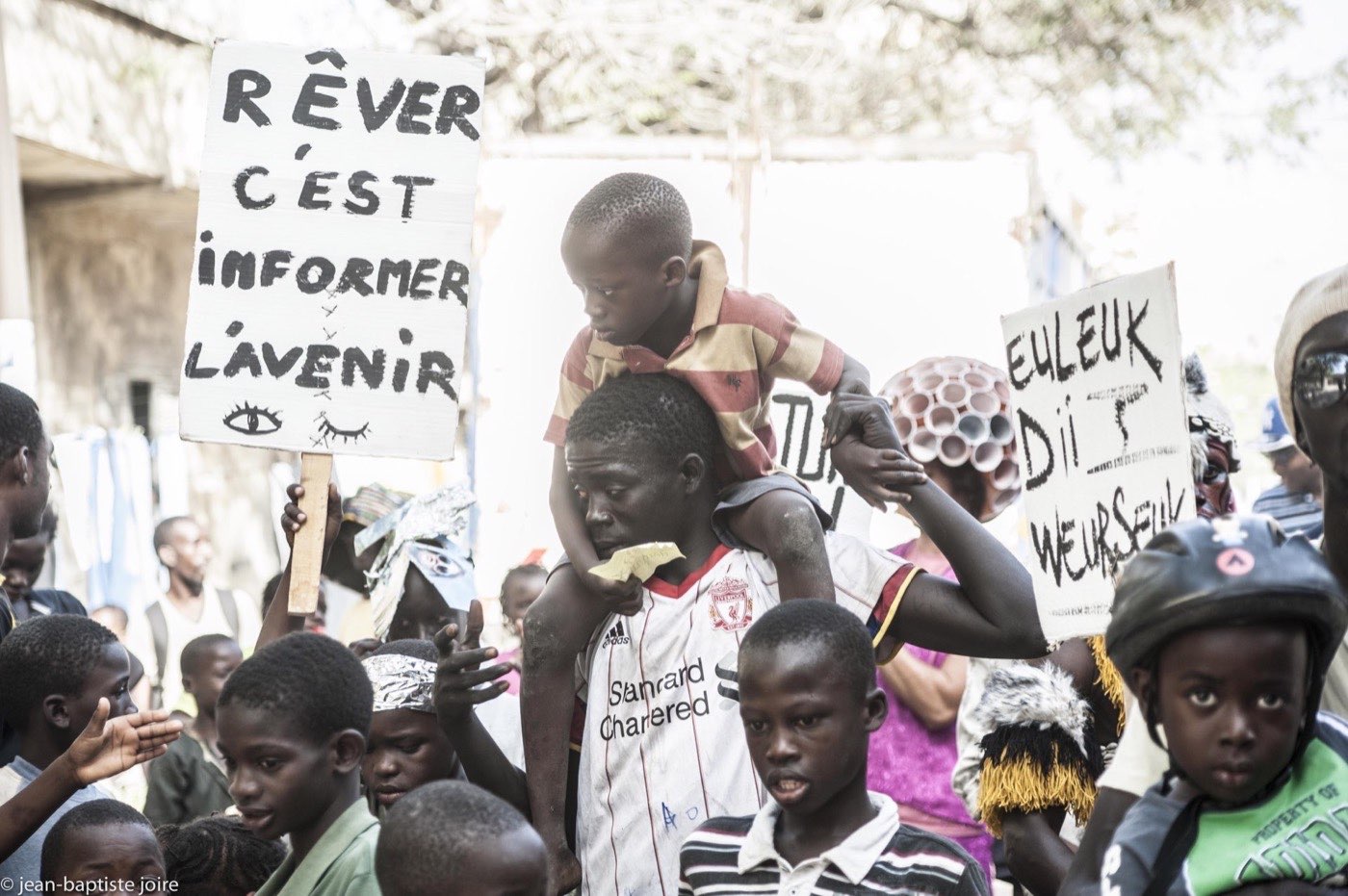
Dans le cadre d'Interférences, Les Petites Pierres lancent une performance collective en mode FlashMob : entre carnaval et manifestation, un mouvement collectif qui inonde la Médina pour revendiquer le rôle de l'art dans la création de la ville du futur

Within the Interférences festival, Les Petites Pierres launch a collective FlashMob performance: between carnival and demonstration, a collective movement flooding the Médina to claim art's role in building the city of the future

06

Coordination éditoriale · Éditions Now Now ! · Dakar · 2018

Collective publication · Editorial coordination · Dakar

Fréquence Pain-thon — Écoute plus souvent les choses

2017

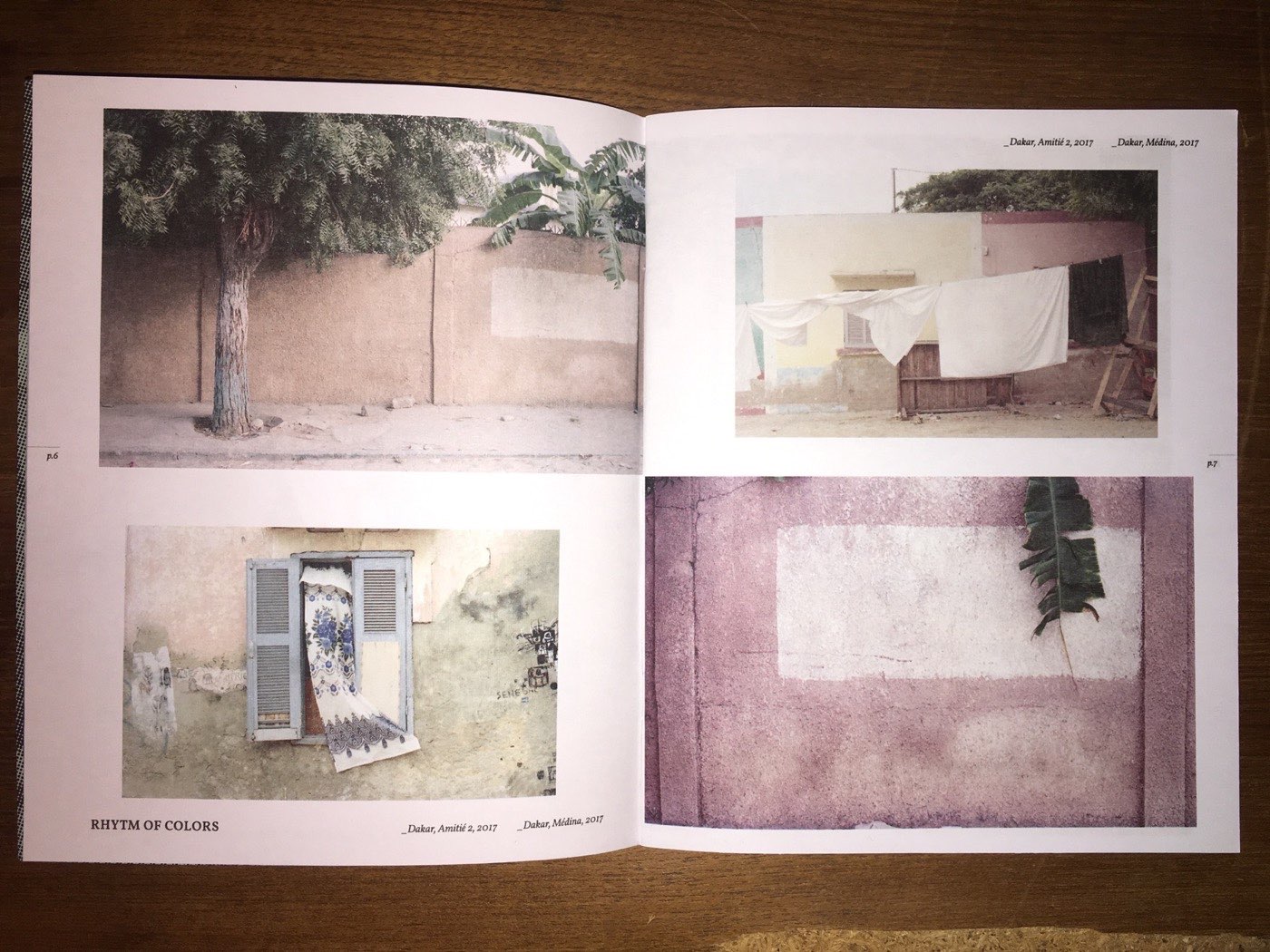
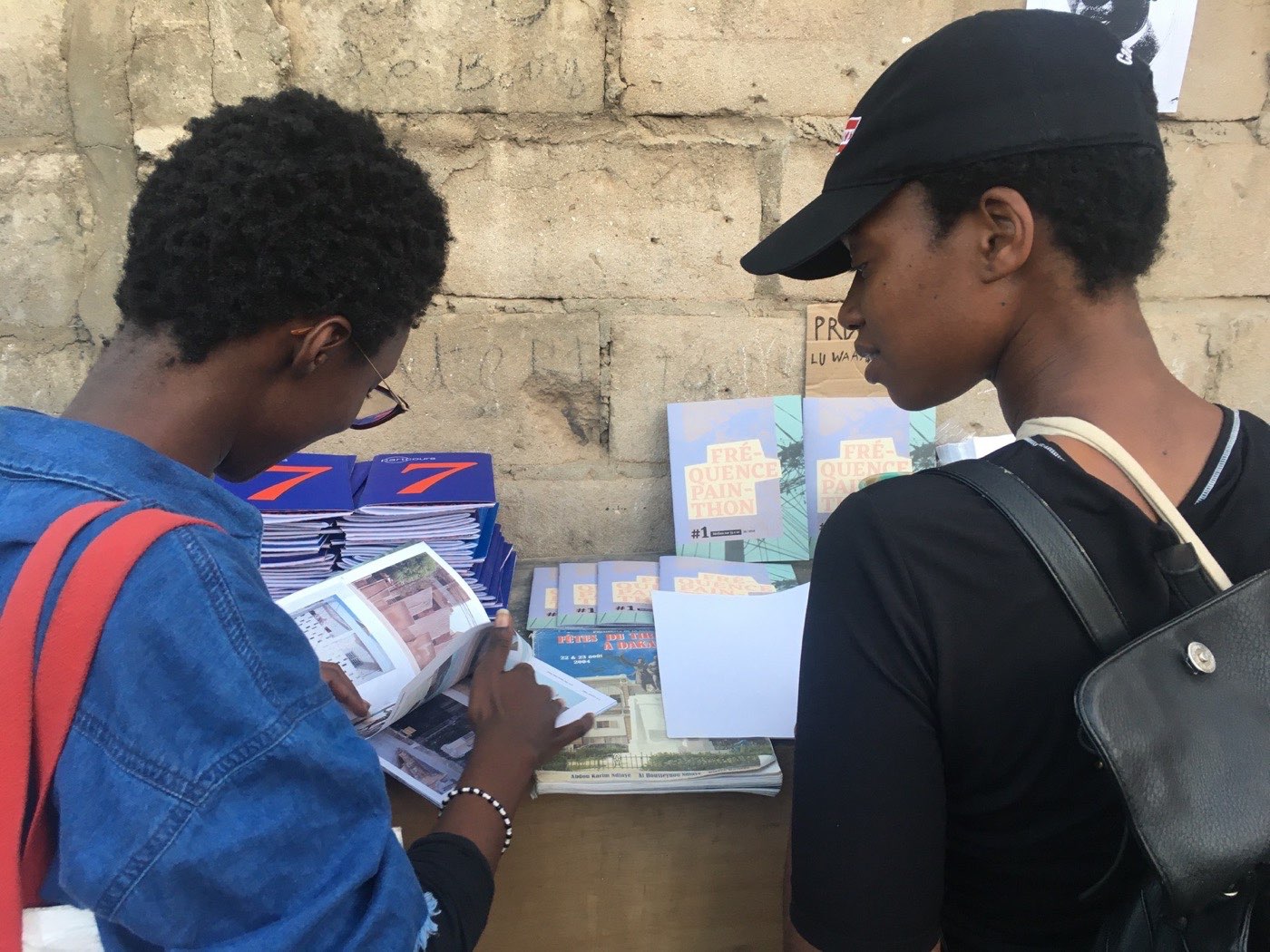
« Par Fréquence nous signifions la multiplicité des urbanités qui coexistent dans cette ville. » Mamadou Diallo et Maya Varichon El Zanaty ont coordonné cette publication. Maya a publié des textes et photographies, sous le titre : Écoute plus souvent les choses. Éditions Now Now !, Dakar, 2018

"By Frequency we mean the multiplicity of urbanities that coexist in this city." Mamadou Diallo and Maya Varichon El Zanaty coordinated this collective publication. Maya contributed original texts and photographs under the title: Écoute plus souvent les choses. Éditions Now Now!, Dakar, 2018

Poésie urbainePhotographieUrbanitésMamadou DialloKatia GolovkoAlioune SambBoubacar Boris Diop

Axe 3

Axis 3

Afrofuturismes

Afrofuturisms

Comment donner corps au sentiment d'habiter le monde « comme un alien sur sa propre planète depuis le XVIIIe siècle » (Kodwo Eshun) ? Ces projets s'emparent de cette condition pour la transmuter en (science) fiction : voyages dans le temps, univers hybrides, esthétiques mutantes et visions post-modernes. Une génération d'artistes africains se réapproprie le récit de leur histoire, réinvente leurs mythologies et impose de nouvelles esthétiques, ouvrant la voie à d'autres modalités narratives et représentations identitaires

How to give body to the feeling of inhabiting the world "like an alien on one's own planet since the 18th century" (Kodwo Eshun)? These projects seize upon this condition and transmute it into (science) fiction: journeys through time, hybrid universes, mutant aesthetics and postmodern visions. A generation of African artists reclaims the narrative of their history, reinvents their mythologies and imposes new aesthetics, opening the way to other narrative modalities and identity representations

01

Co-commissariat · Selly Raby Kane · Biennale Dak'Art 2016

Co-curated with Selly Raby Kane · Dak'Art Biennial 2016

Elsewhen

The simple truth is that you are trapped between two planes of existence which are beginning to converge

The simple truth is that you are trapped between two planes of existence which are beginning to converge

Jonathan Dotse
Dak'Art 2016

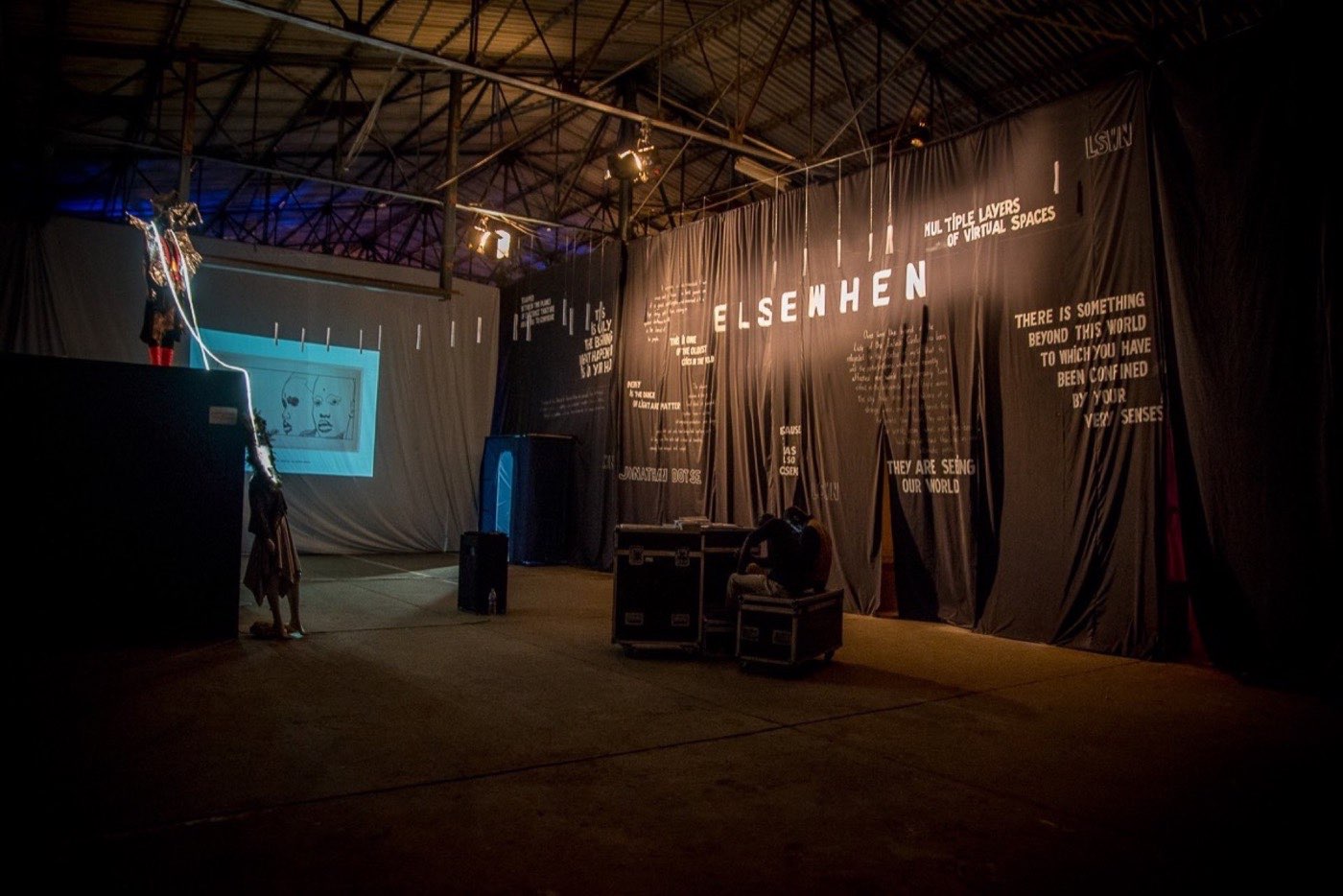
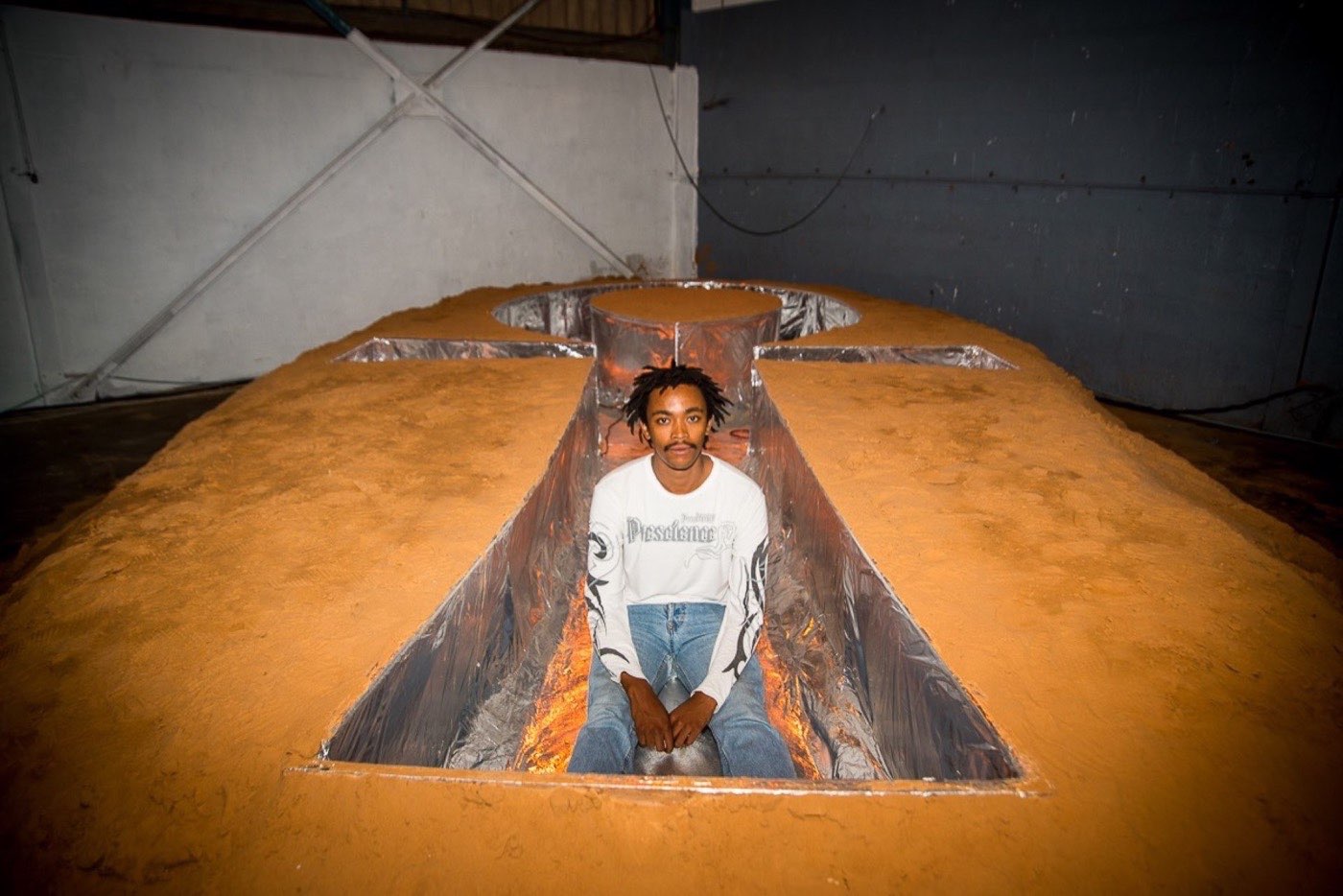
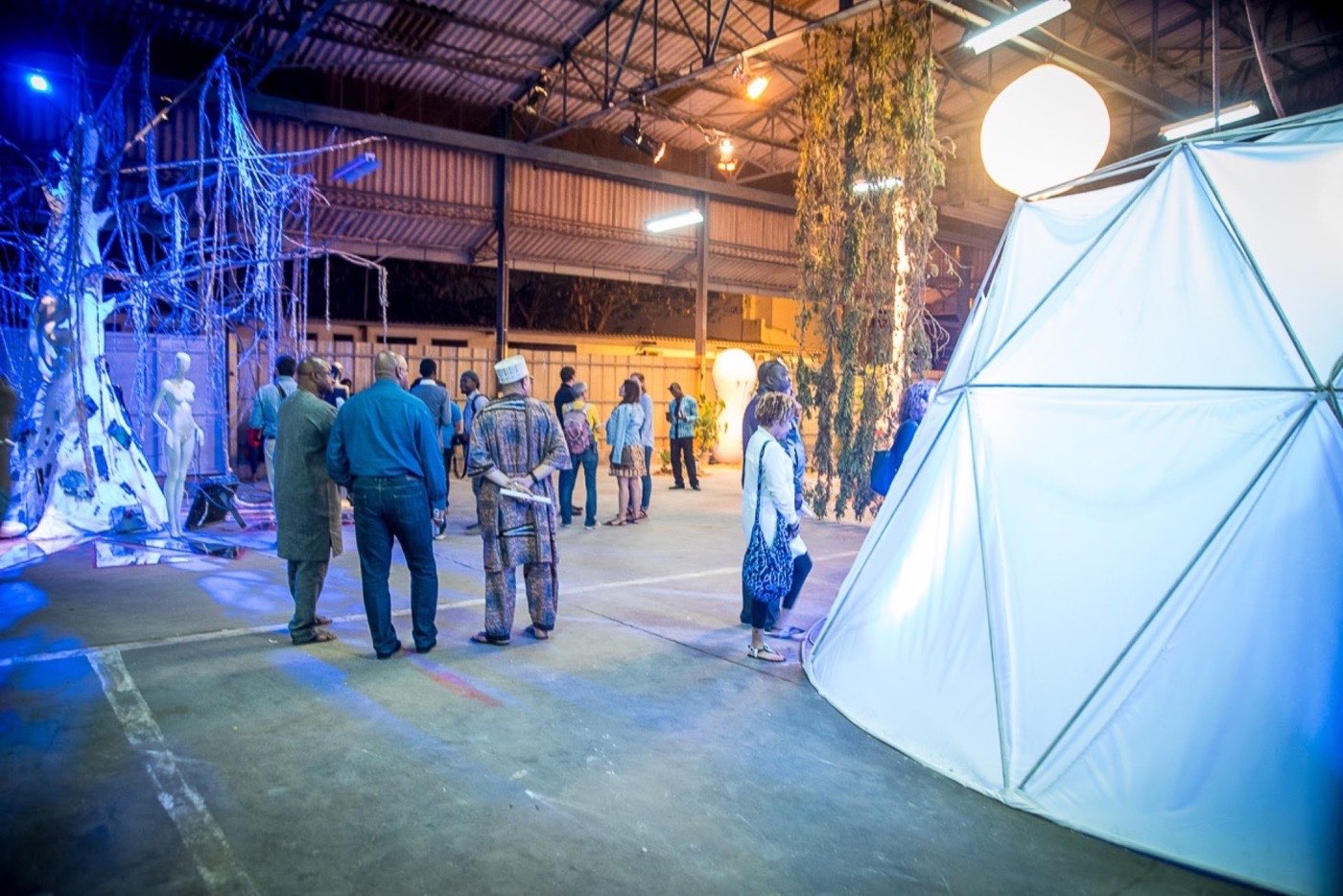
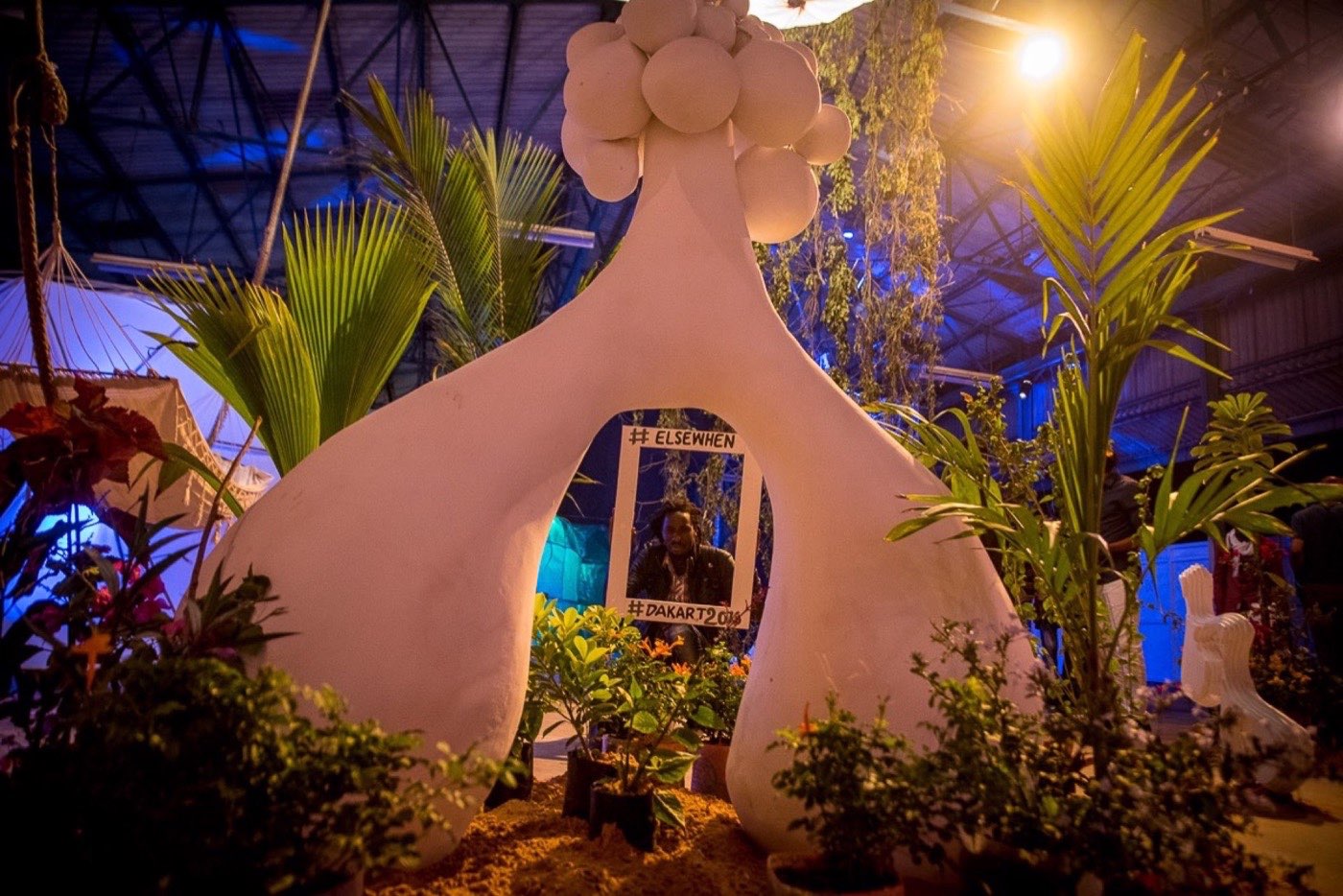
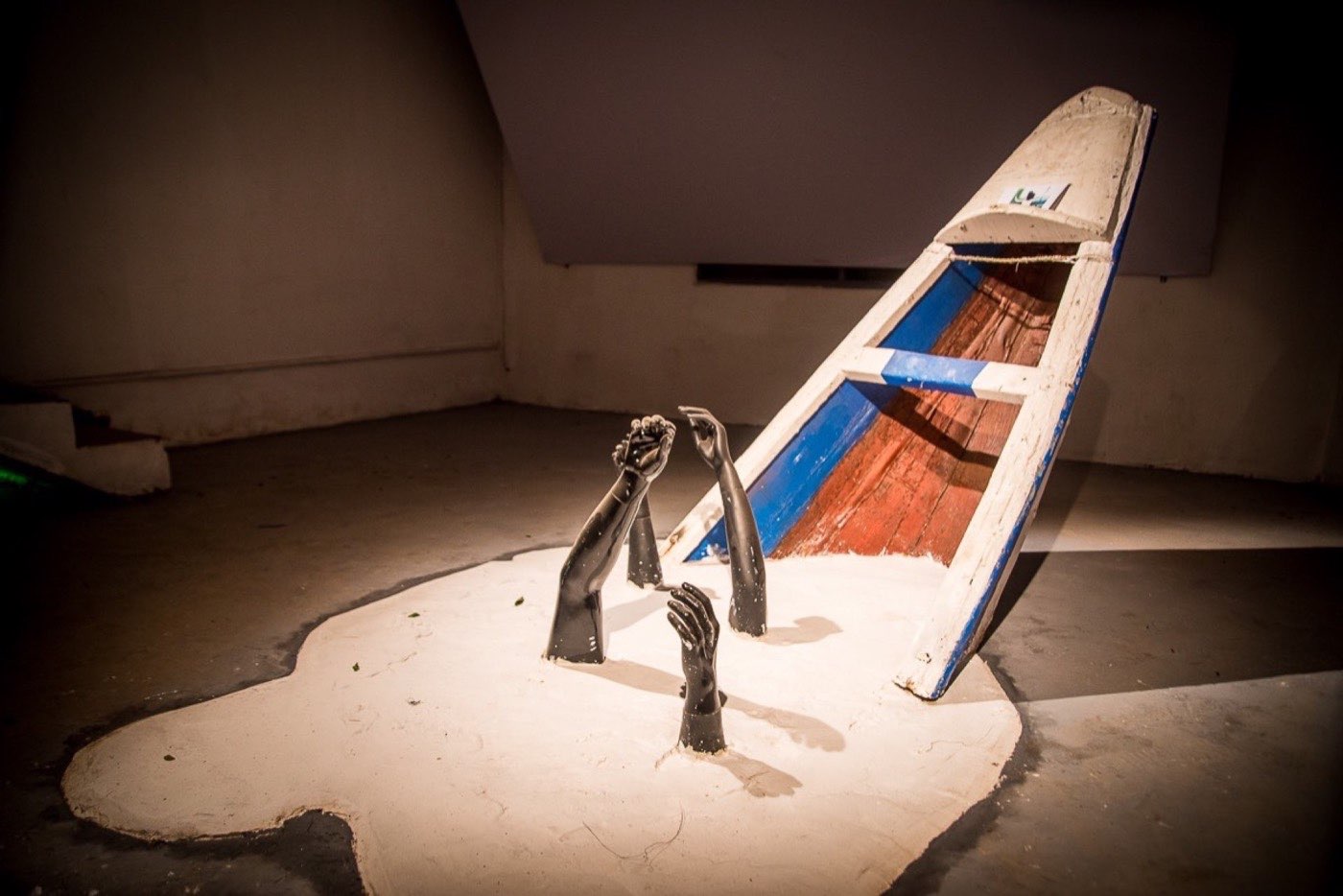
Et si, dans une réalité alternative, l'Histoire de l'Afrique avait été autre ? Elsewhen — elsewhere in time — est la fiction d'un autre temps, une brèche dans l'univers des possibles qui ouvre l'accès à de nouvelles perspectives sur l'Afrique. Une réécriture qui ne nie, ne justifie, ni ne remplace — mais bifurque selon les lignes du fantastique. Ici, l'Afrique explore son double imaginaire.

What if, in an alternative reality, the History of Africa had been otherwise? Elsewhen — elsewhere in time — is the fiction of another time, a breach in the universe of possibilities that opens access to new perspectives on Africa. A rewriting that neither denies, justifies, nor replaces — but bifurcates along the lines of the fantastical. Here, Africa explores its imaginary double.

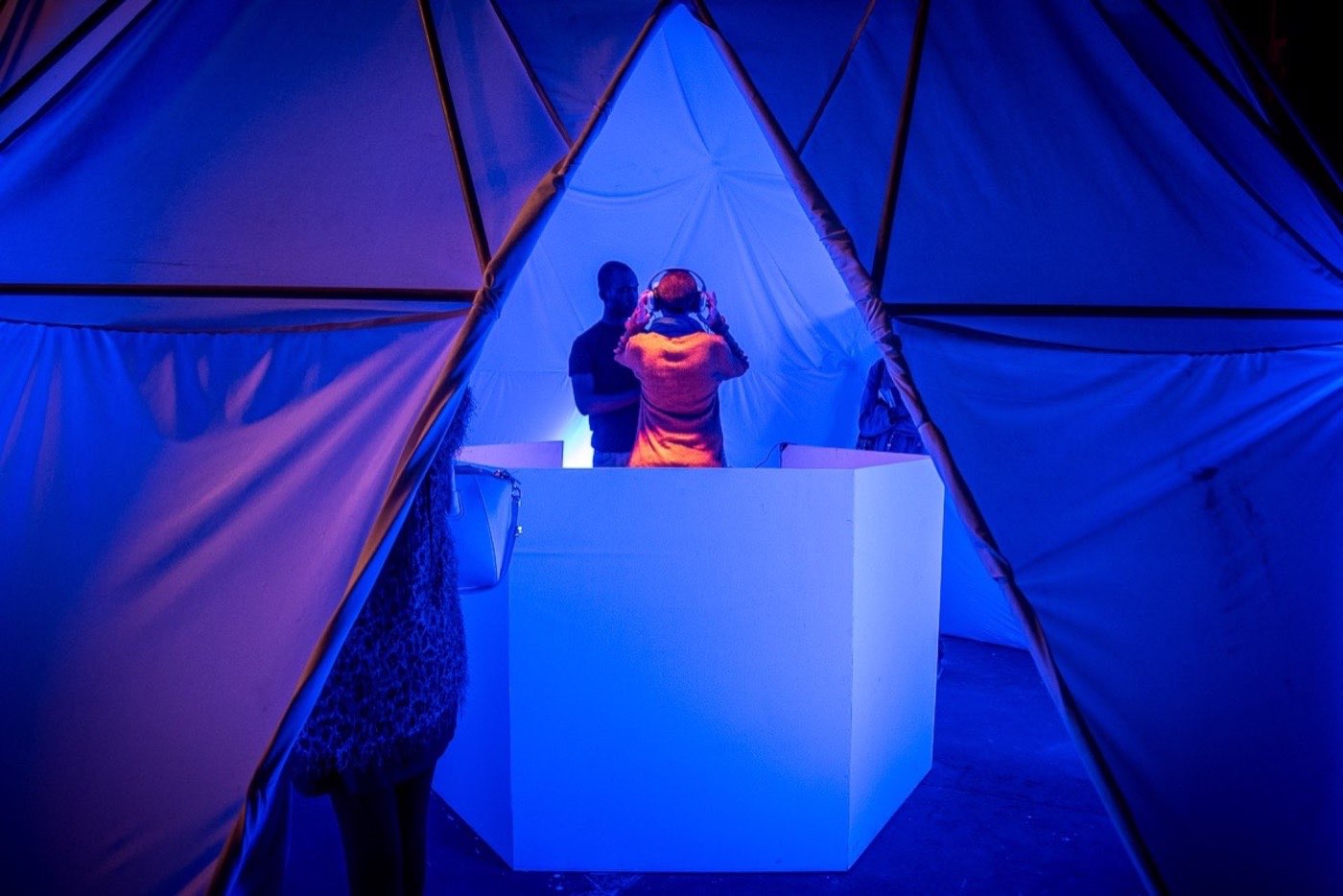
10 artistes africains venus de 5 pays — Sénégal, Kenya, Côte d'Ivoire, Ghana, Afrique du Sud — ayant en commun une génération cosmopolite marquée par une culture artistique révolutionnée par le digital. Une trame commune, fiction d'une réalité temporelle alternative : Elsewhen. Un bus aveugle, menant dans un lieu tenu secret.

Une constellation de figures créatives et inclassables — auteurs, vidéastes, photographes, artistes d'installation, designers, créateurs sonores — chacun interprète Elsewhen à travers son prisme, donnant corps à un récit qui se ramifie en micro-histoires exprimant un univers de possibilités.

Avec : Bogossi Sekhukhuni, Paul Sika, Jonathan Dotse, Jim Chu Chu, Blitz l'Ambassadeur, Mamadou Diallo, Blinky, Selly Raby Kane, Ibaaku.

Un projet réalisé grâce au soutien de l'Ambassade des USA à Dakar, la Mairie de Dakar, Big World Cinéma et Design Indaba (Afrique du Sud).

10 African artists from 5 countries — Senegal, Kenya, Côte d'Ivoire, Ghana, South Africa — sharing a cosmopolitan generation shaped by an artistic culture revolutionised by digital technology. One common thread, the fiction of an alternative temporal reality: Elsewhen. A blind bus, leading to a secret location.

A constellation of creative and uncategorisable figures — authors, filmmakers, photographers, installation artists, designers, sound creators — each interpreting Elsewhen through their own lens, giving body to a narrative that branches into micro-histories expressing a universe of possibilities.

With: Bogossi Sekhukhuni, Paul Sika, Jonathan Dotse, Jim Chu Chu, Blitz l'Ambassadeur, Mamadou Diallo, Blinky, Selly Raby Kane, Ibaaku.

A project made possible with the support of the US Embassy in Dakar, the City of Dakar, Big World Cinéma and Design Indaba (South Africa).

AfrofuturismeExpérience immersiveRéalité virtuelleJonathan DotseIbaakuPaul SikaBogosi SekhukhuniJim Chu ChuGhanaAfrique du SudCôte d'Ivoire
02

Commissariat · PartCours 2016 · Espace Medina · Dakar

Curating · PartCours 2016 · Espace Medina · Dakar

Xalat — de Cheikha

Entre folie et sagesse, spiritualité et surnaturel

Between madness and wisdom, spirituality and the supernatural

2016

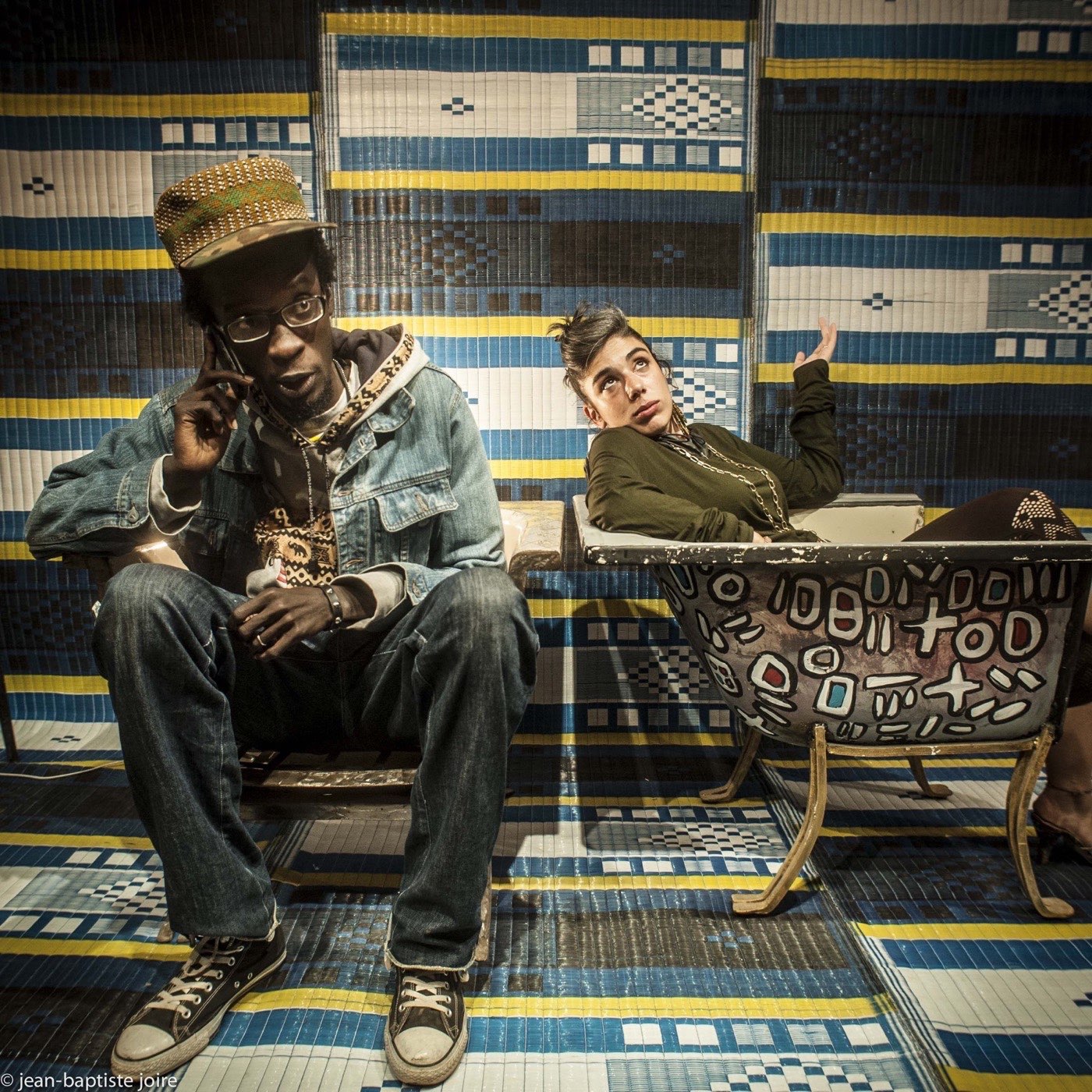
Xalat — « la pensée » en wolof — invite à explorer la réalité cachée derrière le monde des apparences : là où se révèlent les esprits nichés dans les planches de bois sur lesquelles travaillent les poissonniers, où d'objets abandonnés jaillissent des formes organiques. Partout se tracent les lignes d'un univers graphique aux accents soufis, à l'énergie psychédélique et l'esthétique Pop. Une installation d'art optique pour une expérience décalée et délirante, entre folie et sagesse, spiritualité et surnaturel

Cheikh Bamba Loum dit Cheikha développe une recherche plastique qui traverse la mode, la musique et les arts de la scène, le design, la sculpture et les arts visuels. Audacieux et transgressif, il tisse, au-delà de sa recherche sur le vêtement et le design autour du corps vivant, une démarche qui interroge tous les supports possibles comme conteneurs de significations — autant d'éléments de recherche pour un engagement sociétal imprégné de spiritualité.

Xalat — "thought" in Wolof — invites an exploration of the reality hidden behind the world of appearances: where spirits reveal themselves in the wooden boards of fishmongers' stalls, where abandoned bathtubs give rise to organic forms. Everywhere the lines of a graphic universe are traced — Sufi accents, psychedelic energy and Pop aesthetics. An optical art installation for a disorienting and delirious experience, between madness and wisdom, spirituality and the supernatural

Cheikh Bamba Loum known as Cheikha develops a plastic research that traverses fashion, music and the performing arts, design, sculpture and the visual arts. Audacious and transgressive, beyond his research on clothing and design around the living body, he pursues an approach that interrogates all possible supports as containers of meaning — as many elements of research for a societal engagement steeped in spirituality.

Art optiqueSculptureBaye FallSoufismePsychédéliqueCheikhaSpiritualité
03

Direction artistique · Les Petites Pierres · Gare de Dakar · 2013

Fashion show · Afro-futurist · Les Petites Pierres · Dakar

Alien Cartoon — Selly Raby Kane

2012 – 2014

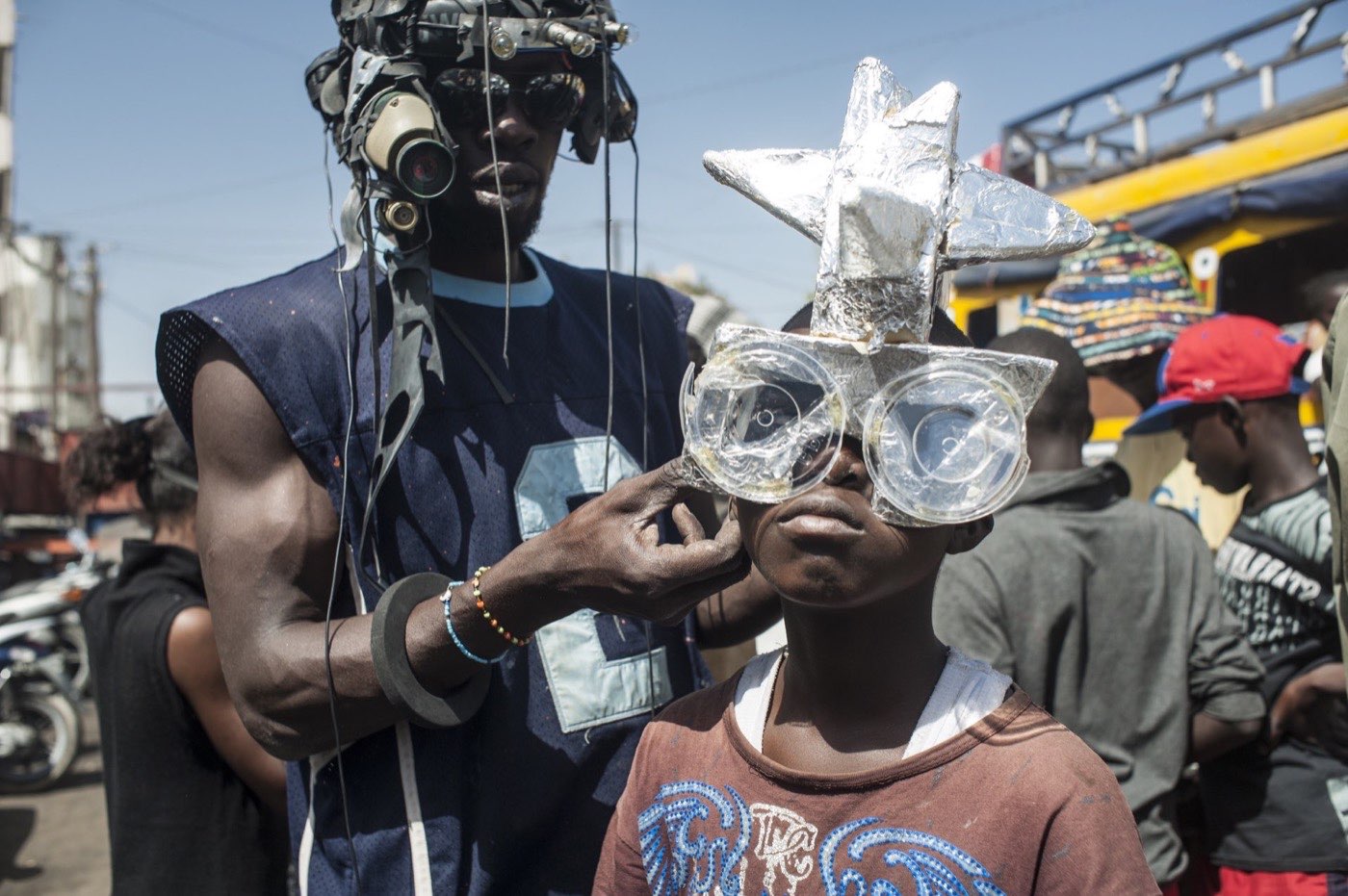
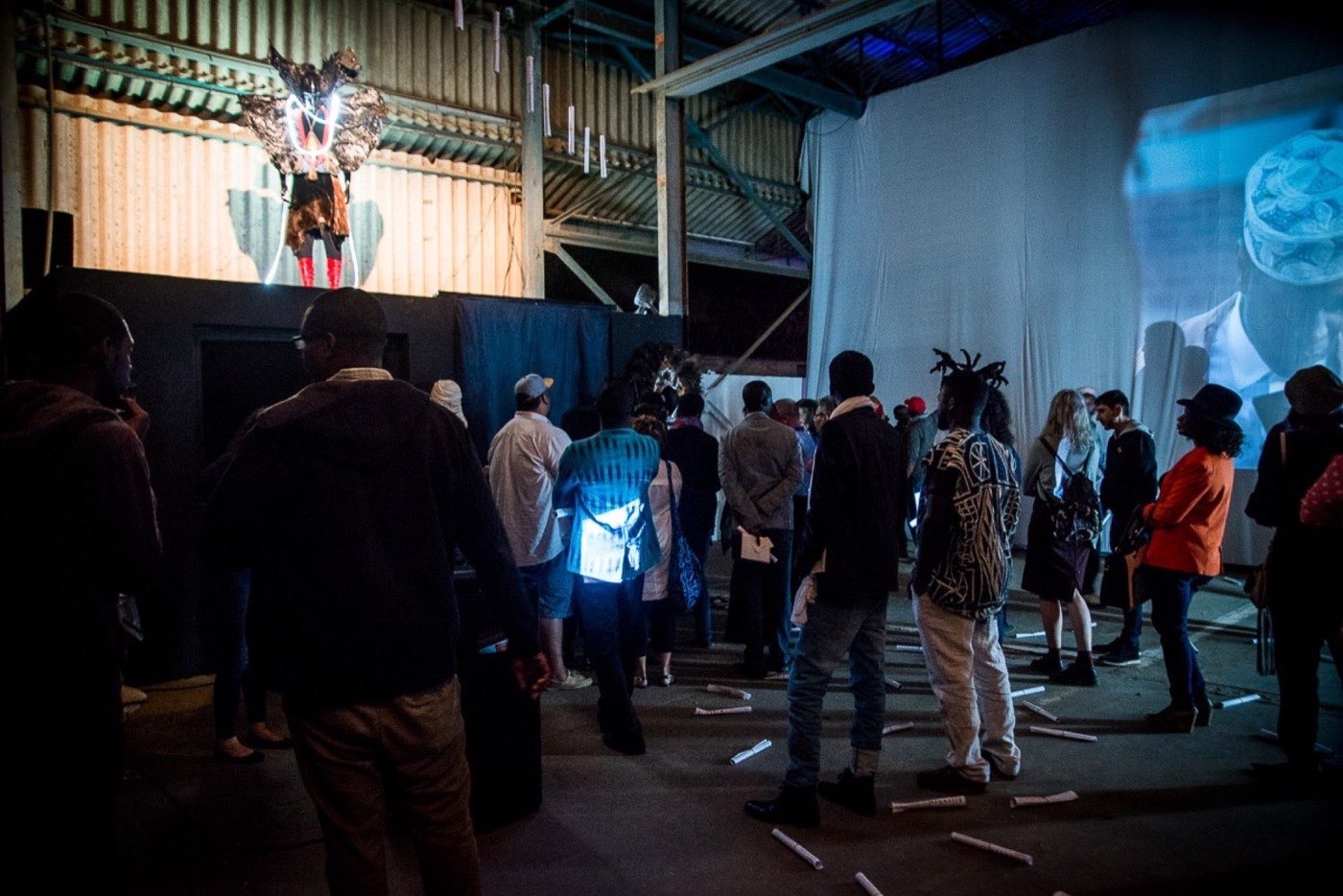
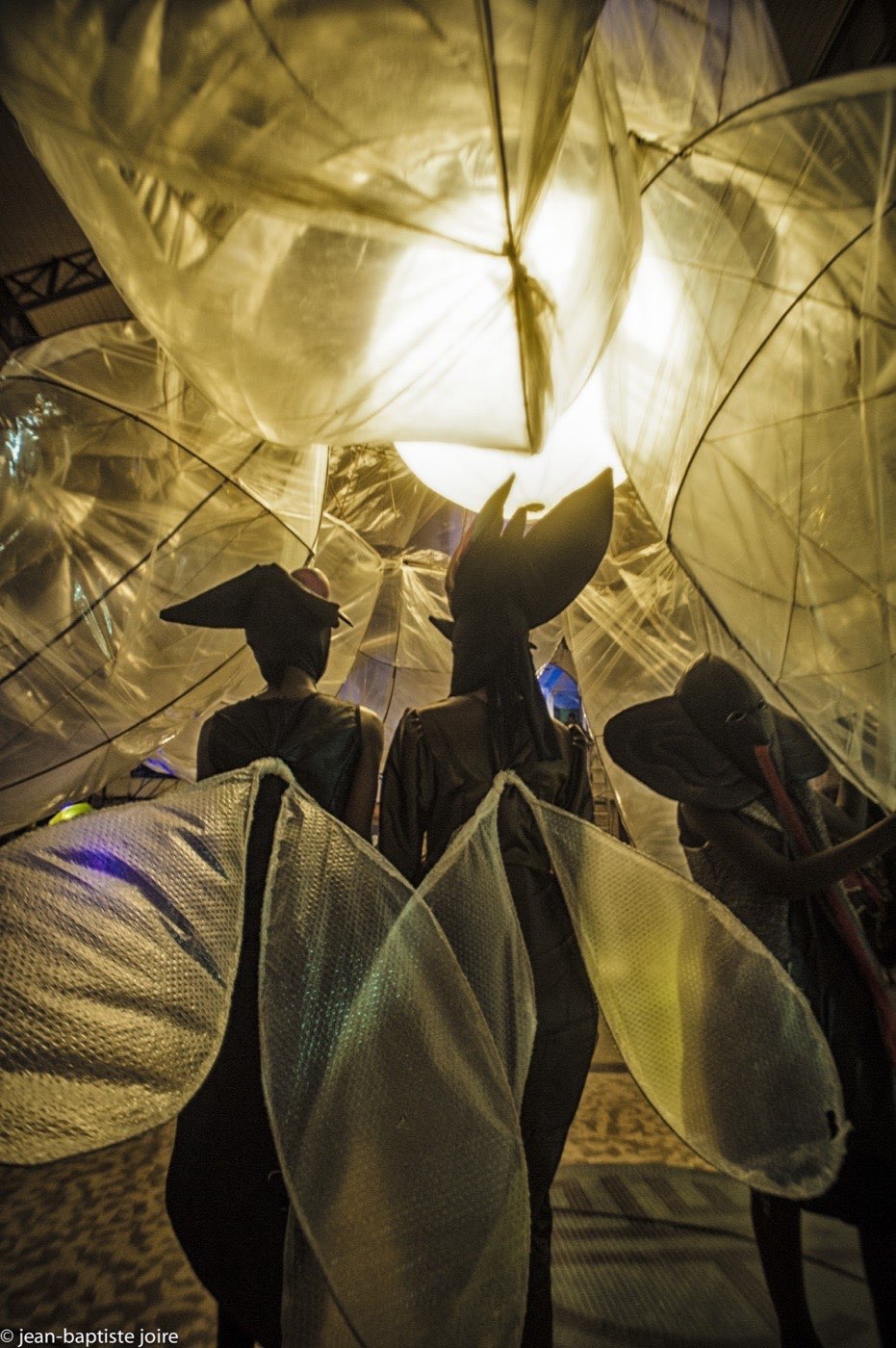
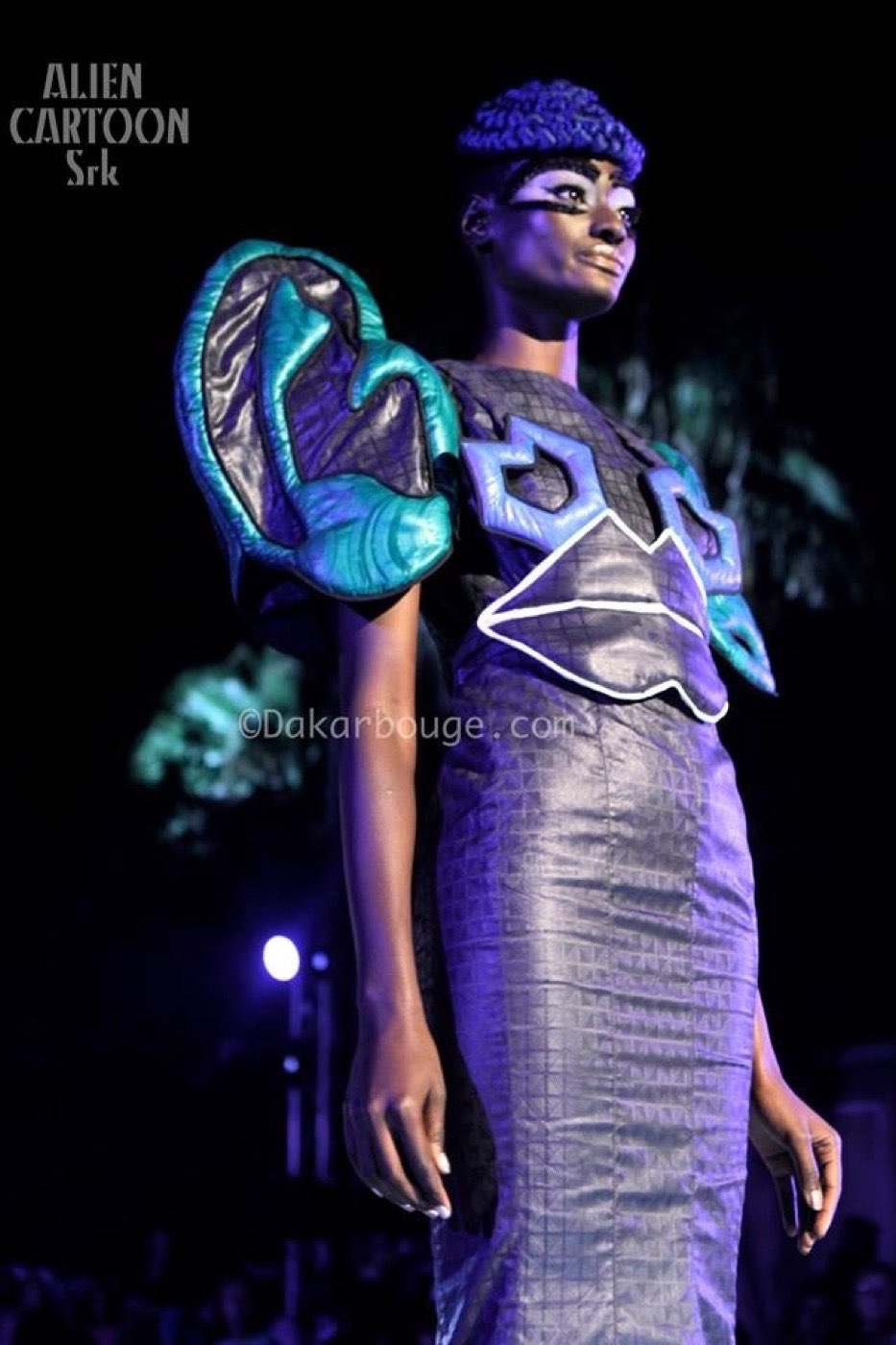
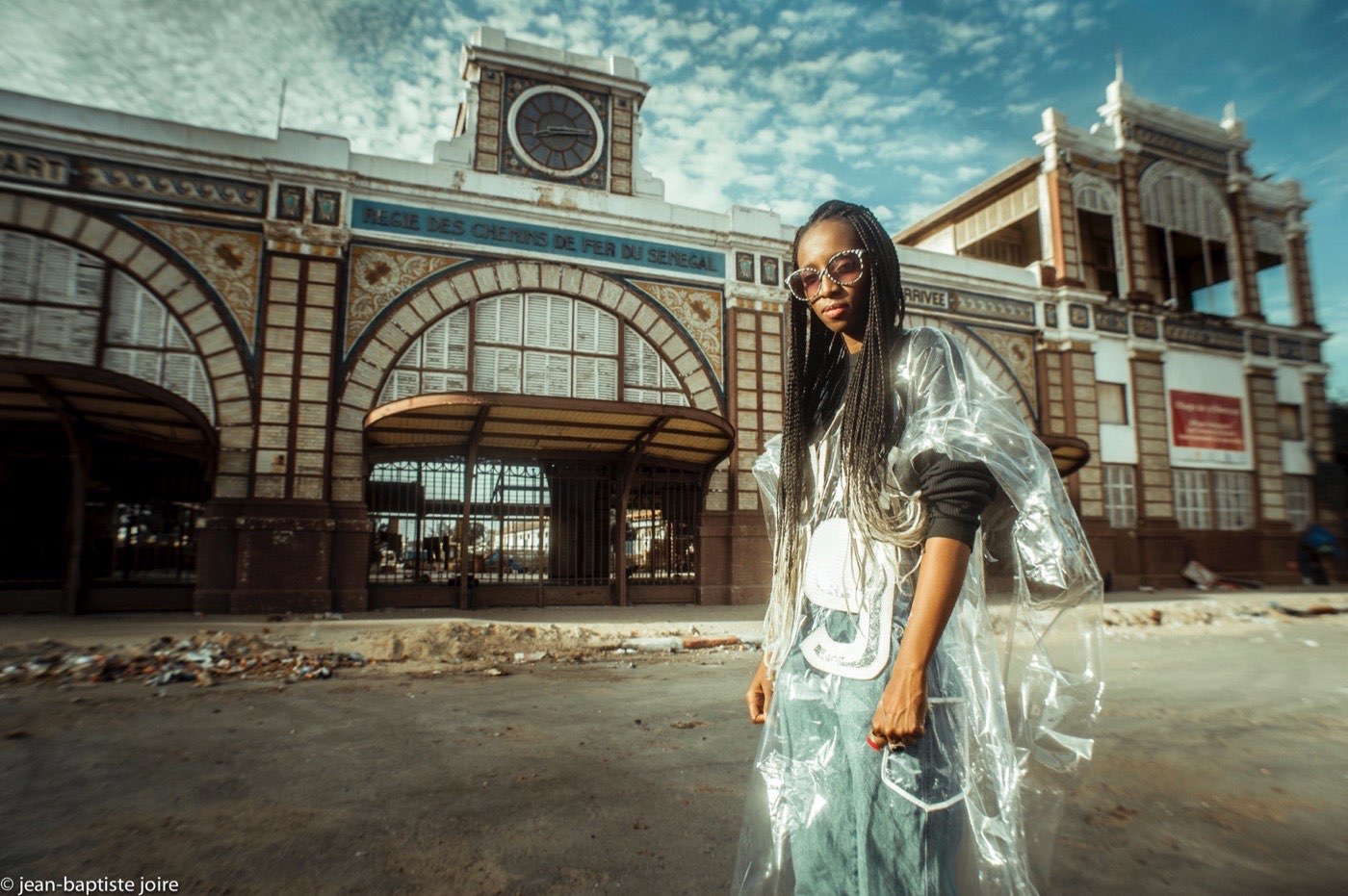
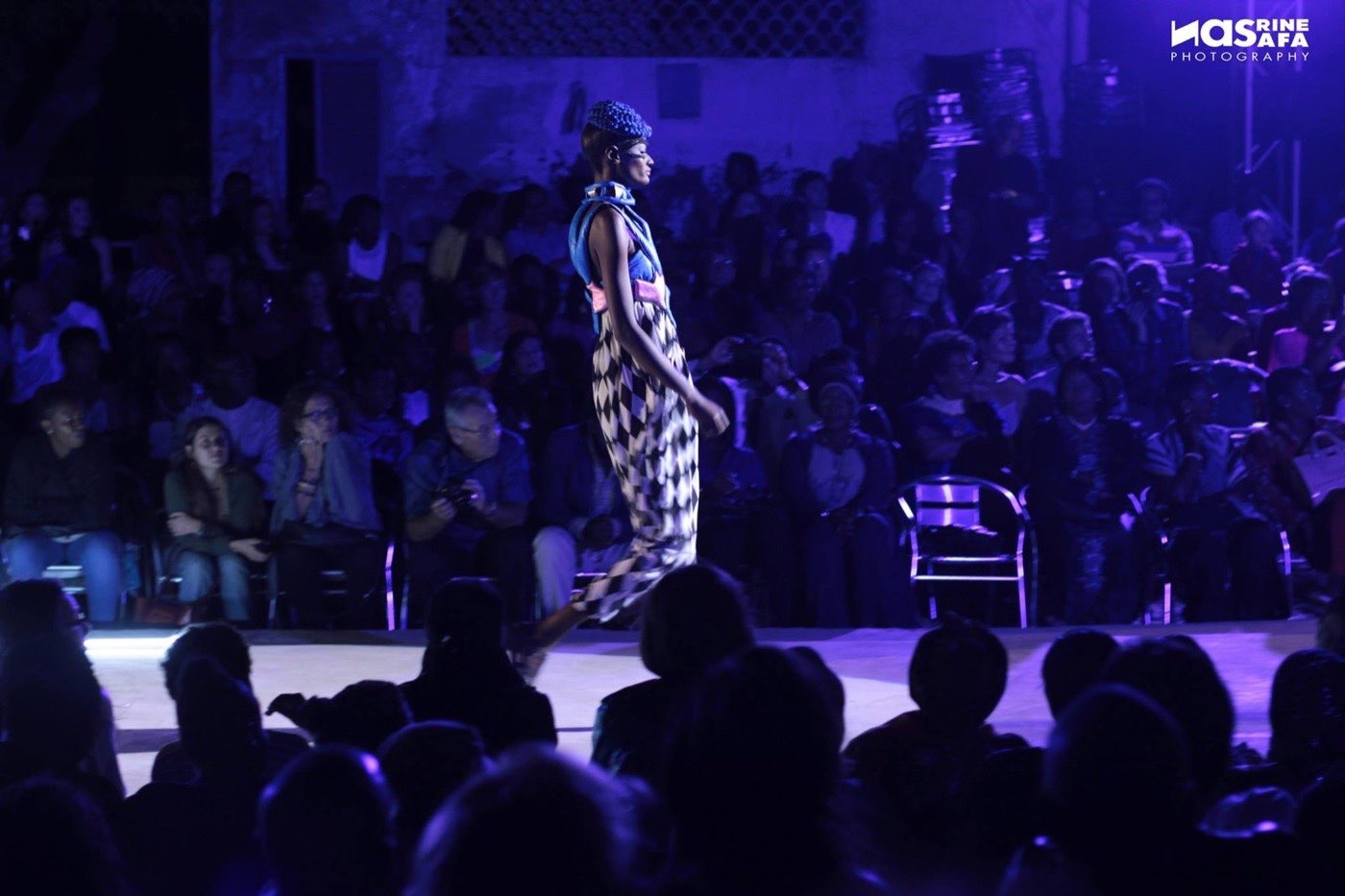
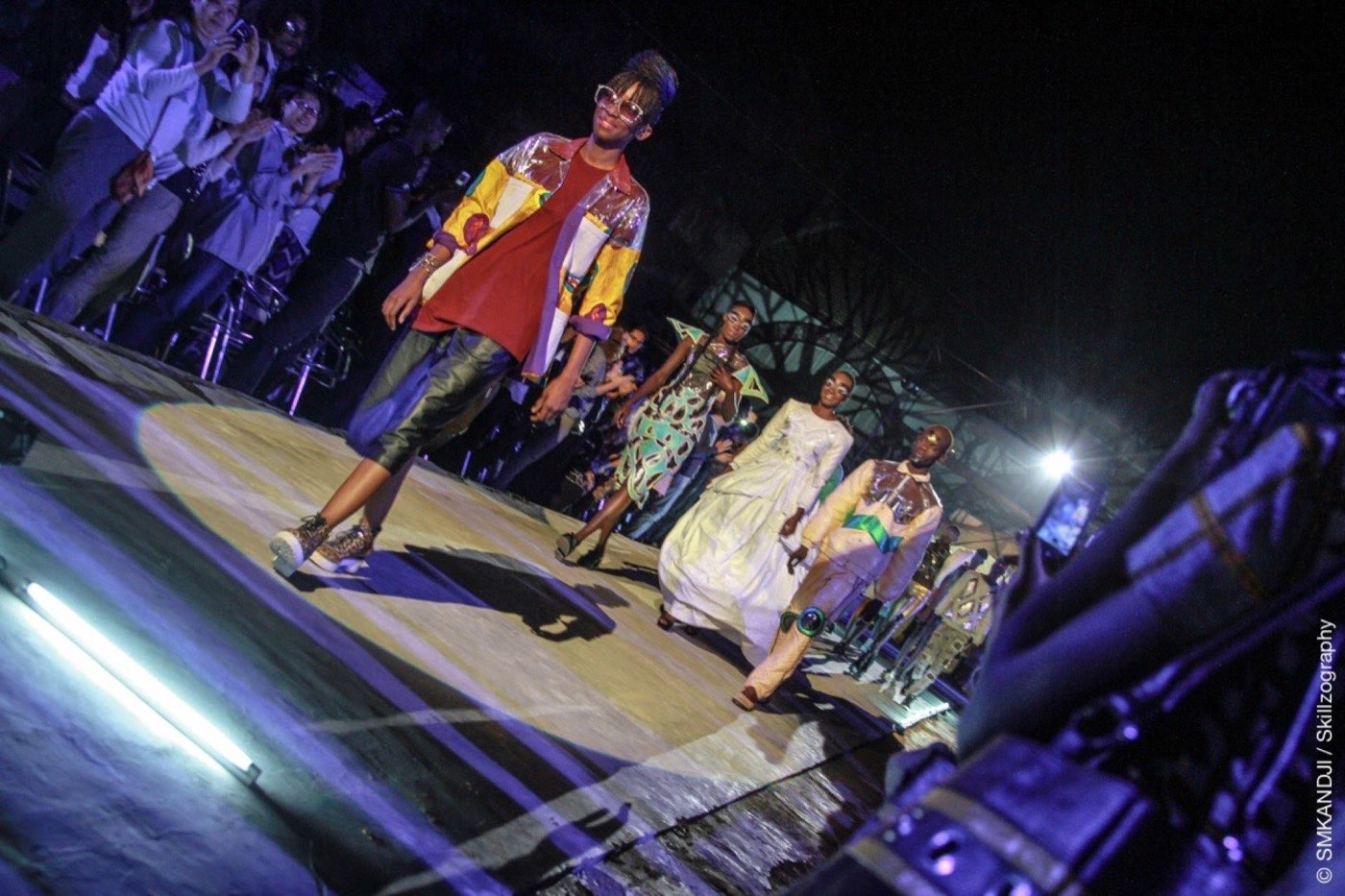
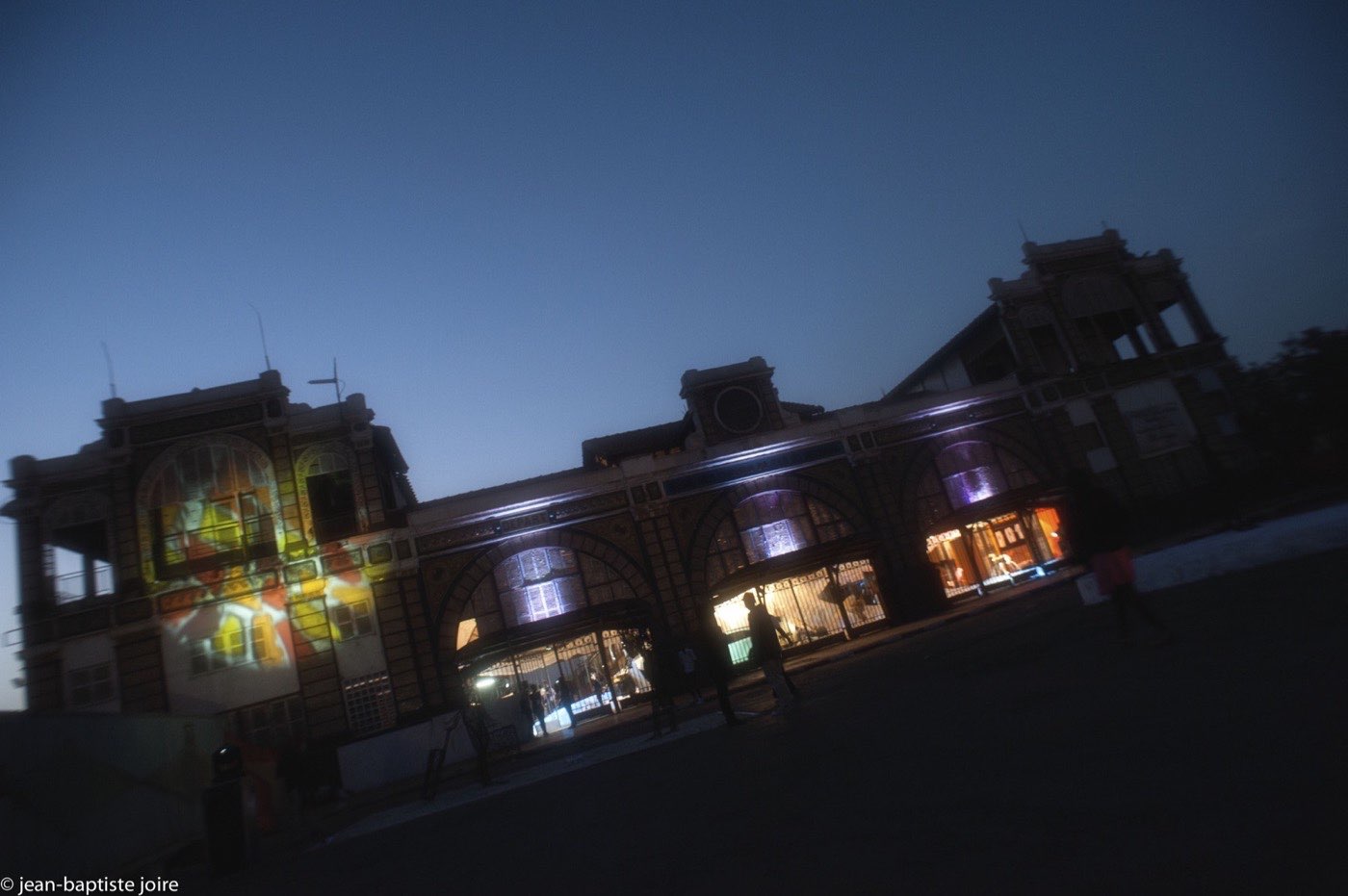
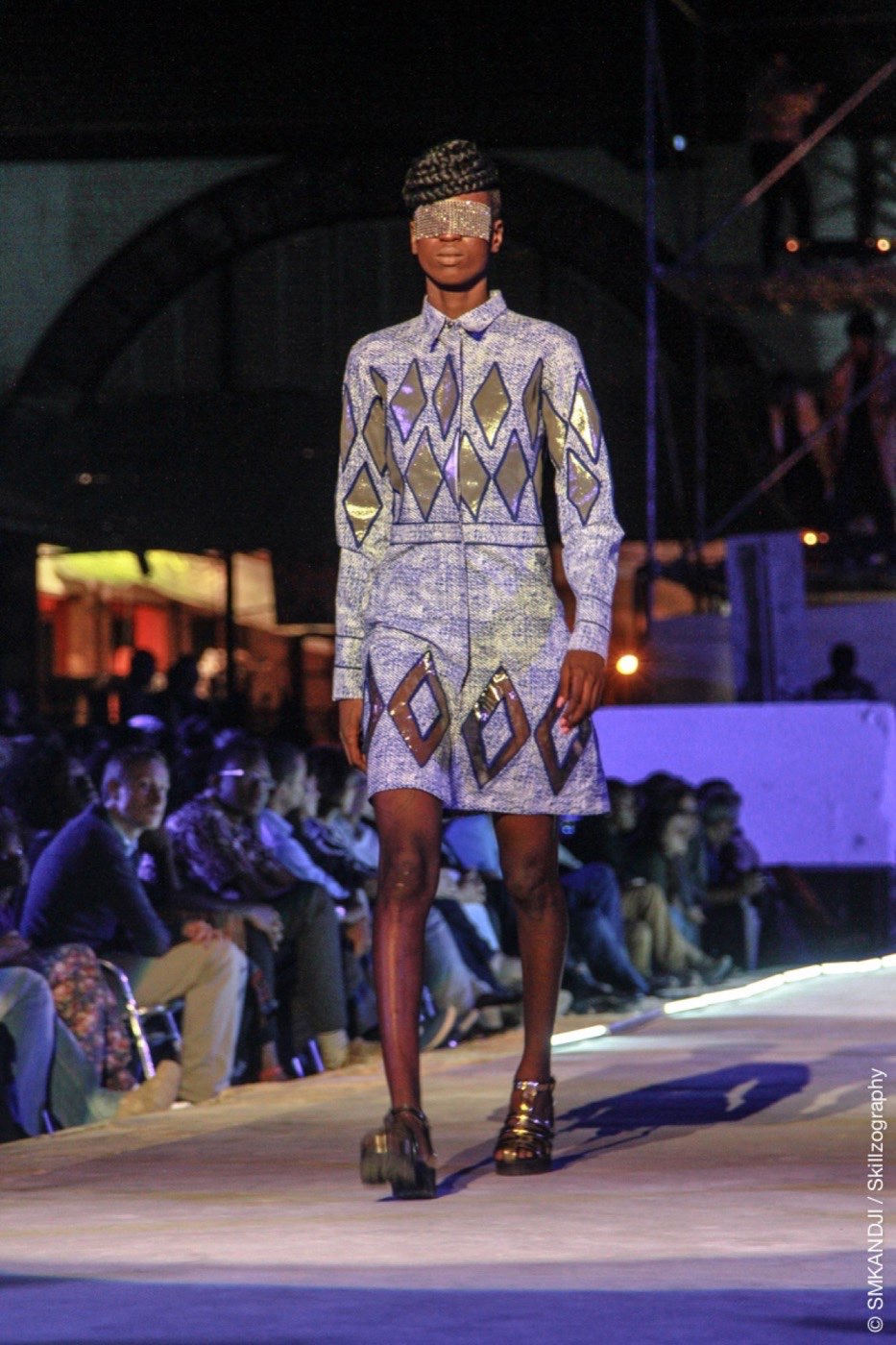
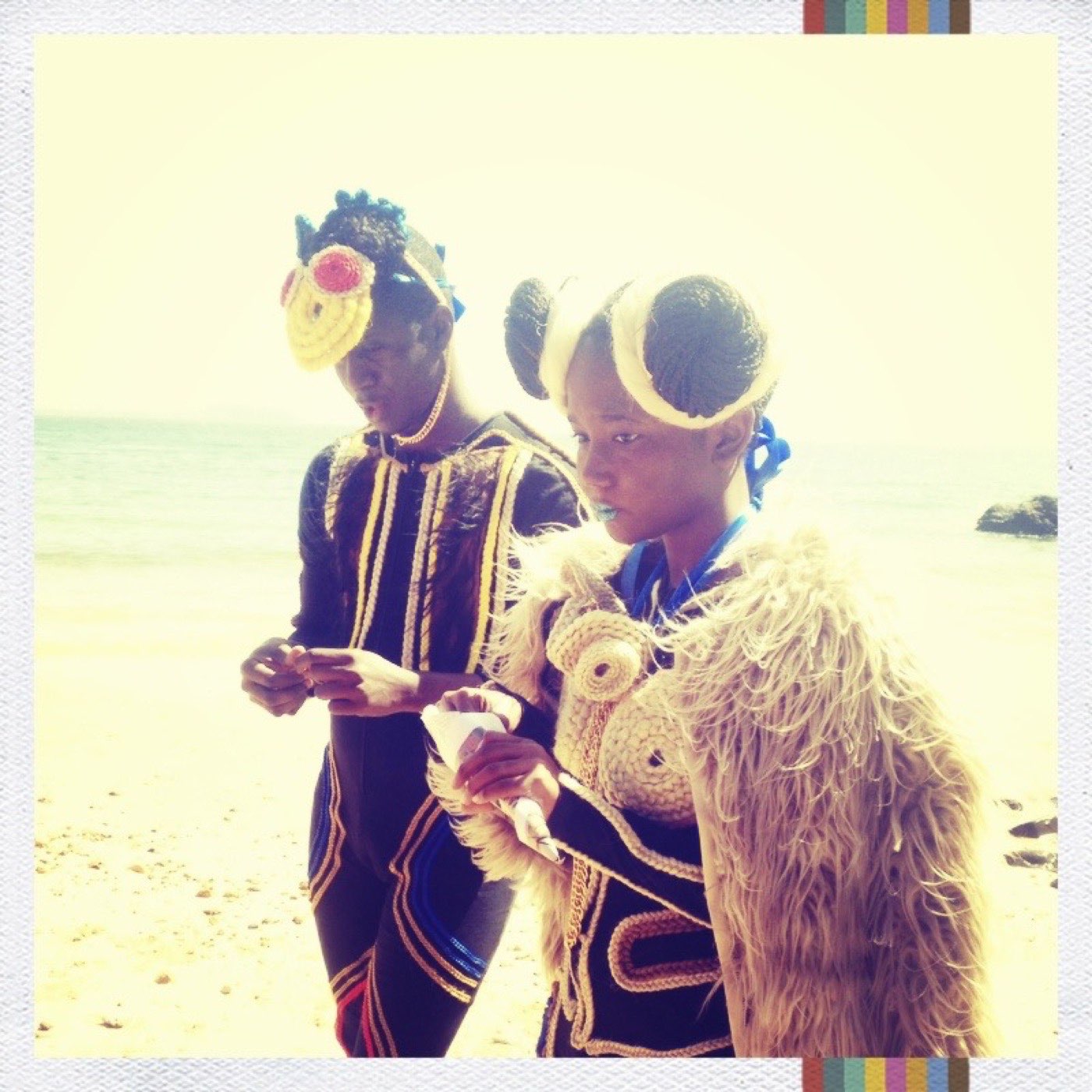
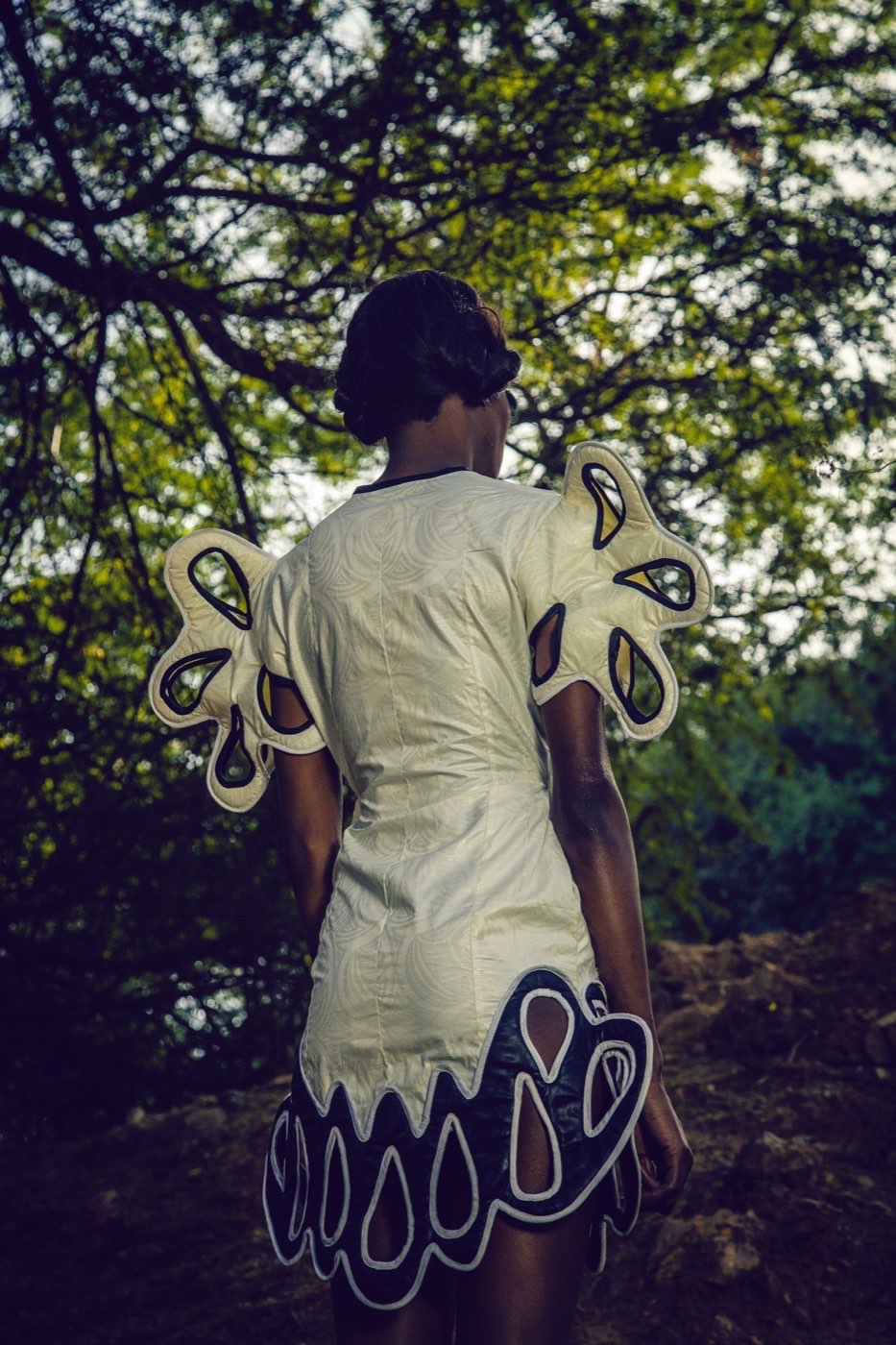
Alien Cartoon est un défilé de mode afro-futuriste de la créatrice Selly Raby Kane, produit et mis en scène par Les Petites Pierres dans la friche de l'ancienne gare ferroviaire de Dakar — alors en état d'abandon, objet d'une campagne de plaidoyer du collectif pour sa sauvegarde

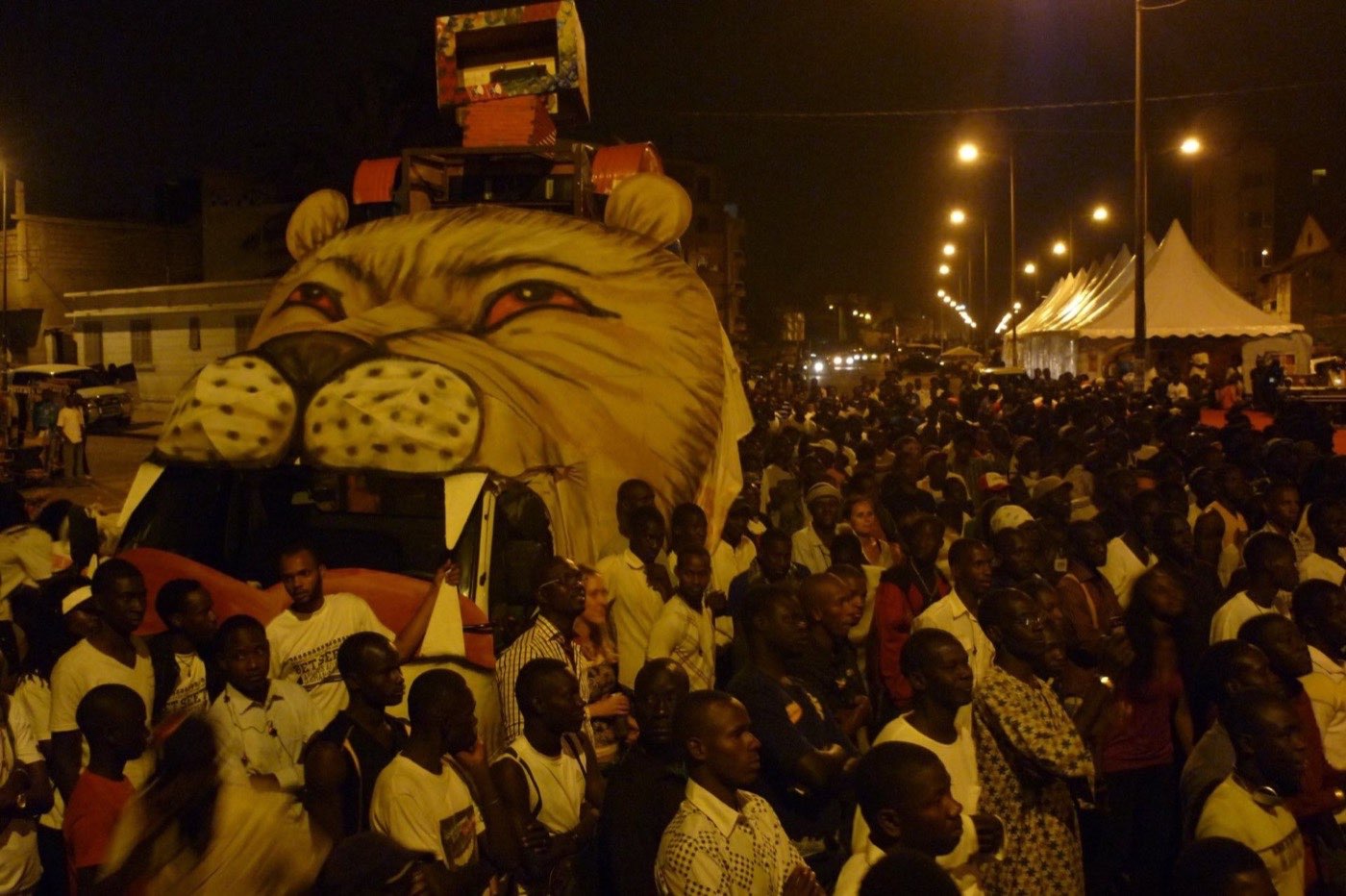
Dans une esthétique afrofuturiste et un esprit « comics » cartoonesque, l'installation était centrée autour d'une pieuvre géante de 10m de haut, autour de laquelle gravitaient de nombreux figurants habillés par les stylistes invités Doulcy et Baye Souleye, et une trentaine d'insectes géants créés par Bass Design. Les visiteurs traversaient l'installation avant d'arriver au podium situé sur les rails du train. En arrière-plan, la silhouette de danseurs électro installés sur un immense échafaudage se découpait au rythme des sons futuristes d'Ibaaku.

Alien Cartoon is an afro-futurist fashion show by designer Selly Raby Kane, produced and staged by Les Petites Pierres in the disused grounds of Dakar's former railway station — then in a state of abandonment, the subject of a campaign by the collective for its preservation

In an afrofuturist aesthetic and a cartoonesque "comics" spirit, the installation centred around a giant ten-metre octopus, around which gravitated numerous performers dressed by invited designers Doulcy and Baye Souleye, and thirty giant insects created by Bass Design. Visitors crossed the installation before arriving at the podium set on the train tracks. In the background, the silhouette of electro dancers installed on an enormous scaffolding was silhouetted to the futuristic sounds of Ibaaku.

AfrofuturismeModePerformanceSelly Raby KaneIbaakuGare ferroviairePlaidoyer

Résidence · Interférences · Les Petites Pierres · Dakar · 2013

Residency · Les Petites Pierres · Interférences · Dakar

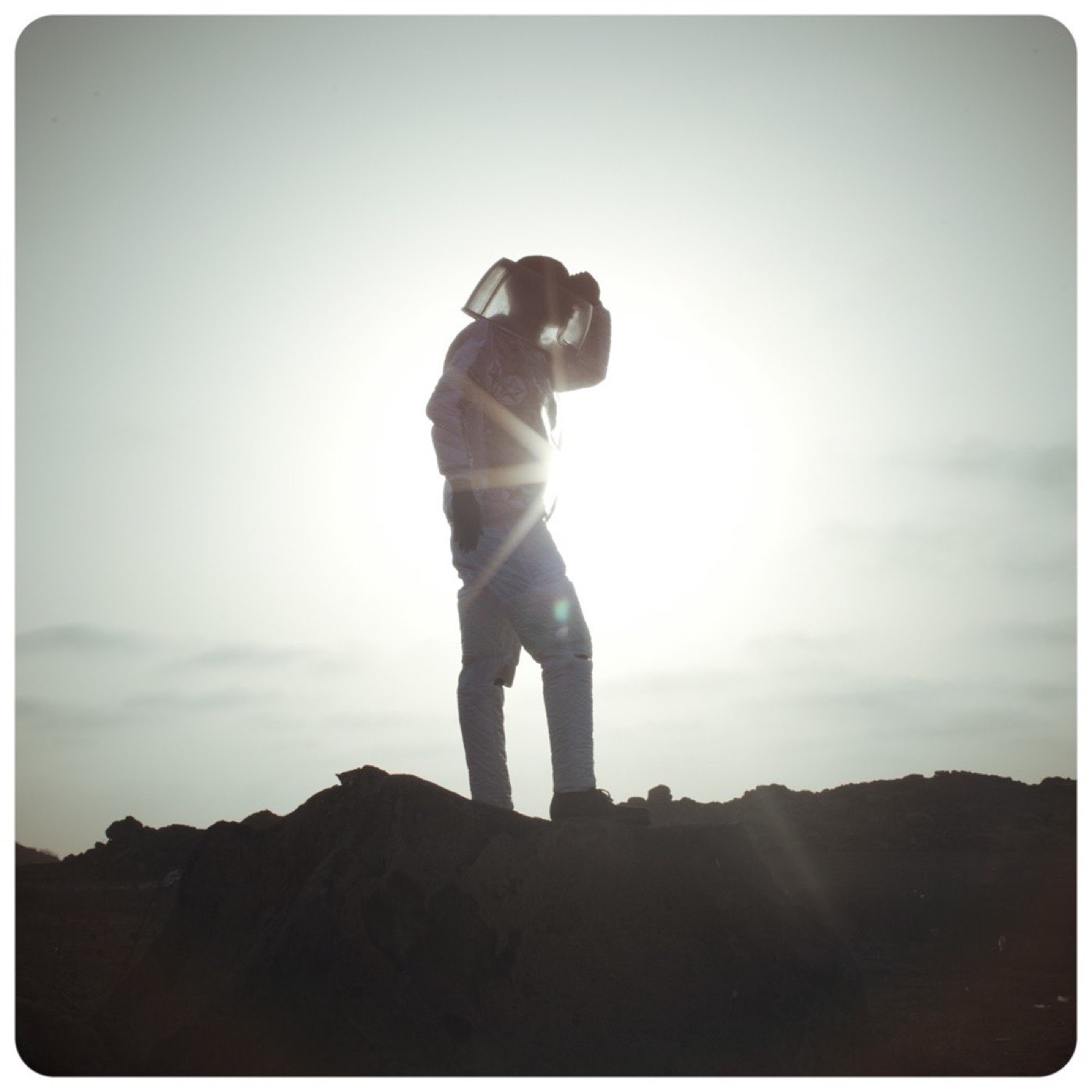
The Afronauts on a Mission to Mars

Que savons-nous de l'Afrique, au-delà des enfants soldats mutilés, des couchers de soleil et des safaris ?

What do we know about Africa, beyond mutilated child soldiers, sunsets and safaris?

Cristina de Middel
2013

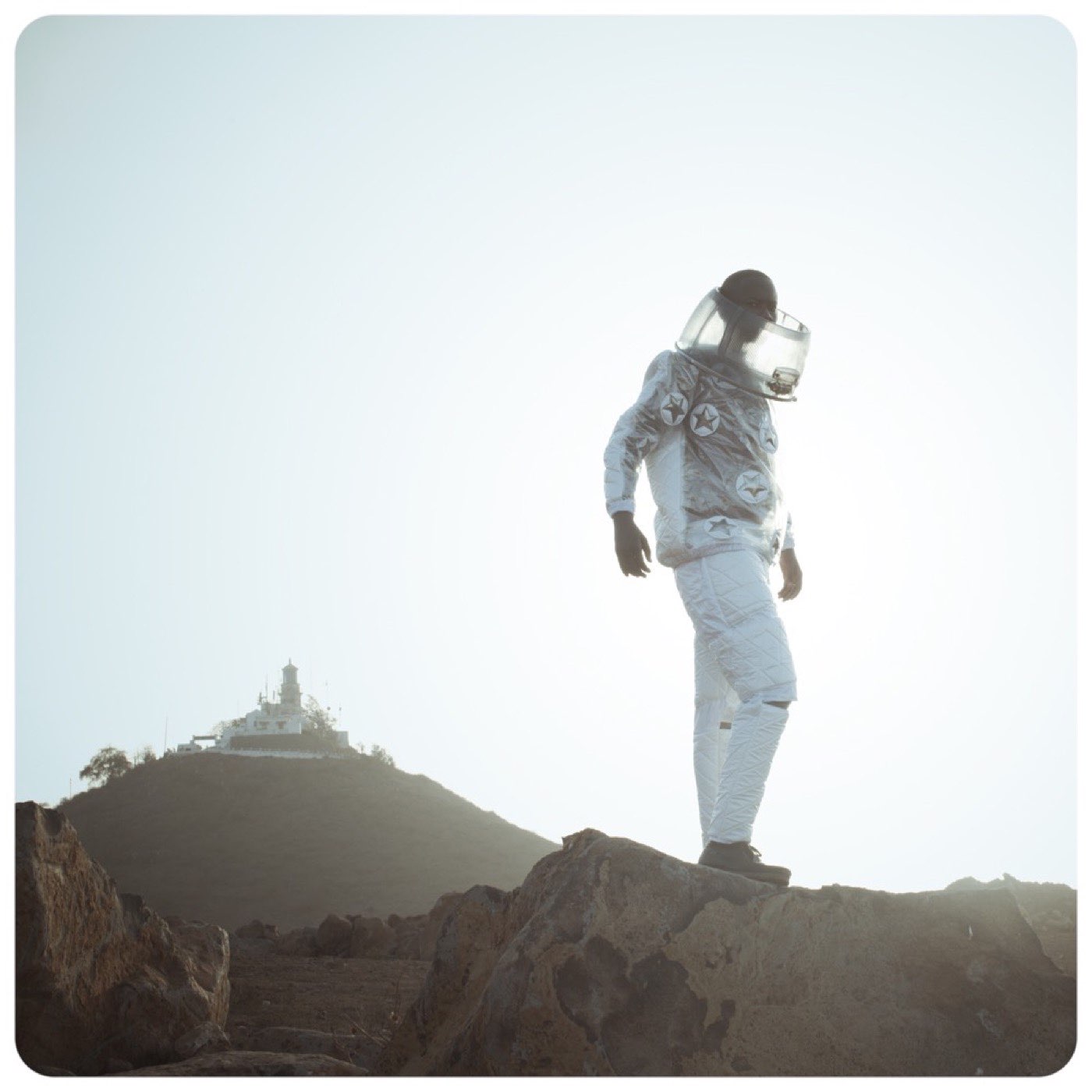
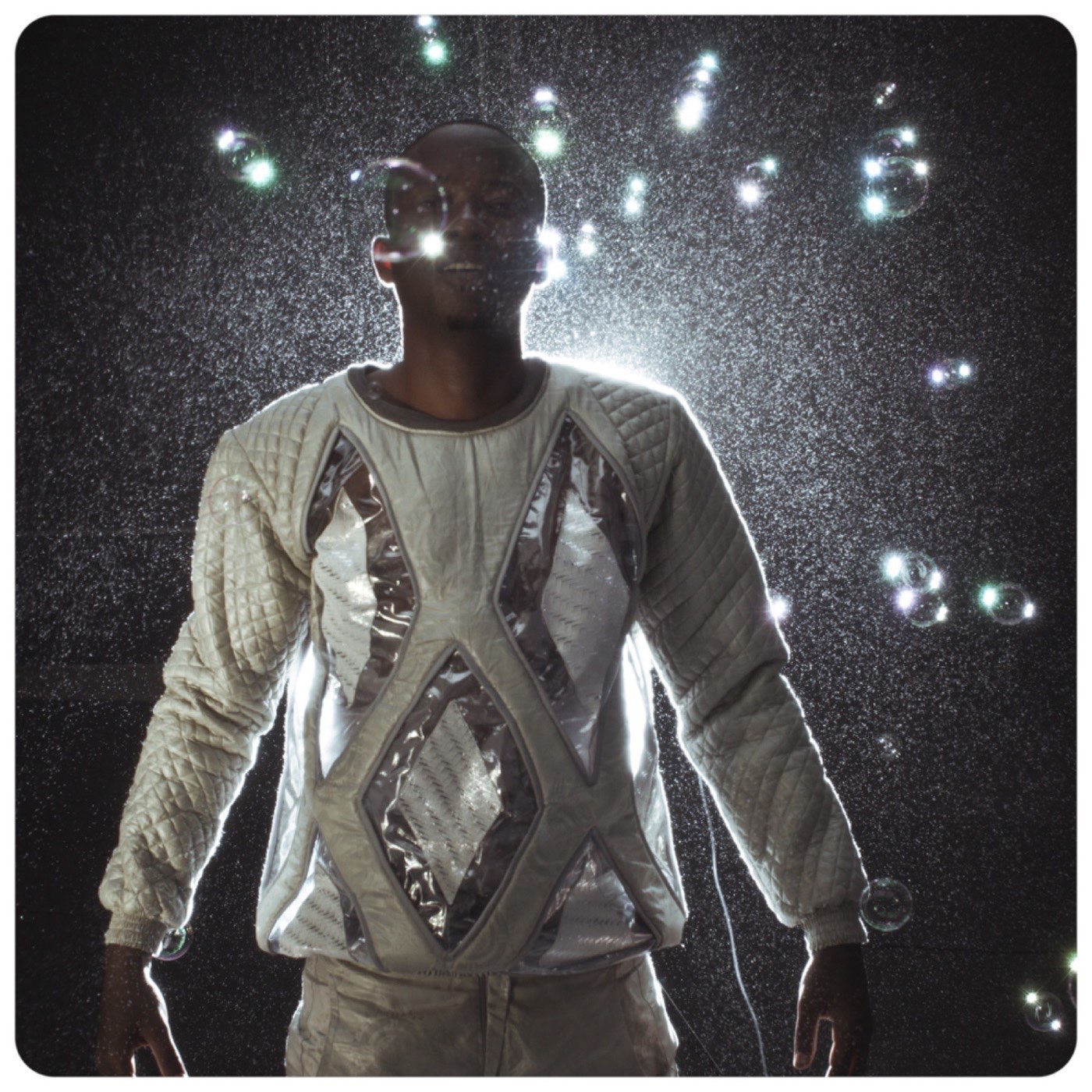
En préparant le programme du festival Interférences, je tombe sur l'étrange histoire d'un programme spatial zambien, imaginé par un instituteur dans les années 1960. Un improbable rêveur bien décidé à conquérir le cosmos, qui inspira la photographe Cristina de Middel pour sa série The Afronauts. Le thème du festival était déjà fixé : Suba (Demain), la science-fiction made in Africa. Il n'y a pas de hasard

De l'autre côté de la planète, la photographe Cristina de Middel s'apprêtait à lancer son projet de science-fiction africaine : The Afronauts. Inspirée par la course à l'espace des années 60 et l'histoire folle de l'instituteur zambien, elle pose une question : « Que savons-nous de l'Afrique, au-delà des enfants soldats mutilés, des couchers de soleil et des safaris ? » Elle rejoint Les Petites Pierres pour résoudre l'équation : Afronauts x Alien Cartoon @ Festival Interférences = X.

La suite était sans doute déjà écrite dans les étoiles : une machine à bulles découverte dans une friche industrielle, une vieille table de mixage, le bras d'un robot du festival précédent, une collection d'objets chinés dans les marchés de Dakar — autant d'instruments pour une nouvelle expédition. Une collection capsule est réalisée par Selly Raby Kane, et la publication fait le buzz aux Rencontres photographiques d'Arles et à la MoMA PS1 Art Book Fair. The Afronauts on a Mission to Mars, publié aux Éditions Pierre Bessard (Paris, 2013), avec une préface de Maya Varichon El Zanaty.

While preparing the Interférences festival programme, I stumbled upon the strange story of a Zambian space programme, dreamt up by a schoolteacher in the 1960s. An improbable dreamer determined to conquer the cosmos, who inspired photographer Cristina de Middel for her series The Afronauts. The festival's theme was already set: Suba (Tomorrow), science-fiction made in Africa. There is no such thing as chance

On the other side of the planet, photographer Cristina de Middel was about to launch her African sci-fi project: The Afronauts. Inspired by the space race of the 60s and the crazy story of the Zambian schoolteacher, she asks a question: "What do we know about Africa, beyond mutilated child soldiers, sunsets and safaris?" She joins Les Petites Pierres to solve the equation: Afronauts x Alien Cartoon @ Festival Interférences = X.

The rest was probably already written in the stars: a bubble machine discovered in a derelict industrial site, an old mixing table, a robot arm from the previous festival, a collection of objects found in Dakar's markets — so many instruments for a new expedition. A capsule collection was created by Selly Raby Kane, and the publication caused a buzz at the Rencontres photographiques d'Arles and the MoMA PS1 Art Book Fair. The Afronauts on a Mission to Mars, published by Éditions Pierre Bessard (Paris, 2013), with a preface by Maya Varichon El Zanaty.

AfrofuturismeFiction documentairePhotographieCristina de MiddelSelly Raby KaneProgramme spatial zambienZineRencontres d'ArlesMoMA PS1 Art Book Fair
04

Direction artistique · Les Petites Pierres · Dakar · 2012

Afro-futurist show · Les Petites Pierres · Dakar

African Spacecraft

Une arche de Noé futuriste, où se mêlent philosophie, mythologie et science-fiction

A futuristic Noah's ark, where philosophy, mythology and science-fiction intertwine

2012

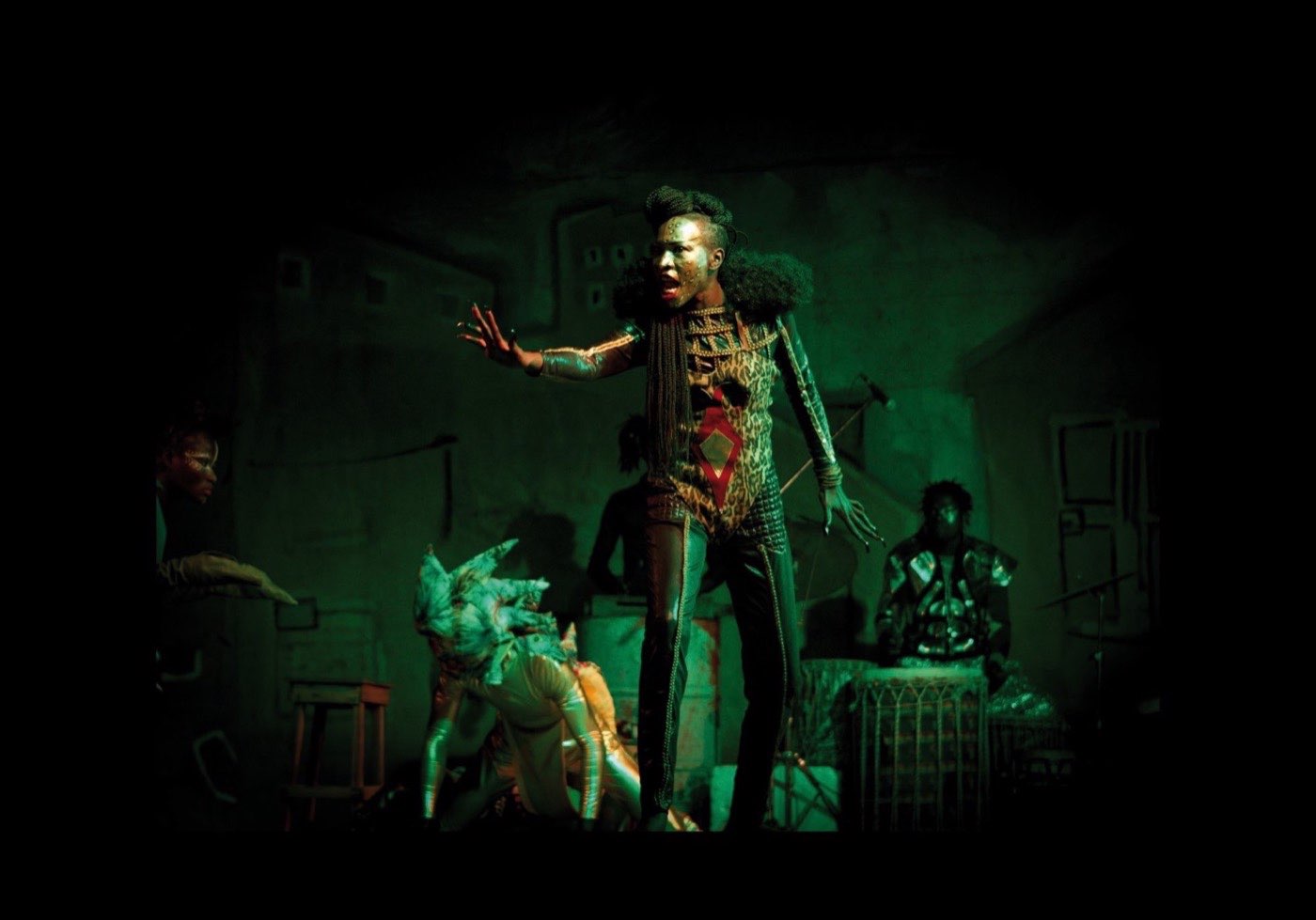
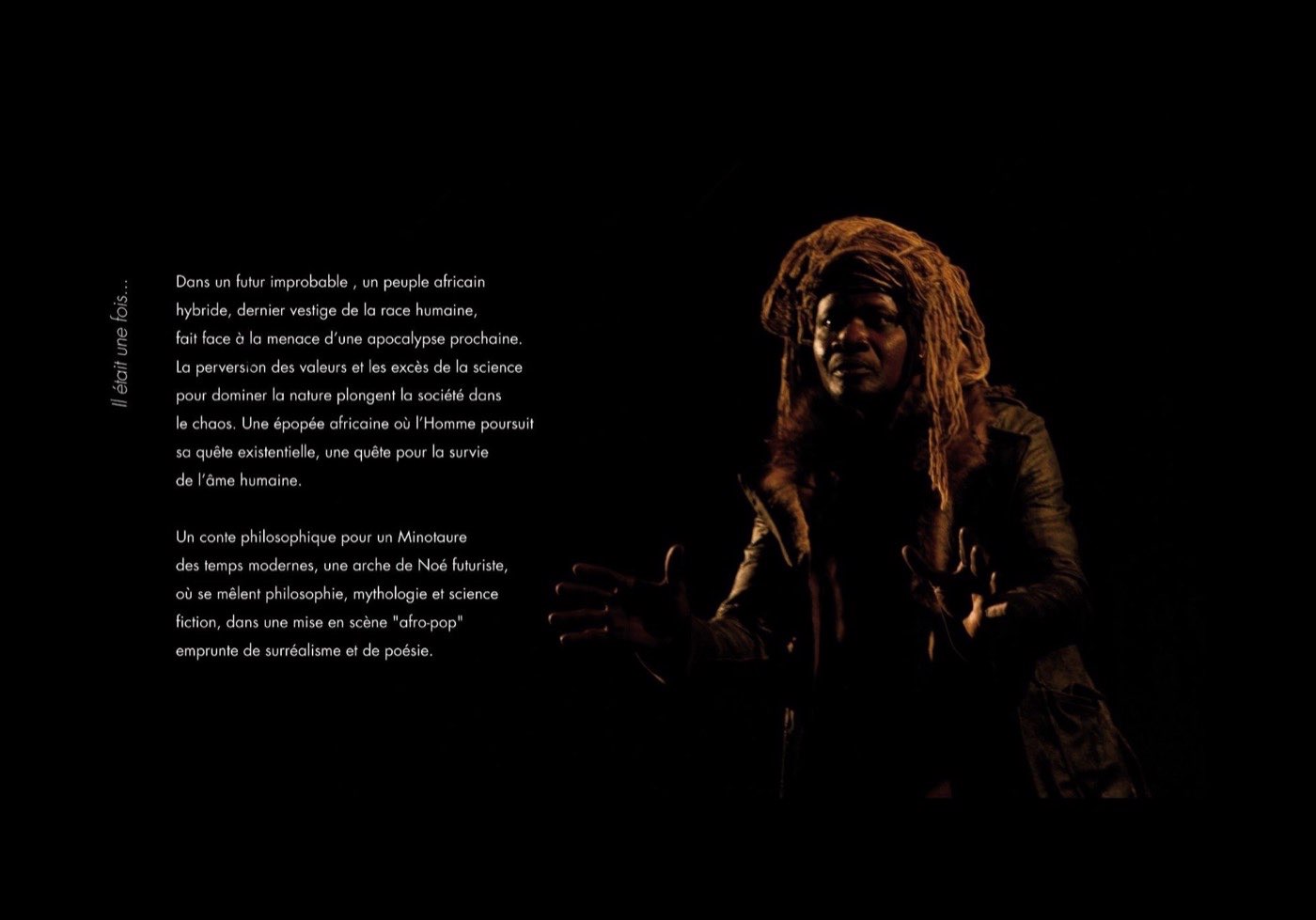
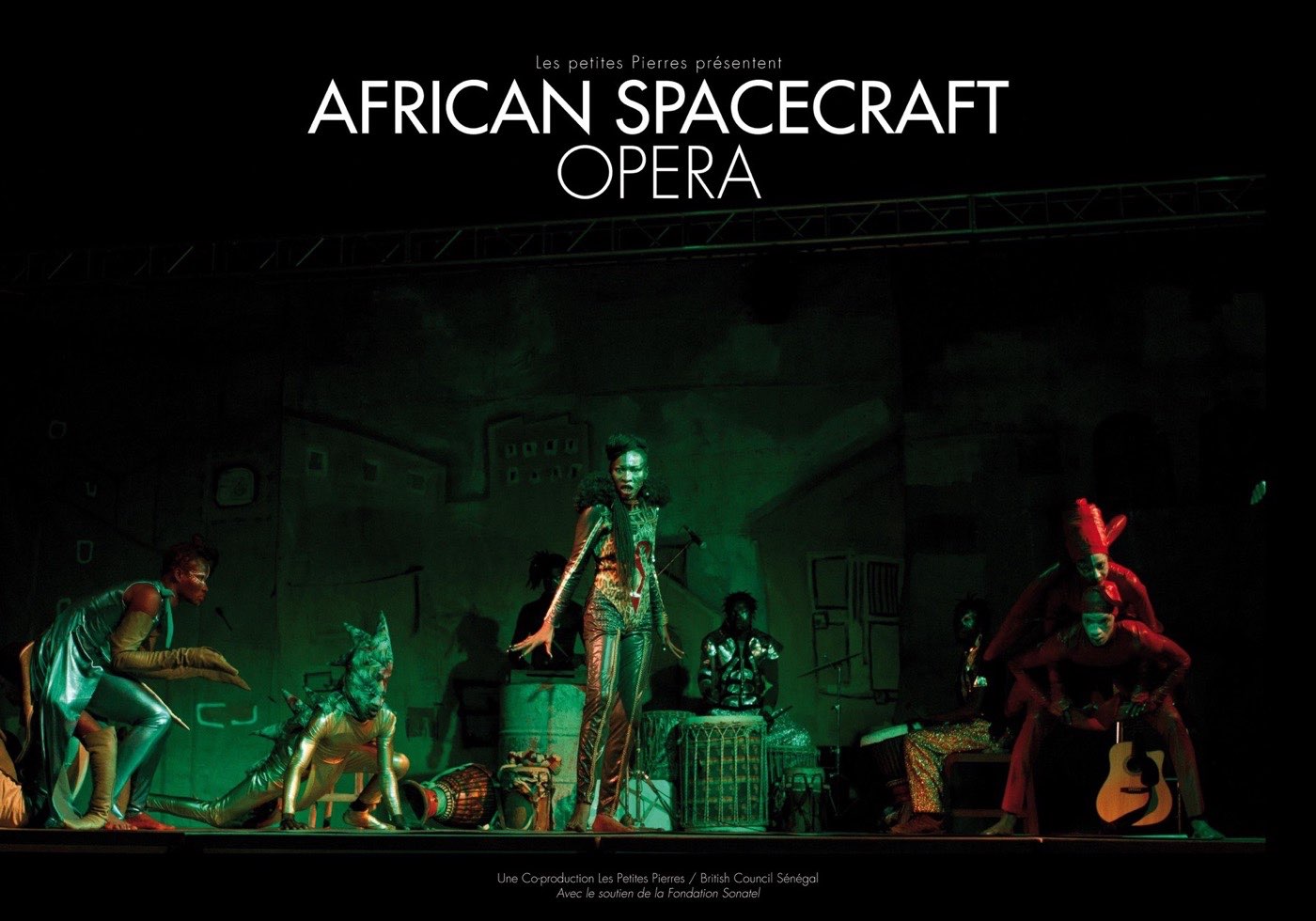
Dans un futur improbable, un peuple africain hybride, dernier vestige de la race humaine, fait face à la menace d'une apocalypse prochaine. La perversion des valeurs et les excès de la science pour dominer la nature plongent la société dans le chaos. Une épopée africaine où l'Homme poursuit sa quête existentielle, une quête pour la survie de l'âme humaine

Un conte philosophique pour un Minotaure des temps modernes, une arche de Noé futuriste, où se mêlent philosophie, mythologie et science-fiction, dans une mise en scène « afro-pop » empreinte de surréalisme et de poésie. Sous la direction artistique de Les Petites Pierres, African Spacecraft est un opéra transdisciplinaire associant la musique, la mode, la danse, les arts de la parole et les arts visuels — et l'aboutissement du programme WAPI, une dynamique de détection et de professionnalisation des jeunes talents de la scène émergente, initié en 2008 en collaboration avec le British Council et la Fondation Sonatel.

In an improbable future, a hybrid African people — the last vestige of the human race — faces the threat of an imminent apocalypse. The perversion of values and the excesses of science to dominate nature plunge society into chaos. An African epic in which humanity pursues its existential quest — a quest for the survival of the human soul

A philosophical tale for a Minotaur of modern times, a futuristic Noah's ark, where philosophy, mythology and science-fiction intertwine in an "afro-pop" staging steeped in surrealism and poetry. Under the artistic direction of Les Petites Pierres, African Spacecraft is a transdisciplinary opera combining music, fashion, dance, spoken word and visual arts — and the culmination of the WAPI programme, a dynamic of detecting and professionalising young talents from the emerging scene, initiated in 2008 in collaboration with the British Council and the Sonatel Foundation.

AfrofuturismeOpéra transdisciplinaireScience-fictionPhilosophieWAPIBritish CouncilFondation SonatelSelly Raby Kane

Axe 4

Axis 4

Fabrique du commun

Making the Commons

Le commun comme pratique, comme alternative, comme mode de vie à inventer ensemble. Ces projets explorent les formes d'organisation et de création collective — des communs souterrains du marronage à la sociopoésie noire, aux luttes d'émancipation contemporaines — celles qui se taisent, qui résistent, qui chantent depuis les marges

The commons as practice, as alternative, as a way of life to invent together. These projects explore forms of collective organisation and creation — from the underground commons of marronage to Black sociopoetry, to contemporary emancipatory struggles — those that fall silent, resist, sing from the margins

01

Recherche-création · Centre International de Recherche sur l'Anarchisme · Marseille · 2024

Research-creation · Bibliothèque Terme Sud · CIRA · Marseille

Socio-poésie Noire

Black Sociopoetry

Ce que contient le chant libre de celle·ux censé·es être silencieu·ses

The open song of the ones who are supposed to be silent

Fred Moten & Stefano Harney — The Undercommons, Fugitive Planning and Black Study
2024

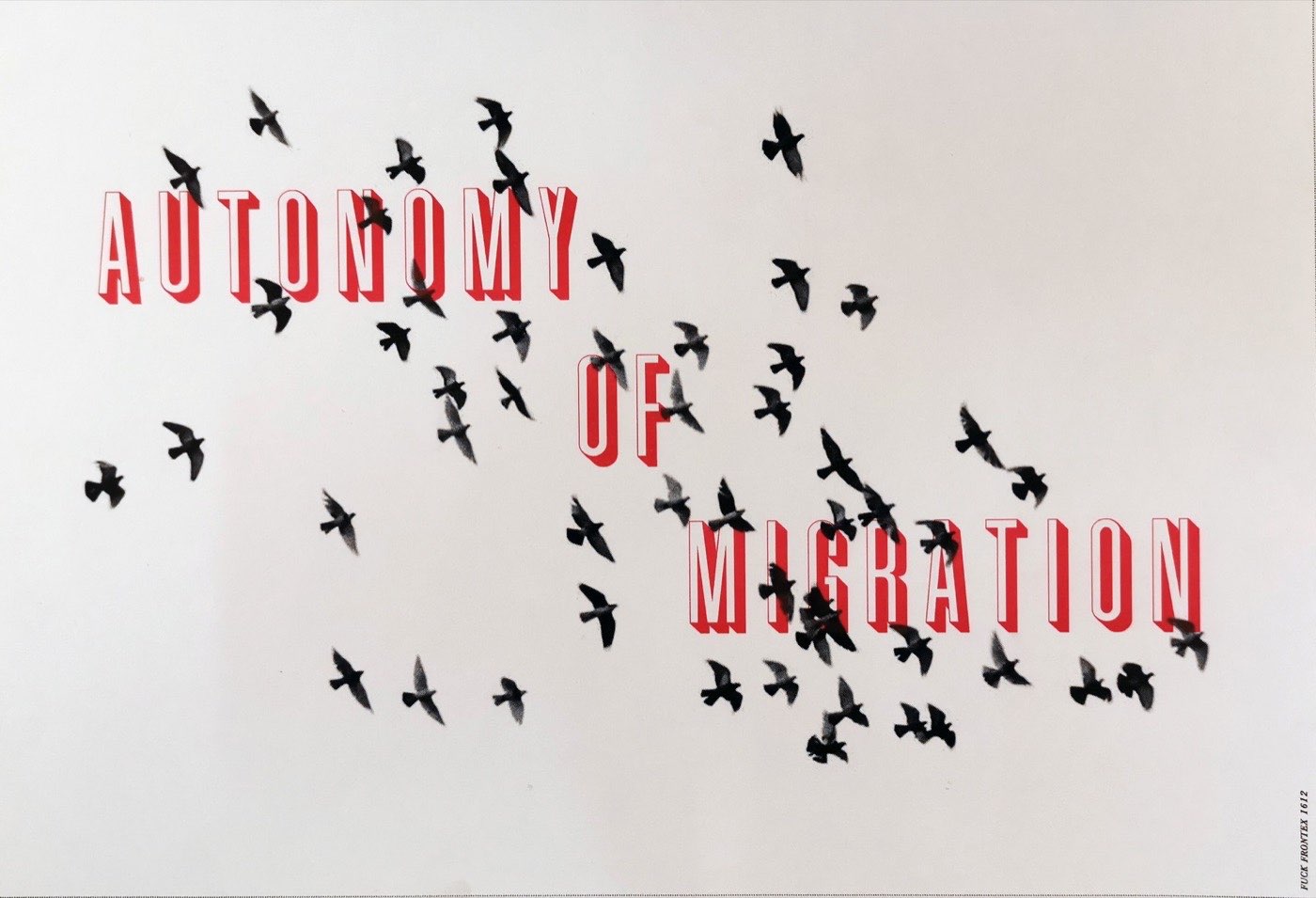
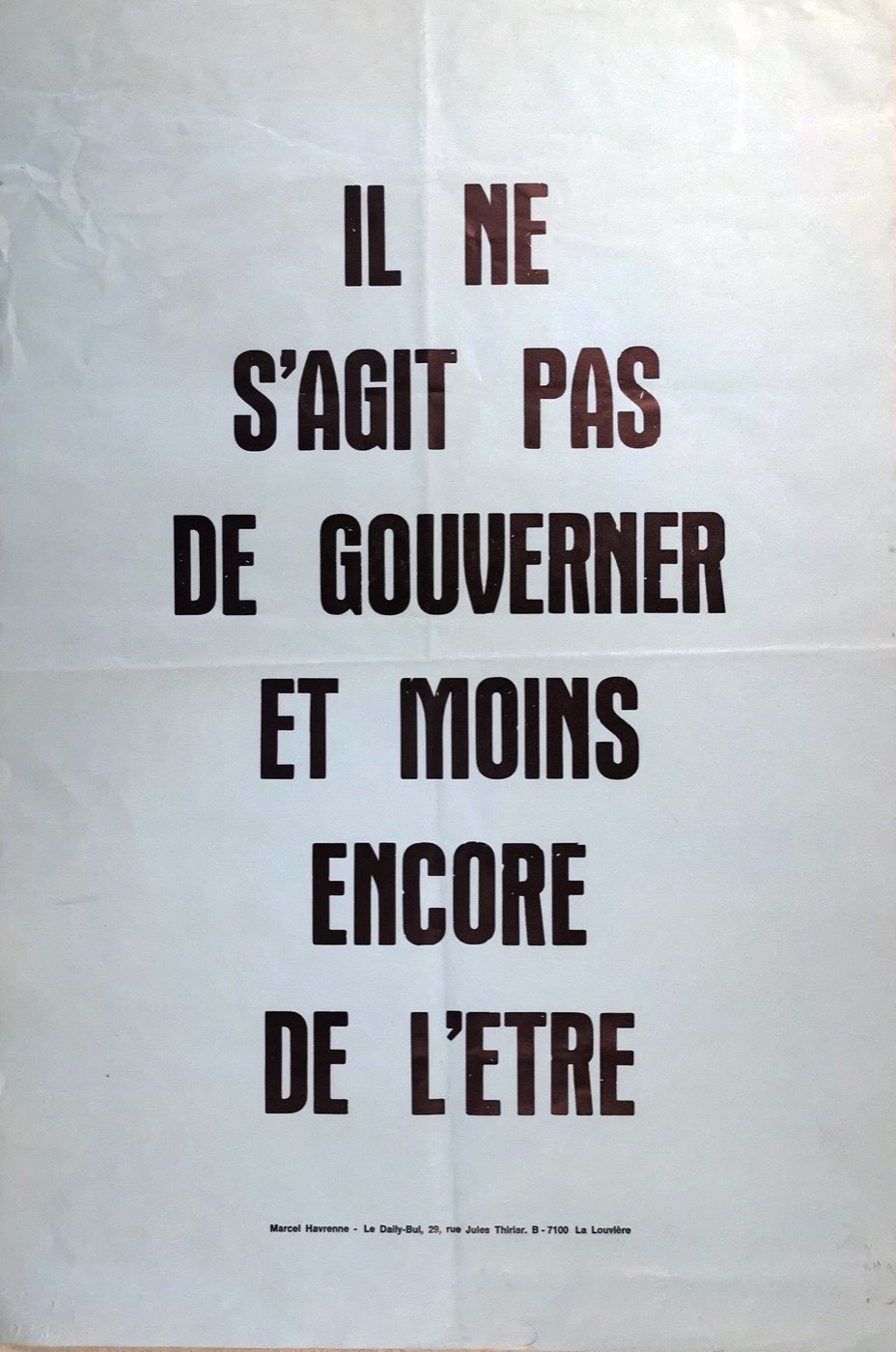
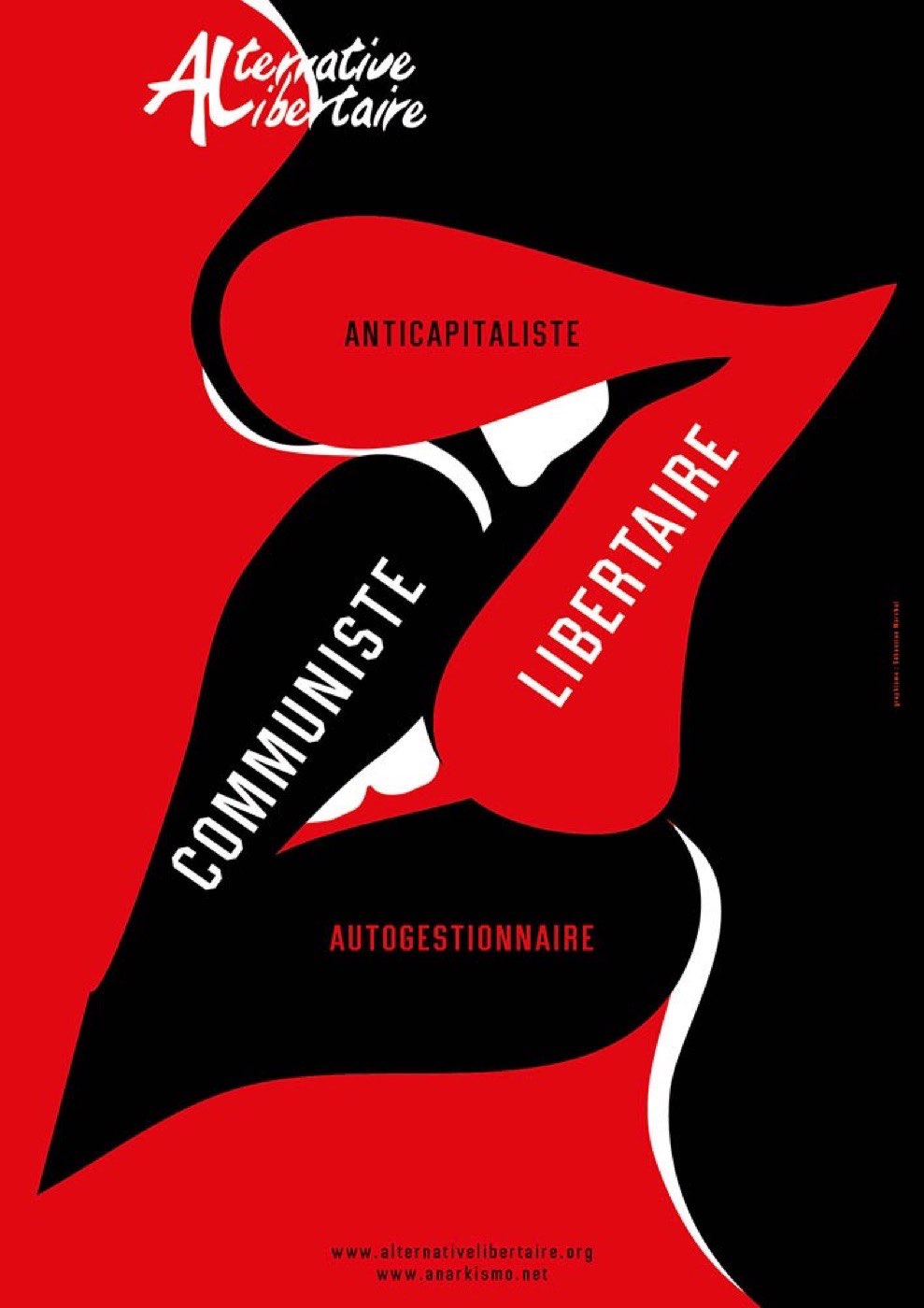
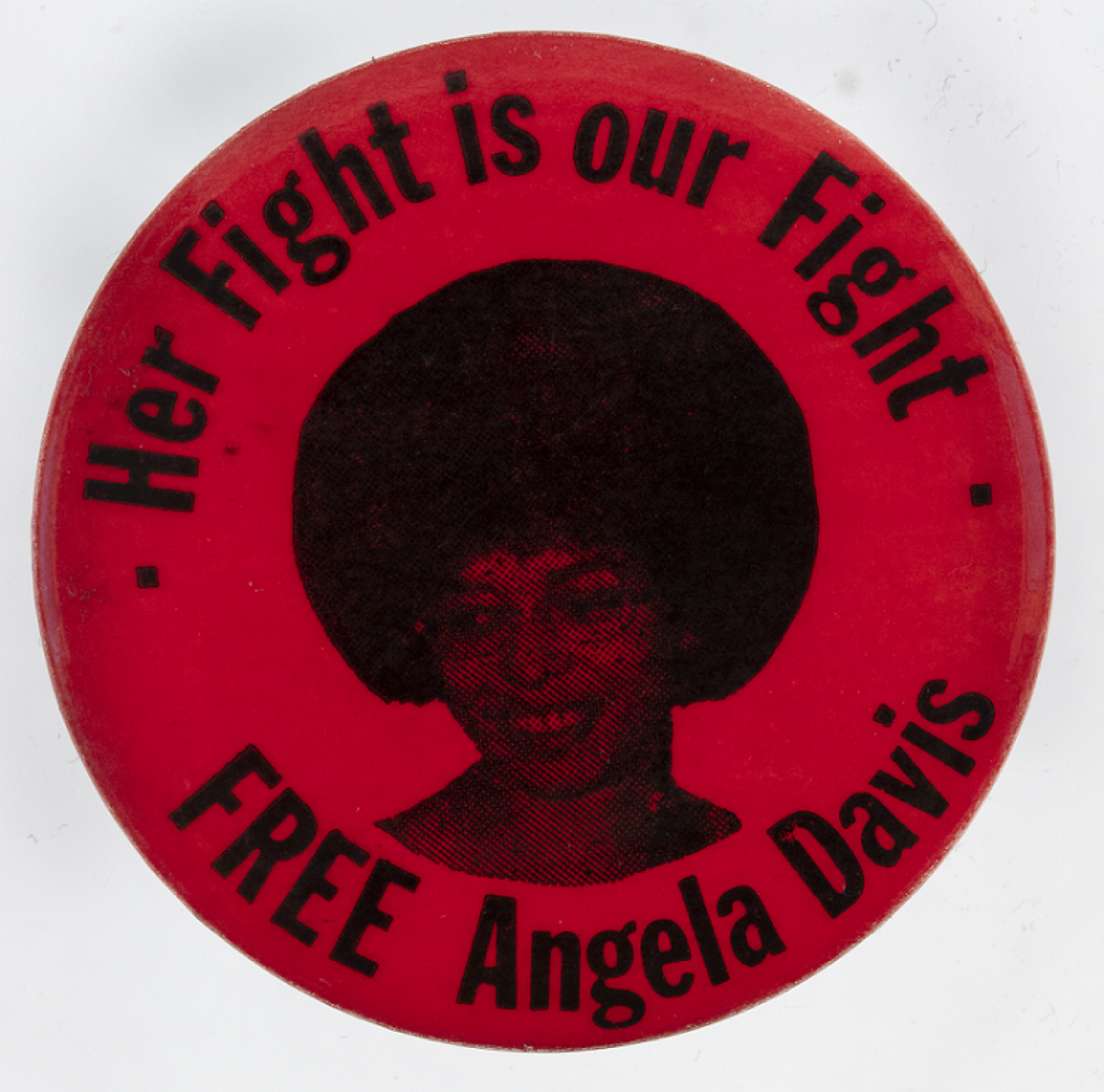
Fruit d'un travail de recherche-création dans les archives d'affiches du CIRA (Centre International de Recherches sur l'Anarchisme, Marseille), ce projet met en dialogue une sélection d'images militantes avec des extraits des Sous-communs de Fred Moten et Stefano Harney. Affiches et sociopoésie noire en résonance — évoquant le récit fictionnel d'une convergence des luttes libertaires, guidé par la notion centrale de fugitivité

Ce dialogue imaginaire cherche ce qui rassemble plutôt que ce qui divise : les résonances entre formes de l'émancipation anticoloniale et de la résistance libertaire, à travers l'histoire des communs souterrains, du marronage aux luttes contemporaines. La plongée dans les archives révèle aussi des résonances en creux — des angles morts, des absences qui témoignent des limites historiques de la convergence entre ces mouvements. Une invitation à globaliser la pensée, comme le formule Angela Davis — à trouver dans l'imagination sociopoétique les formes d'un ralliement possible. Le projet a donné lieu à une exposition itinérante présentée dans plusieurs festivals indépendants.

Born of a research-creation process in the poster archives of the CIRA (Centre International de Recherches sur l'Anarchisme, Marseille), this project brings into dialogue a selection of militant images with extracts from Fred Moten and Stefano Harney's The Undercommons. Posters and Black sociopoetry in resonance — evoking the fictional narrative of a convergence of libertarian struggles, guided by the central notion of fugitivity

This imaginary dialogue seeks what unites rather than divides: the resonances between forms of anticolonial emancipation and libertarian resistance, through the history of underground commons, from marronage to contemporary struggles. The immersion in the archives also reveals resonances in the hollow — blind spots, absences that bear witness to the historical limits of convergence between these movements. An invitation to globalise thought, as Angela Davis formulates it — to find in sociopoetic imagination the forms of a possible rallying. The project gave rise to an itinerant exhibition presented at several independent festivals.

Sociopoésie noireFred MotenStefano HarneyFugitivitéArchives anarchistesExposition itinéranteConvergence des luttes

Performance & échange · Interférences · Les Petites Pierres · L'Escif · Dakar

Performance & exchange · Interférences · Les Petites Pierres · L'Escif · Dakar

Les Petits Échanges

Transformer le monde commence par transformer sa manière d'habiter le monde

Transforming the world begins with transforming the way we inhabit it

2012 – 2014

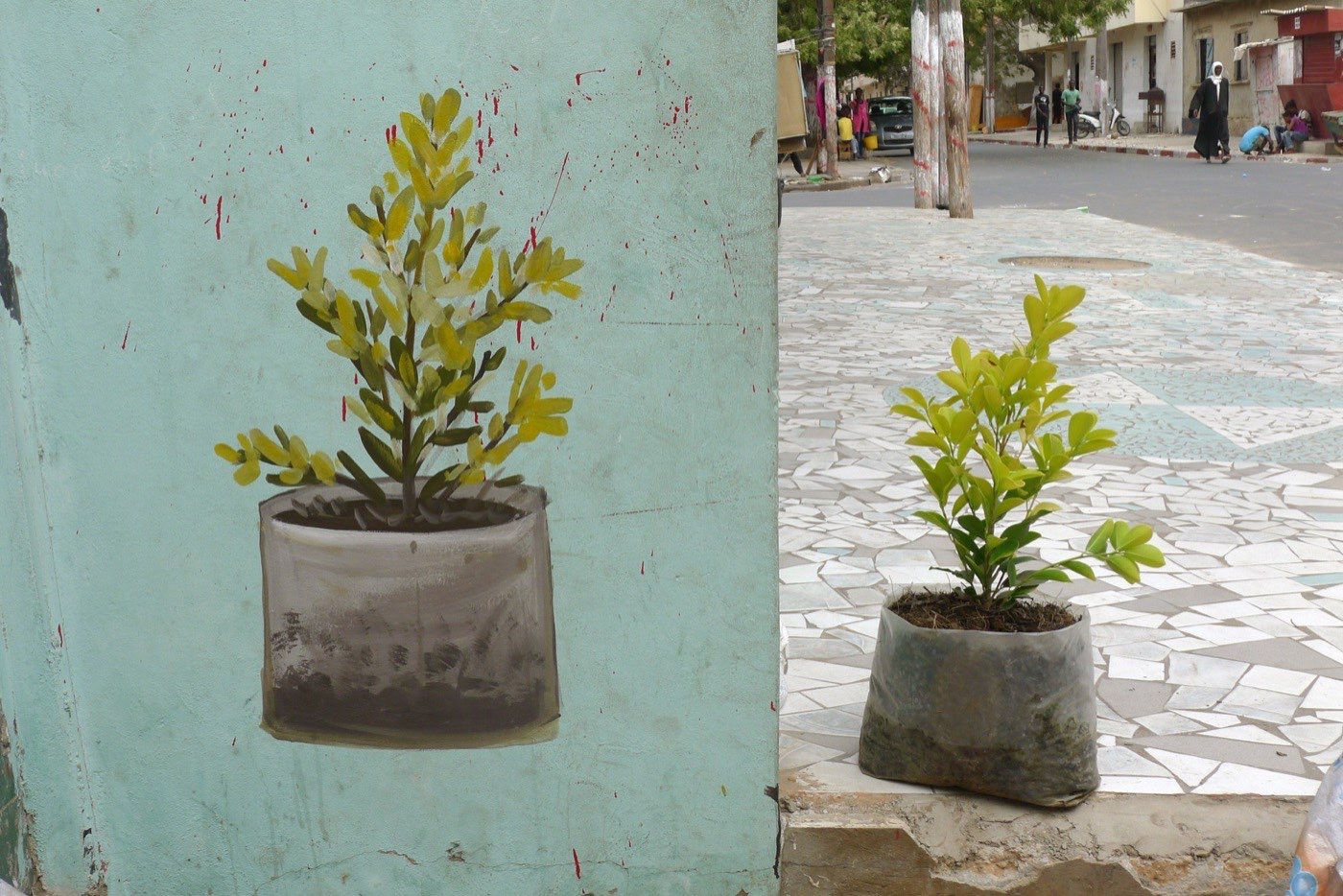
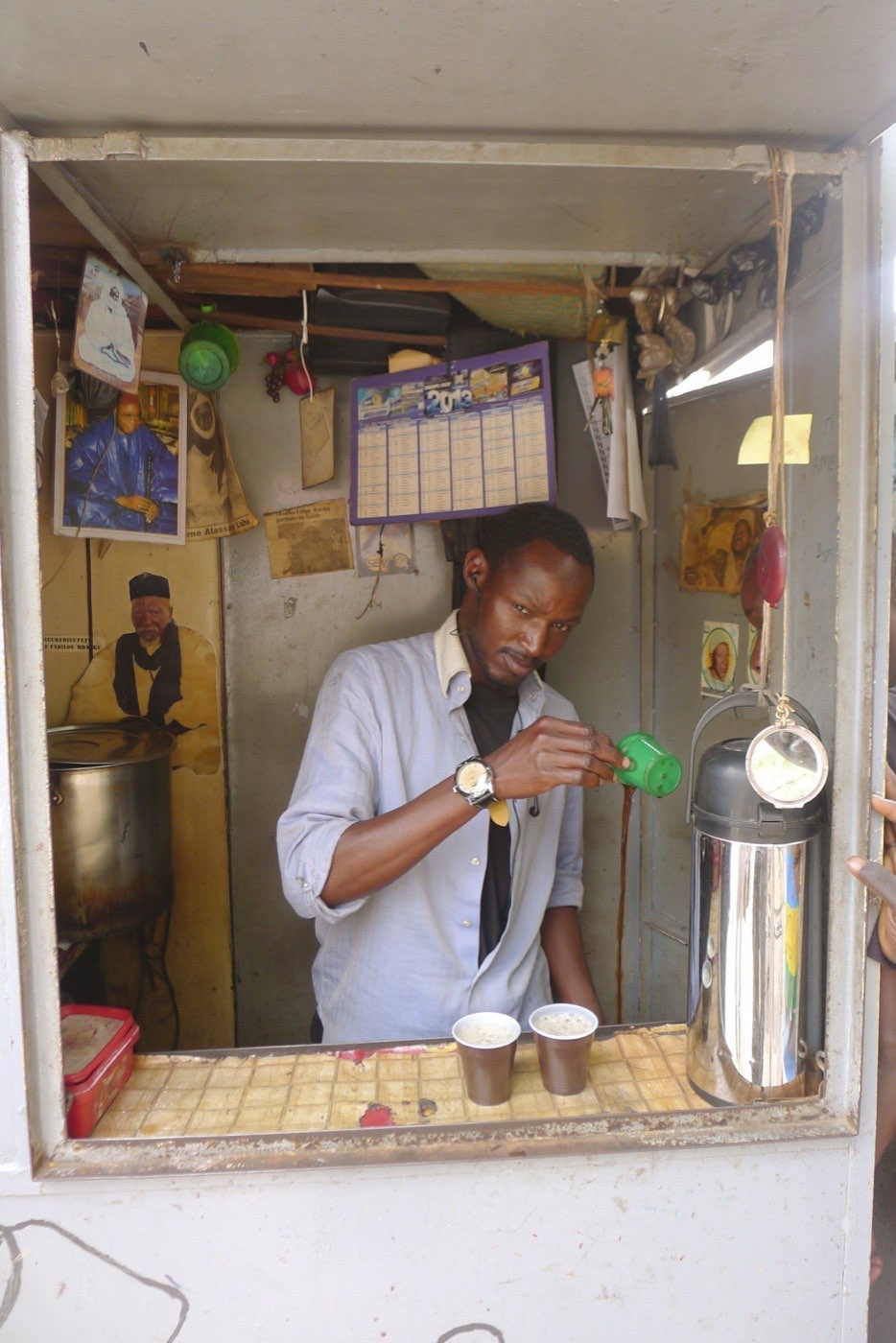
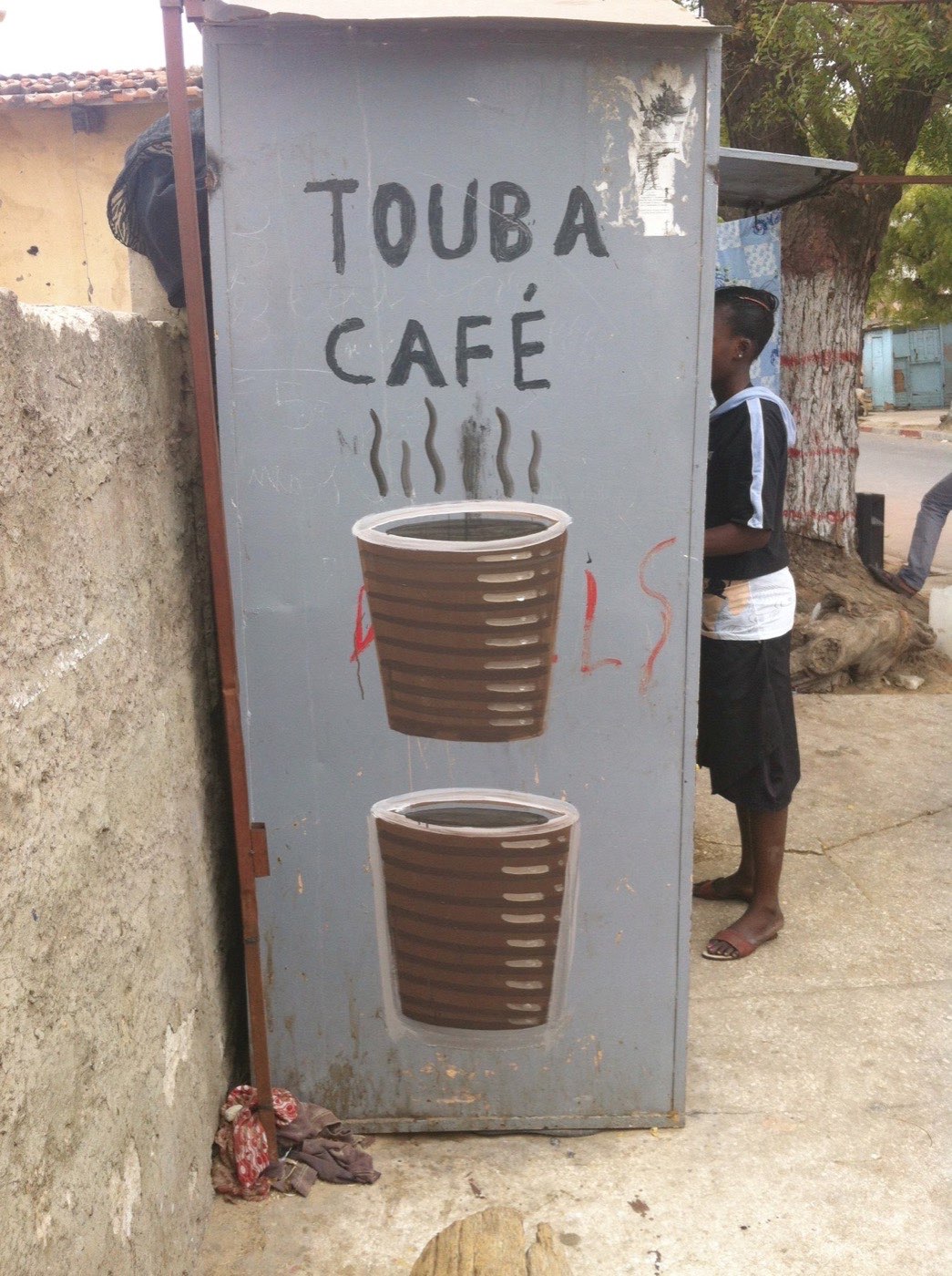
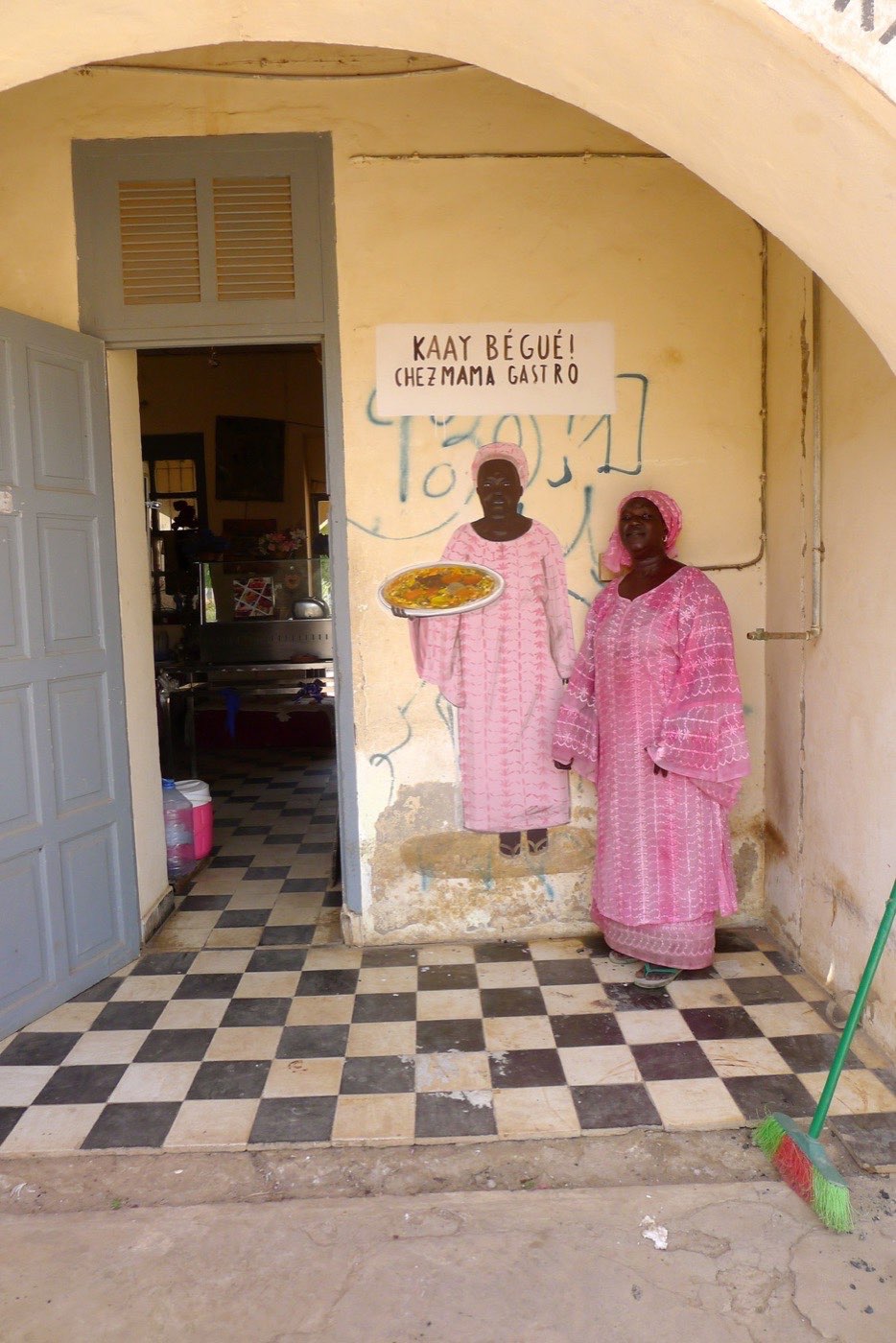
Dans le cadre du festival Interférences 2014 (Médina, Dakar) — festival pluridisciplinaire fondé et dirigé par Les Petites Pierres — l'artiste L'Escif investit le quartier avec une proposition radicalement simple : tisser des liens entre l'art et les petites choses de la vie quotidienne. En échange d'une enseigne peinte, on nous offre tantôt un café, un repas, une manucure, quelques pinceaux, une photo en studio ou une robe — et contre une effigie de saint peinte sur la maison, toute une famille nous consacre sa prière. En quelques jours, tout le quartier nous connaît et nous le connaissons aussi, au-delà des façades de ses rues

Une trame invisible à l'œil nu se déploie au-delà de la structure bâtie. La valeur de l'expérience du don et du contre-don, au-delà de sa dimension relationnelle, nous ramène au niveau le plus essentiel des rapports entre les hommes. Nous qui traversions chaque jour ces mêmes lieux — leur odeur, leur musique a changé. Une subtile et poétique expérience qui montre bien que transformer le monde commence par transformer sa manière d'habiter le monde. Le projet a été intégré par L'Escif dans son premier livre autopublié, Elsewhere — qu'il décrit comme « an encyclopedic archive of images, poetry, and resistance ».

As part of the Interférences 2014 festival (Médina, Dakar) — a multidisciplinary festival founded and directed by Les Petites Pierres — artist L'Escif took over the neighbourhood with a radically simple proposition: weaving connections between art and the small things of everyday life. In exchange for a painted sign, we are offered a coffee, a meal, a manicure, a few brushes, a studio photograph or a dress — and in exchange for a saint's effigy painted on a house, an entire family dedicates their prayers to us. Within a few days, the whole neighbourhood knows us, and we know it too, beyond the facades of its streets

An invisible thread, imperceptible to the naked eye, unfolds beyond the built structure. The value of the experience of gift and counter-gift, beyond its relational dimension, brings us back to the most essential level of relations between people. We who crossed these same places every day — their smell, their music has changed. A subtle and poetic experience that shows how transforming the world begins with transforming the way we inhabit it. The project was integrated by L'Escif into his first self-published book, Elsewhere — which he describes as "an encyclopedic archive of images, poetry, and resistance".

Don et contre-donEspace publicArt relationnelQuartierL'EscifLivre Elsewhere
02

Commissariat · PartCours 2017 · Espace Medina · Dakar

Curating · PartCours 2017 · Espace Medina · Dakar

Nous

Une forme en mouvement où se joue la question du lien, de ce qui nous dénoue et de ce qui nous noue

A form in motion where the question of connection plays out: what unties us and what binds us

2017

À travers un atelier du « Nous », nous proposons une recherche plastique qui engage une réflexion autour de l'exercice d'une parole commune. Dans un mouvement permanent d'invention du réel, le langage plastique devient espace de création de savoir, autour d'un « Nous » qui ne soit pas superposable à un cercle identitaire, ni à une addition de « je » — mais un sujet collectif, une forme en mouvement où se joue la question du lien, de ce qui nous dénoue et de ce qui nous noue. Présenté à l'Espace Medina dans le cadre de la 6ème édition du PartCours, Dakar, 2017

NOUS ? Quelle est sa forme ? Est-ce un puzzle ? Un monde ? Un village ? Un marché ? Un laboratoire ? Ou encore une marche ? Dout's Ndoye, Badou Diack, Manel Ndoye, Birame Ndiaye, Habib Sembène, Pascal Nampémanla Traoré, Cheikha : chaque artiste invité devient curateur d'un dispositif de recherche, une démarche collective vouée à se ramifier progressivement avec la participation d'artistes de diverses pratiques — des arts visuels à la performance et aux arts vivants — suivant le mouvement d'un processus expérimental.

Through a "Nous" (We) workshop, we propose a plastic research that engages a reflection around the exercise of a shared voice. In a permanent movement of inventing reality, plastic language becomes a space for the creation of knowledge — around a "We" that cannot be superimposed onto an identity circle, nor onto an addition of "I"s, but a collective subject, a form in motion where the question of connection plays out: what unties us and what binds us. Presented at Espace Medina as part of the 6th edition of PartCours, Dakar, 2017

WE? What is its form? Is it a puzzle? A world? A village? A market? A laboratory? Or a march? Dout's Ndoye, Badou Diack, Manel Ndoye, Birame Ndiaye, Habib Sembène, Pascal Nampémanla Traoré, Cheikha: each invited artist becomes the curator of a research device, a collective approach destined to branch out progressively with the participation of artists from diverse practices — from visual arts to performance and live arts — following the movement of an experimental process.

Recherche plastiqueSujet collectifLienPerformanceDout's NdoyeCheikhaBadou DiackManel NdoyeBirame NdiayePascal Nampémanla Traoré
Visuels à venirVisuals coming soon
01

Représentation de l'œuvre · Bignona, Casamance · Depuis 2018

Representation of the work · Bignona, Casamance · Since 2018

Seyni Awa Camara — c. 1945–2026
Ce qui advint alors, elle ne le révèle que par le langage de l'argile

What happened then, she reveals only through the language of clay

2018 —

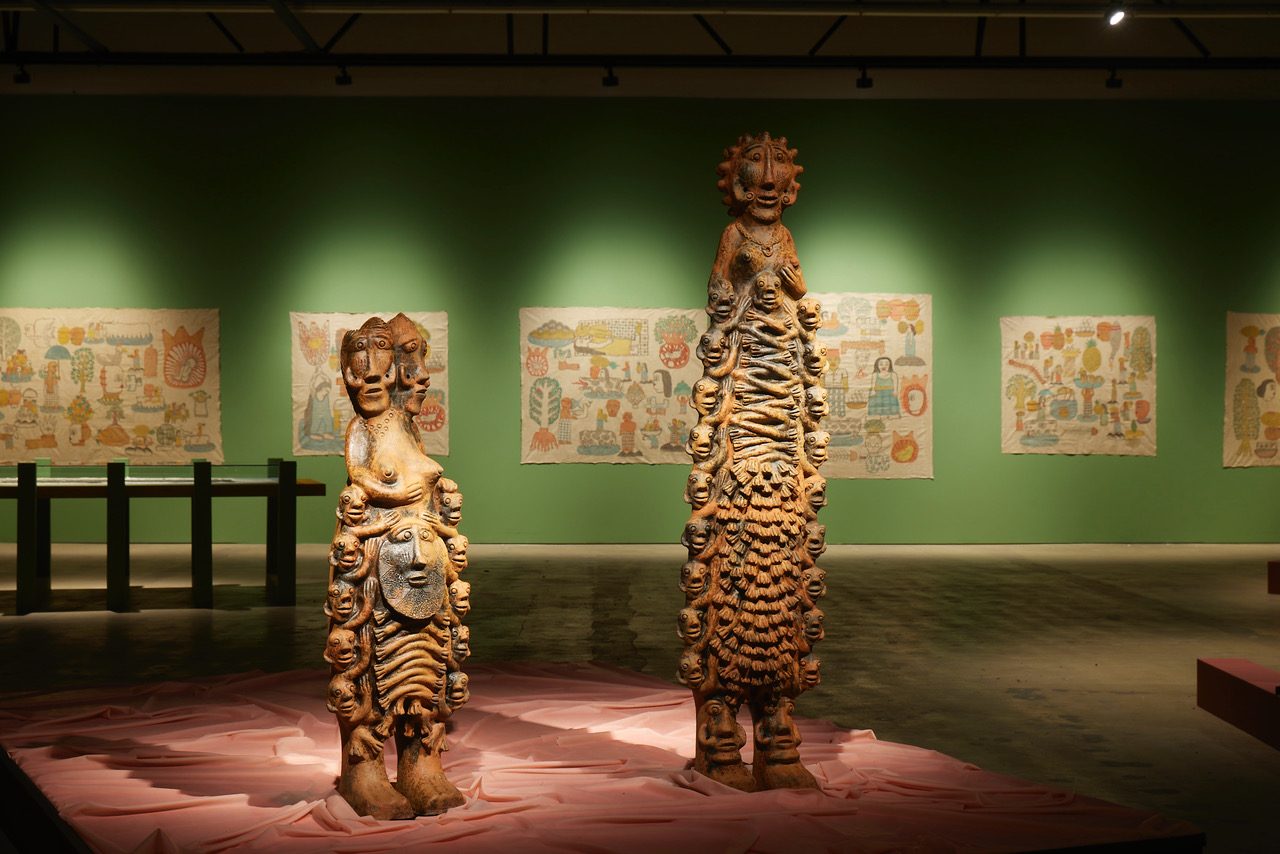
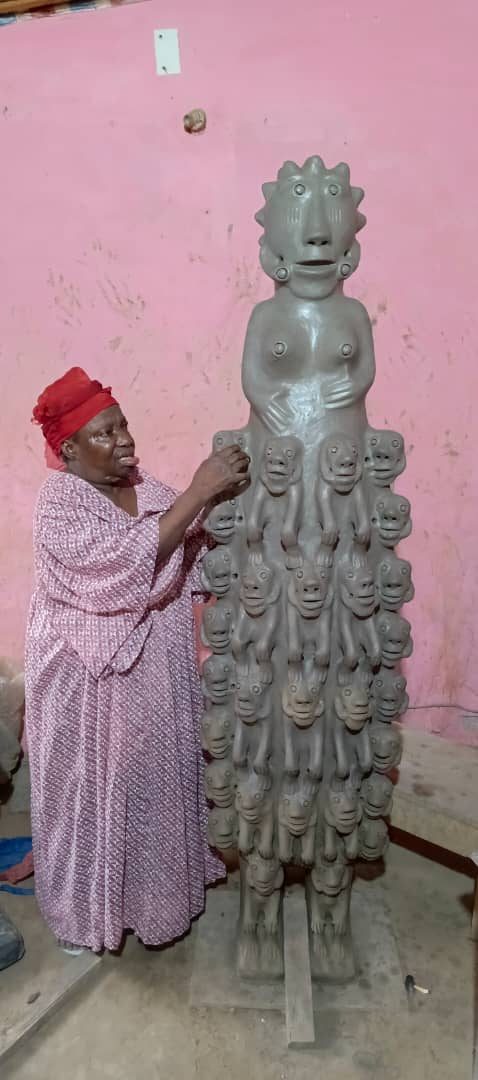
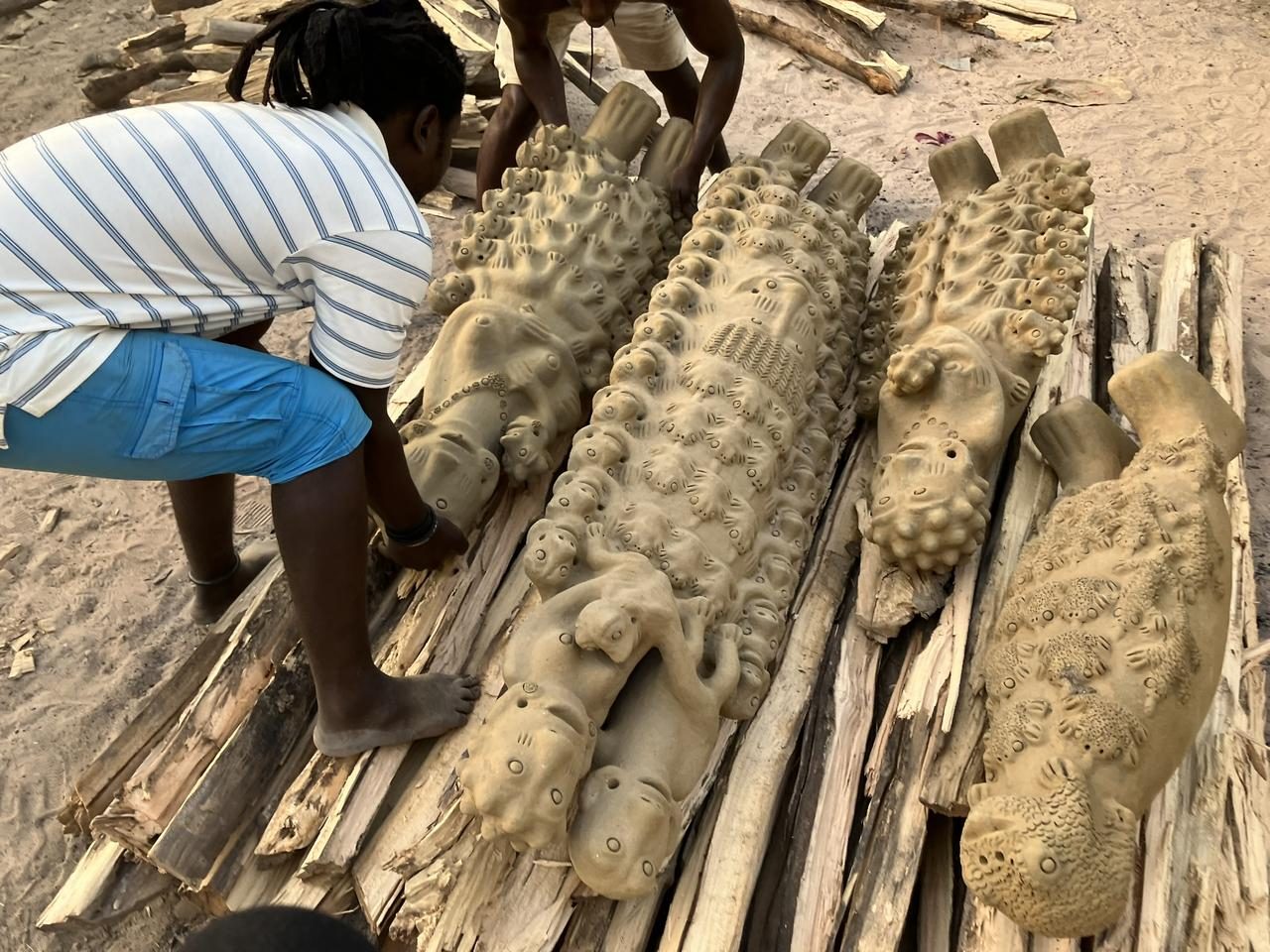
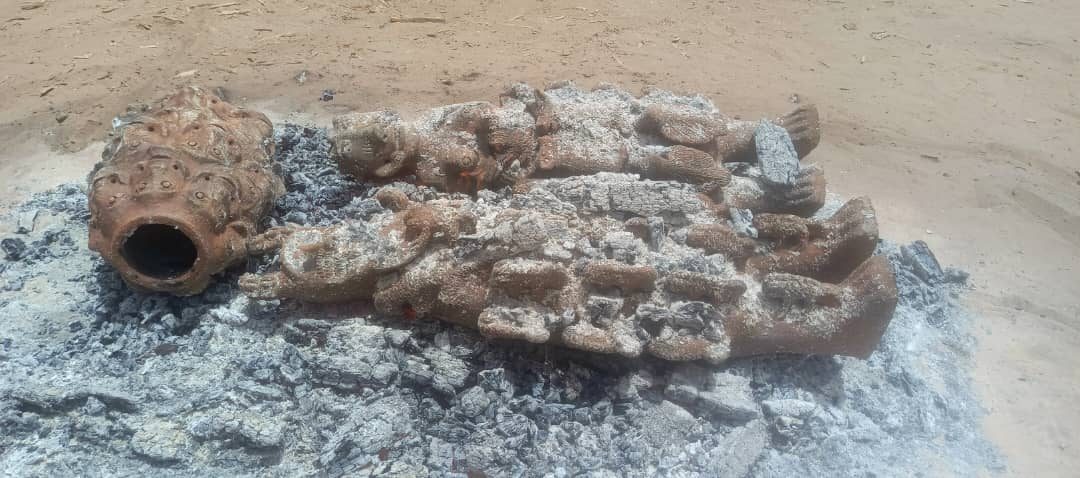
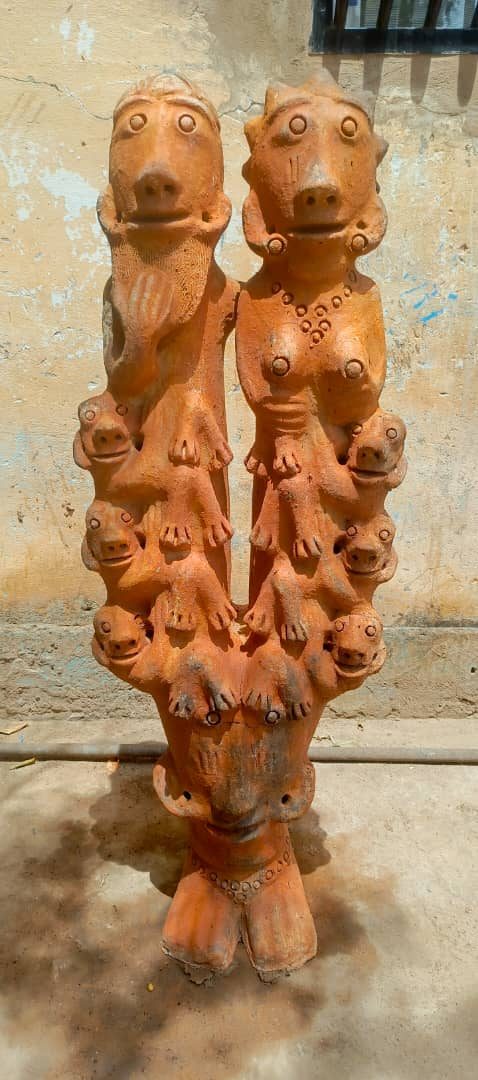
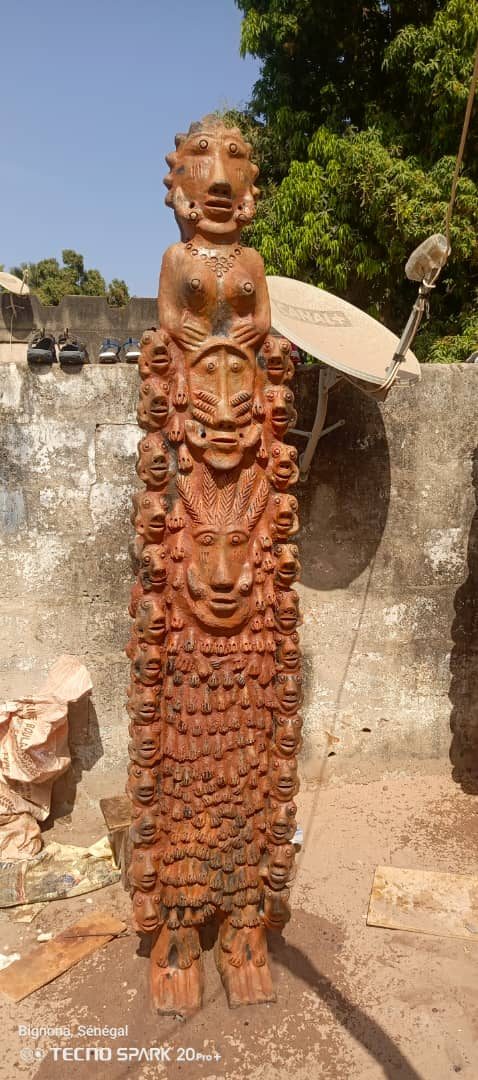
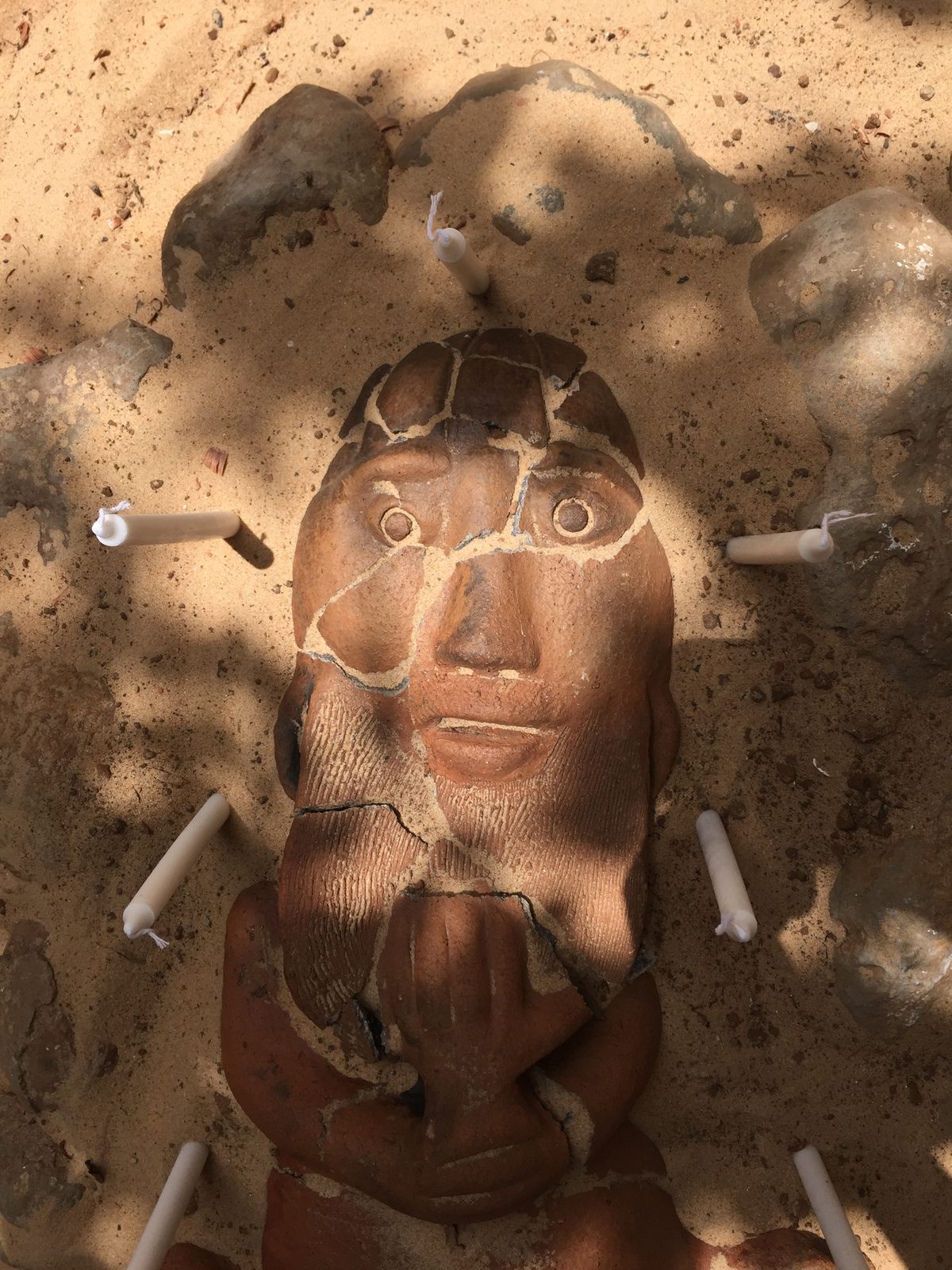
J'accompagne Seyni Awa Camara et sa famille depuis notre rencontre en 2018, lors de la préparation d'une commande pour la Biennale de Gwangju : deux sculptures monumentales dont j'ai coordonné le processus, de la production à l'écriture, jusqu'à l'acquisition par la Tate Modern en 2022. Depuis sa participation à l'exposition Magiciens de la Terre en 1989, nombre de collectionneurs éminents sont venus acheter par lots dans la cour de Bignona, auprès d'une artiste issue d'un village des forêts de Casamance, loin d'une éducation académique et ne parlant que le diola — une asymétrie dont son parcours porte la marque. En cohérence avec mon parcours de commissaire, plus axé sur la production critique que sur le marché de l'art, mon travail s'ancre dans un rôle de médiation, d'interprétariat et de conseil, auprès de l'artiste puis de sa famille, et auprès d'une diversité d'institutions artistiques. Depuis son décès en janvier 2026, sa mémoire et le patrimoine qu'elle laisse derrière elle sont au cœur de ce travail.
Le Souffle de la Mère-Terre · Texte de Maya Varichon El Zanaty · 13e Biennale de Gwangju, Minds Rising, Spirits Tuning, 2021

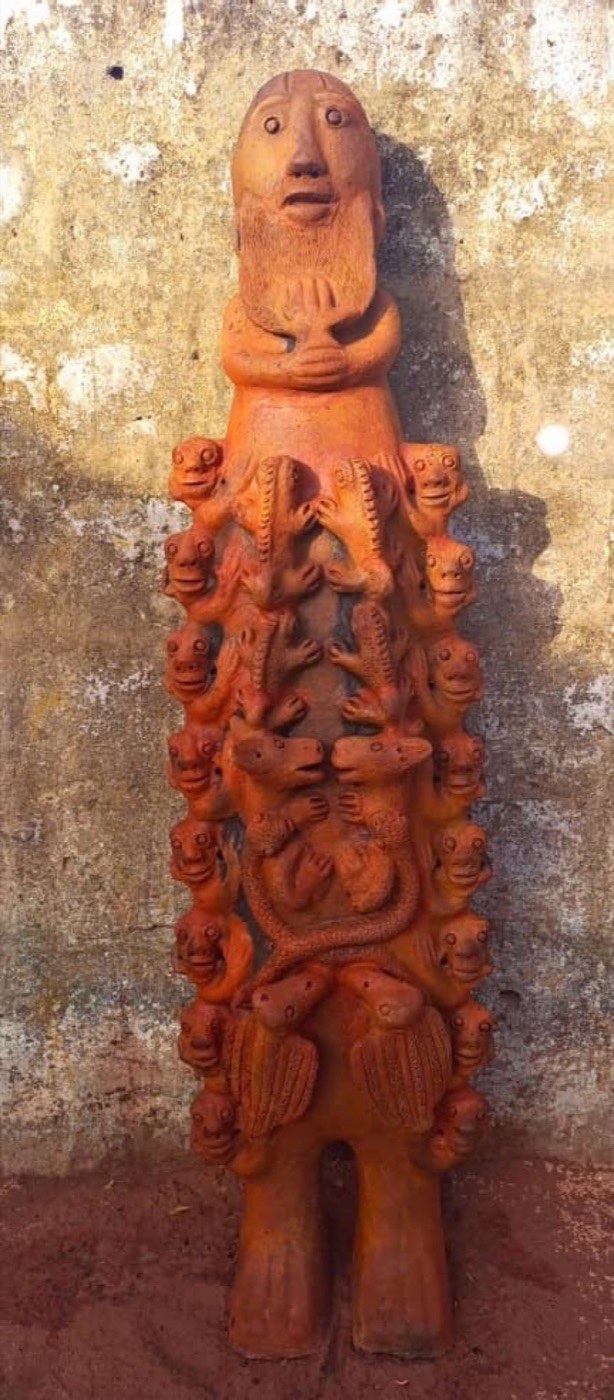
Un jour d'enfance, Seyni s'aventura dans la forêt avec ses frères, allant y chercher du bois mort, tout comme chaque jour leur mère, qui était potière, le leur demandait. Ils avaient tous les quatre une dizaine d'années : une fratrie de quadruplés qui alors entourait Seyni d'une fertile abondance de vie. Mais ce jour-là, Seyni disparut et malgré les recherches de toute la famille, puis de tout le village, resta introuvable, seule au milieu de la grande forêt. Elle n'en ressortit miraculeusement qu'une semaine plus tard, un morceau d'argile dans la main.

Ce n'est qu'avec le temps et avec d'infinies précautions que Seyni accepta de distiller les secrets que la forêt lui confia durant cette mystérieuse excursion. Ce qui advint alors, elle ne le révèle que par le langage de l'argile, terre ancestrale et sacrée qu'elle mue depuis lors en majestueuses créatures cosmiques.

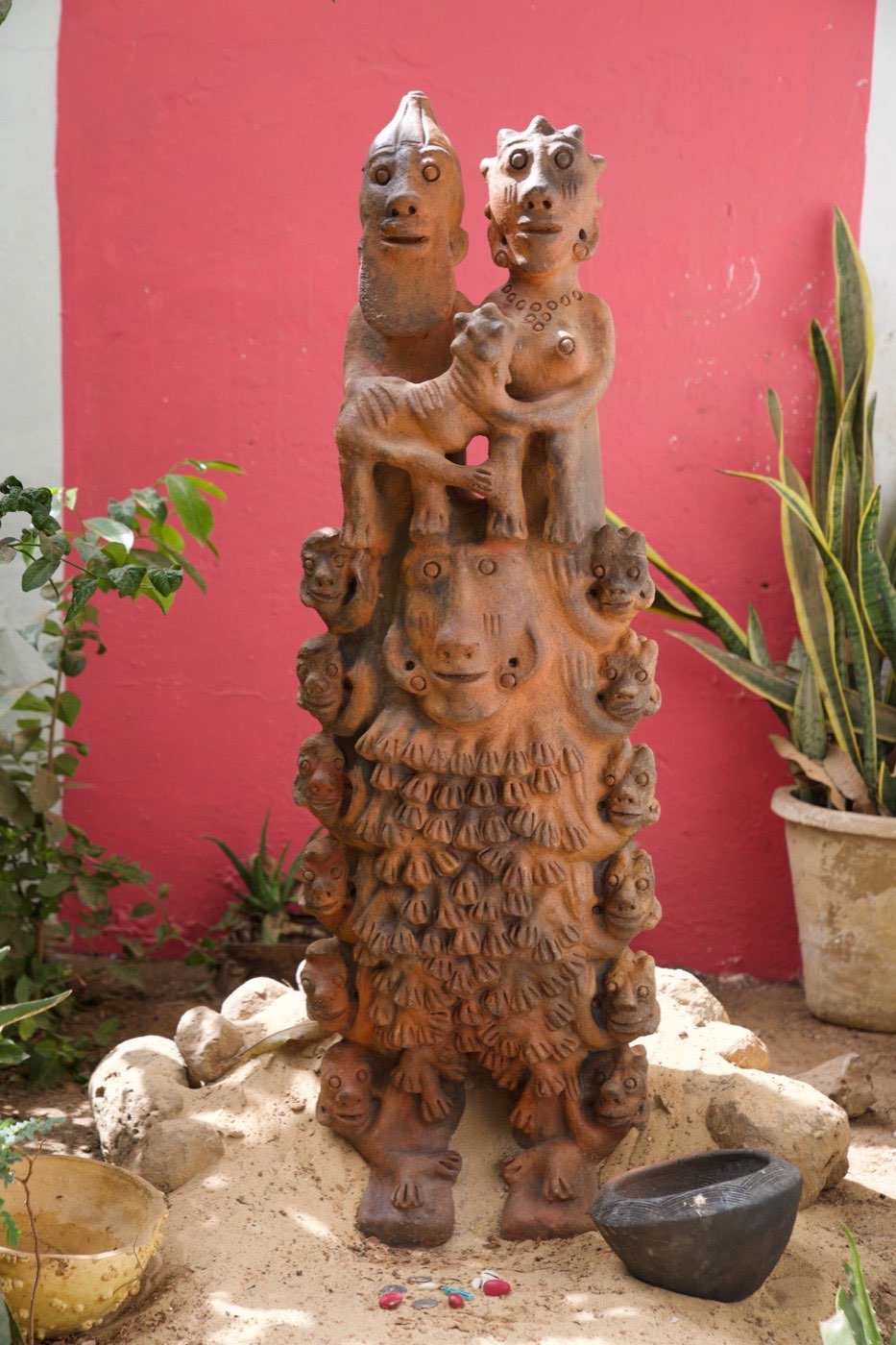
L'œuvre de Seyni Camara forme un récit cosmologique, construit selon une grammaire bien précise. Chaque élément de son travail est codé comme un alphabet dans lequel toutes les formes et images, composées d'ancêtres et de descendance, de figures paternelles et maternelles, de frères aînés et cadets, d'êtres humains, non-humains ou sur-humains, sont les composantes élémentaires d'une représentation métaphysique de l'univers centrée sur la notion de famille dans sa conception la plus élargie. Elles révèlent un monde prospère et joyeux, unifié par un principe maternel solaire. Elles racontent l'existence d'un « nous » céleste et sacré, à l'origine et à la fin de tout.

La dimension spécifique des pièces met en lumière différentes échelles de présence au monde : les représentations humaines et semi-humaines sont de petite taille ; par contraste émergent des figures remarquables par leurs dimensions, appartenant aux représentations supra-humaines, parmi lesquelles le symbole récurrent d'une grand-mère mythologique, ancêtre nourricière, fondatrice de l'univers, emblème de la terre de fertilité et d'abondance qu'est la Casamance natale de l'artiste.

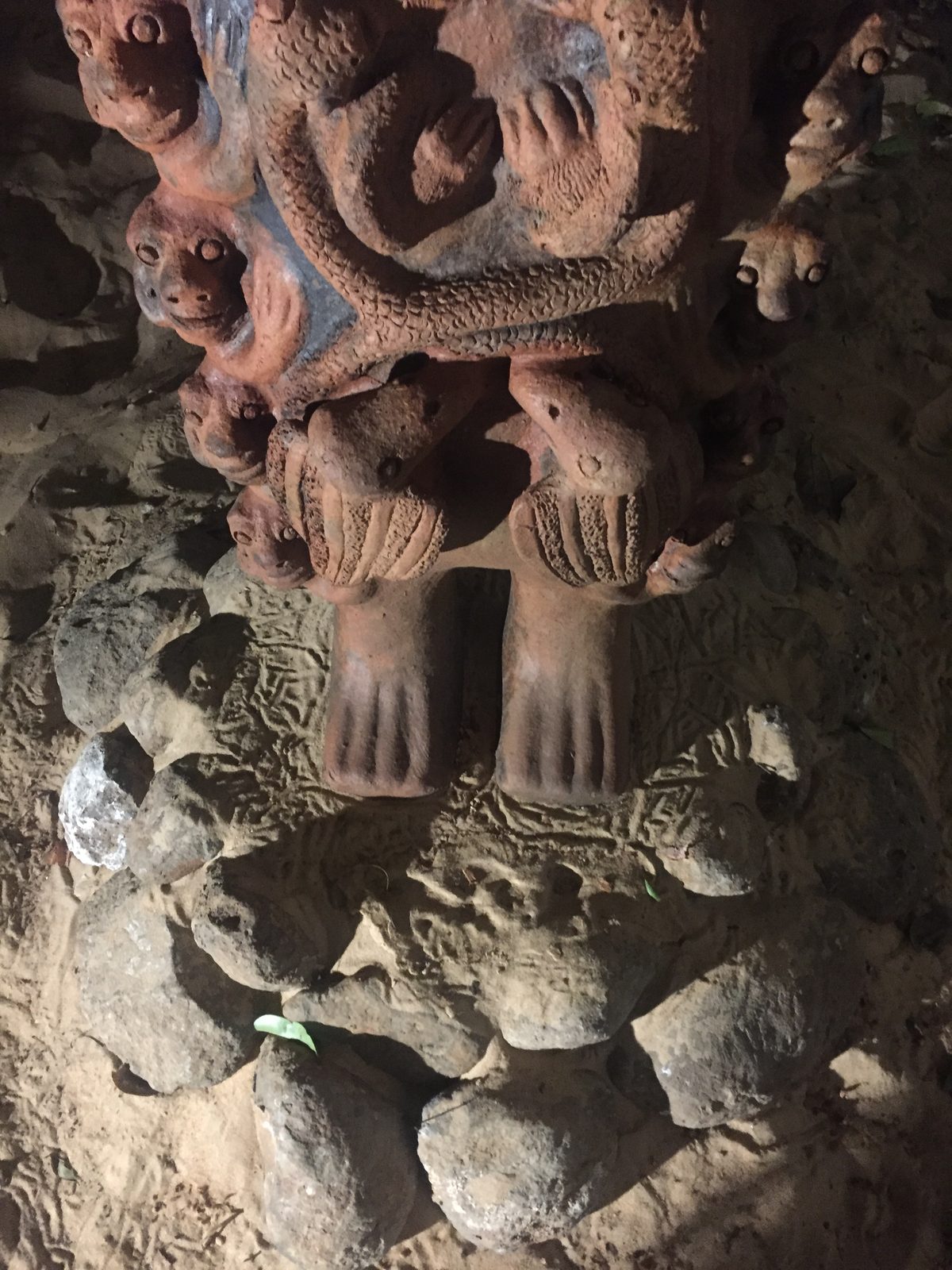
Elles incarnent la prospérité du vivant, fruit de l'union des ancêtres avec leur descendance illimitée et solidaire, trame tissée entre les vivants, les morts et les générations futures, entre les dimensions féminines et masculines, entre le monde visible et celui de l'invisible. Encerclés dans le sein matriciel, la descendance apparaît comme principe fraternel, dont les bras, mains et pieds s'enchevêtrent selon des motifs précis, structurés comme les écorces d'un arbre ou les écailles d'un poisson.

La vie villageoise et le rôle qu'y jouent les femmes au quotidien informe également la composition des œuvres : femmes enceintes, allaitant sans relâche tandis qu'elles transportent de l'eau ou des fagots de bois sur la tête, figurent le courage laborieux des femmes de Casamance — ses mères, grand-mères, sœurs, filles et petites filles — emblèmes de force et de fertilité généreuse, émanations singulières du principe féminin premier auquel Seyni Camara donne corps et âme à travers son œuvre.

I have worked alongside Seyni Awa Camara and her family since we met in 2018, during the preparation of a commission for the Gwangju Biennale: two monumental sculptures whose process I coordinated, from production to writing, through to their acquisition by Tate Modern in 2022. Since her participation in the exhibition Magiciens de la Terre in 1989, many eminent collectors came to buy in batches in the courtyard at Bignona, from an artist raised in a village of the Casamance forests, far from any academic education and speaking only Diola — an asymmetry whose mark her trajectory bears. In keeping with my practice as a curator, oriented towards critical production rather than the art market, my work rests on mediation, interpreting and advice, alongside the artist and then her family, and alongside a range of art institutions. Since her death in January 2026, her memory and the legacy she leaves behind are at the heart of this work.

The Breath of Mother Earth · Text by Maya Varichon El Zanaty · 13th Gwangju Biennale, Minds Rising, Spirits Tuning, 2021

Once upon a time of childhood, Seyni ventured into the forest with her brothers, fetching dead wood, as their mother, who was a potter, asked them to do every day. All four of them were about ten years old: a sibling group of quadruplets who surrounded Seyni with a fertile abundance of life. But that day, Seyni disappeared and despite the searches of the whole family and village, she was nowhere to be found, alone in the great forest. She only miraculously emerged a week later with a piece of clay in her hand.

Only with time and infinite precautions did Seyni distil the secrets that the forest confided during this mysterious excursion. What happened then, she reveals only through the language of clay — the ancestral and sacred soil she has since turned into majestic cosmic creatures.

Seyni Camara's work forms a cosmological narrative constructed according to a precise grammar. Each element is coded like an alphabet in which all forms and images — ancestors and descendants, paternal and maternal figures, elder and younger siblings, human, non-human and super-human beings — are the elementary components of a metaphysical representation of the universe centred on the notion of family in its widest conception. They reveal a prosperous and joyful world, unified by a solar maternal principle. They tell of the existence of a celestial and sacred « we », at the origin and the end of everything.

The specific dimension of the pieces highlights different scales of presence in the world: the human and semi-human representations are small in size; by contrast, figures emerge remarkable for their dimensions — super-human representations, among which the recurring symbol of a mythological grandmother, a nurturing ancestor, founder of the universe, emblem of the land of fertility and abundance that is the artist's native Casamance.

They embody the prosperity of the living, fruit of the union of the ancestors with their unlimited descendants, a woven fabric between the living, the dead and future generations, between feminine and masculine dimensions, between the visible and invisible worlds. Encircled in the matrix womb, the descent appears as a fraternal principle, whose arms, hands and feet interlock according to precise patterns, structured like the bark of a tree or the scales of a fish.

Village life and the role that women play in it also informs the works: pregnant women, breastfeeding tirelessly while carrying water or bundles of wood on their heads, represent the laborious courage of the women of Casamance — their mothers, grandmothers, sisters, daughters and granddaughters — emblems of strength alongside generous fertility, singular emanations of the primary feminine principle to which Seyni Camara gives body and soul through her work.

AccompagnementConseilAcquisitions privées et institutionnellesCollections publiquesCollections d'art africain

Page en cours de construction

Page under construction

Écriture Writing

Publications

Publications

Recherche documentaire · Coordination éditoriale · Écriture

Documentary research · Editorial coordination · Writing

Aux sources du cinéma panafricain
Sembène, Vieira, Mambety, Samb Makharam

Éditions Vive Voix, Dakar — 2022

Ouvrage consacré aux pères fondateurs du cinéma panafricain. Recherches documentaires, coordination éditoriale et écriture autour de quatre figures majeures : Sembène Ousmane, José Mambety Diop, Paulin Vieira et Ababacar Samb Makharam

A work dedicated to the founding fathers of pan-African cinema. Documentary research, editorial coordination and writing around four major figures: Sembène Ousmane, José Mambety Diop, Paulin Vieira and Ababacar Samb Makharam

Texte d'auteure & photographie · Catalogue · Biennale de Gwangju 2020

Author's text & photography · Catalogue · Gwangju Biennial 2020

Seyni Awa Camara

Mind Rising, Spirit Tunning — Gwangju Biennale — 2020

Texte et photographies consacrés à l'artiste sénégalaise Seyni Awa Camara, publiés dans le catalogue officiel de la Biennale de Gwangju, Corée du Sud

Text and photographs dedicated to Senegalese artist Seyni Awa Camara, published in the official catalogue of the Gwangju Biennial, South Korea

Texte d'auteure · Livre-objet

Author's text · Book-object

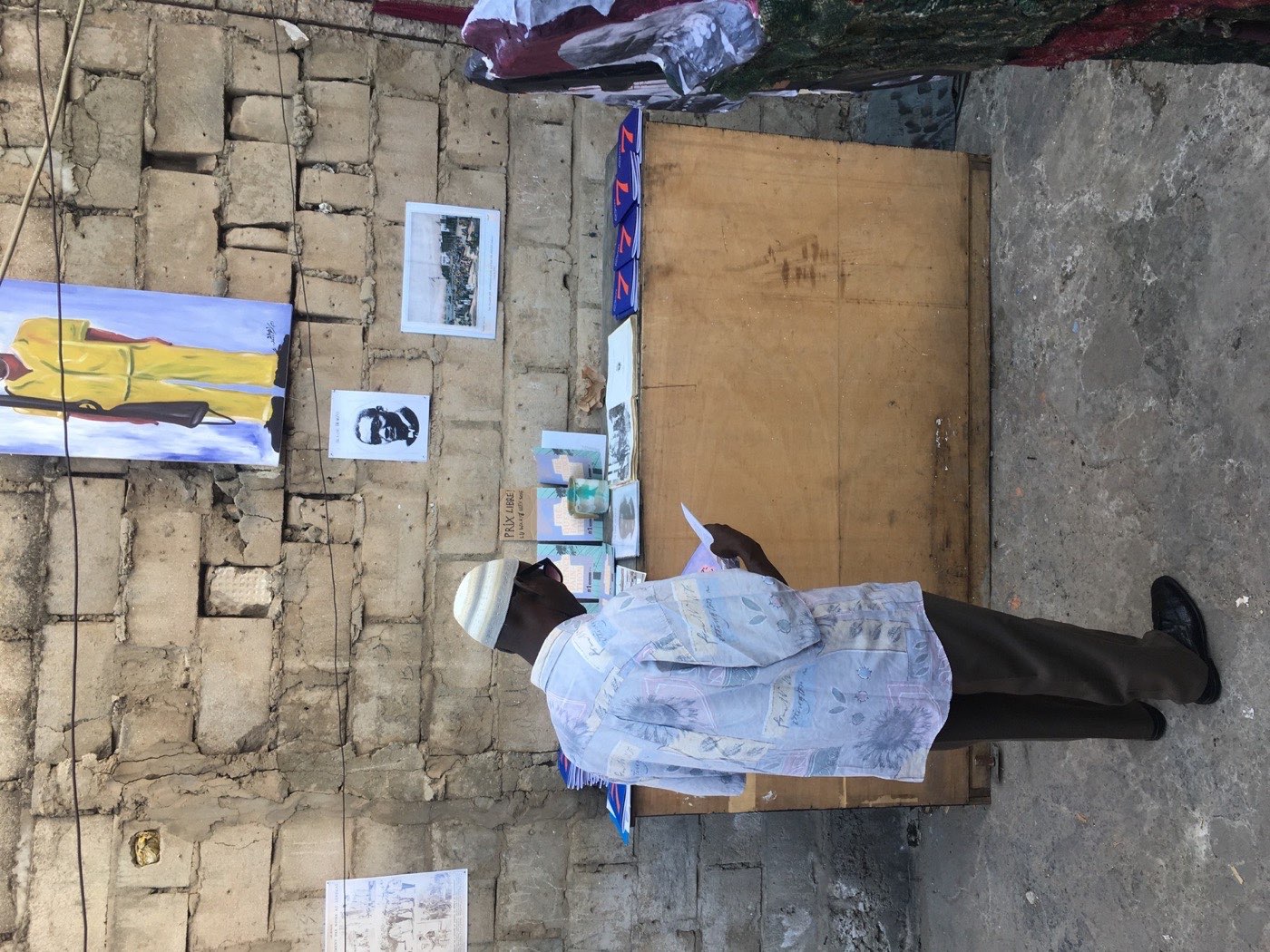
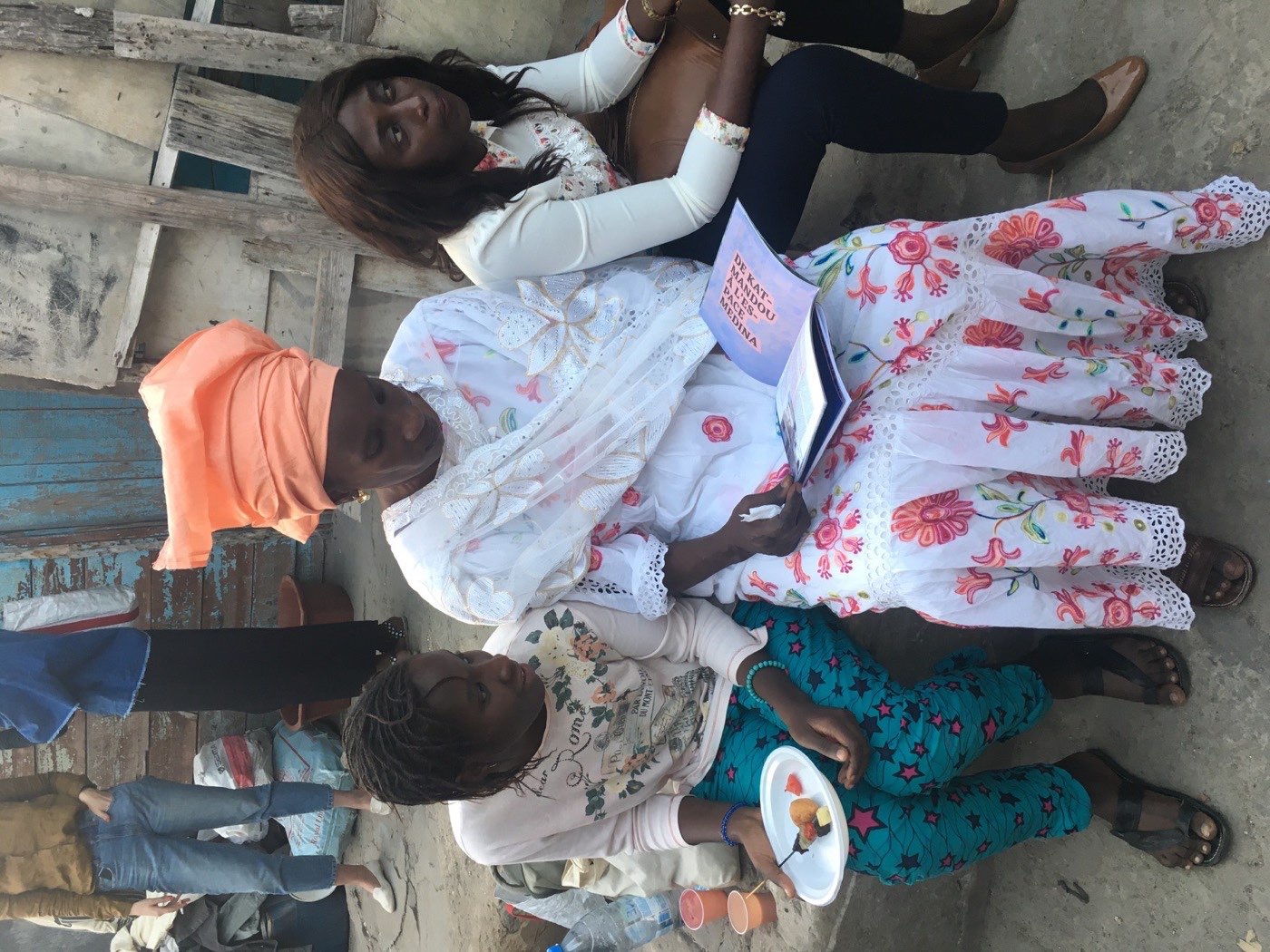
Niaye Thioker : Lieu Commun
Un laboratoire artistique dans la ville

Éditions Vive Voix, Dakar · Ateliers Graphoui, Bruxelles — 2019

Publication documentant le projet Lieu Commun, exploration artistique d'un quartier dakarois en sursis. Livre-objet co-édité entre Dakar et Bruxelles, croisant textes, archives et créations visuelles

Publication documenting the Lieu Commun project, an artistic exploration of a threatened Dakar neighbourhood. A book-object co-published between Dakar and Brussels, weaving texts, archives and visual works

Texte d'auteure · Catalogue · Biennale Dak'Art 2018

Author's text · Catalogue · Dak'Art Biennial 2018

Dakar, matrice du monde

L'Heure Rouge — 2018

Texte publié dans le catalogue officiel de la Biennale de Dakar 2018, dont le thème était L'Heure Rouge. Une réflexion sur Dakar comme espace-monde, carrefour des imaginaires contemporains africains

Text published in the official catalogue of the 2018 Dakar Biennial, themed L'Heure Rouge. A reflection on Dakar as a world-space, crossroads of contemporary African imaginaries

Coordination éditoriale · Texte & photographies originales

Editorial coordination · Original text & photography

Écoute plus souvent les choses
in Fréquence Pain-thon

Éditions Now Now !, Dakar — 2018

« Par Fréquence nous signifions la multiplicité des urbanités qui coexistent dans cette ville. » Mamadou Diallo et Maya Varichon El Zanaty ont coordonné cette publication. Maya a publié des textes et photographies, sous le titre : Écoute plus souvent les choses

"By Frequency we mean the multiplicity of urbanities that coexist in this city." Mamadou Diallo and Maya Varichon El Zanaty coordinated this publication. Maya contributed original texts and photographs, under the title: Écoute plus souvent les choses

Texte d'auteure · Intense Art Magazine · Édition spéciale Dak'Art 2016

Author's text · Intense Art Magazine · Dak'Art 2016 special edition

Pourquoi Selly Raby Kane
est-elle une icône ?

Intense Art Magazine — 2016

Portrait critique de la créatrice et artiste Selly Raby Kane, figure de proue de l'afro-futurisme sénégalais, publié dans l'édition spéciale Biennale Dak'Art 2016

Critical portrait of designer and artist Selly Raby Kane, figurehead of Senegalese afro-futurism, published in the Dak'Art Biennial 2016 special edition

Préface · Éditions Pierre Bessard, Paris — 2013 · Édition limitée à 300 exemplaires

Preface · Éditions Pierre Bessard, Paris — 2013 · Limited edition of 300 copies

The Afronauts on a Mission to Mars

Cristina de Middel · Éditions Pierre Bessard, Paris — 2013

Préface du livre de photographies de Cristina de Middel, issu d'une résidence Les Petites Pierres / Interférences à Dakar. Une série afro-futuriste entre fiction documentaire et poésie visuelle. 38 pages, 18 × 25 cm, photographie signée par l'artiste

Preface to the photography book by Cristina de Middel, born from a Les Petites Pierres / Interférences residency in Dakar. An afro-futurist series between documentary fiction and visual poetry. 38 pages, 18 × 25 cm, picture signed by the artist

Formation académique & alternative Academic & alternative education

Cursus

Cursus

2022 · Le Caire
CILAS (Cairo Institute for Liberal Arts and Sciences) × Ecoversities Alliance
Résidence de recherche
Research residency

Résidence de recherche dans le cadre du projet de recherche-création Talismania : une critique de l'égyptologie coloniale qui retrace les fils de transmission culturelle entre l'Égypte ancienne et l'Afrique de l'Ouest contemporaine

Research residency within the Talismania research-creation project: a critique of colonial Egyptology tracing the threads of cultural transmission between ancient Egypt and contemporary West Africa

2019 · Jinja, Uganda  ·  2022 · Siwa, Égypte
Ecoversities Alliance
Résidences de recherche
Research residencies

Alliance planétaire de communautés qui revendiquent la diversité des savoirs, des relations et des imaginaires pour concevoir de nouvelles approches de l'éducation. Deux résidences : Jinja, aux sources du Nil : premier rassemblement de la branche africaine — Siwa, oasis du désert égyptien : rassemblement planétaire

A global alliance of communities reclaiming diverse knowledges, relationships and imaginations to design new approaches to education. Two residencies: Jinja, at the source of the Nile — first gathering of the African branch; Siwa, oasis in the Egyptian desert — global gathering

2020 · Sénégal
Hôpital traditionnel de Kër Massar
Stage de recherche · Pratiques de guérison
Research placement · Healing practices

Stage de recherche dans le cadre du programme Faju (Healing) — pharmacopée traditionnelle, prophylaxie et principes de traitement. Une immersion dans les savoirs thérapeutiques ancestraux du Sénégal

Research placement within the Faju (Healing) programme — traditional pharmacopoeia, prophylaxis and treatment principles. An immersion in the ancestral therapeutic knowledges of Senegal

2019 · Dakar · 7 semaines
RAW Académie — CURA · Session 6
Dirigée par Koyo Kouoh · RAW Material Company

RAW Académie est un programme expérientiel pour la recherche et l'étude de la pratique et de la pensée artistique et du commissariat d'exposition. Dans cette session, Koyo Kouoh place le commissariat au cœur de la réflexion — comme monnaie culturelle, action sociale et politique, manière d'écrire et de réécrire des histoires, de lire le présent et d'imaginer des futurs possibles. Corps professoral : Gaby Ngcobo, Kate Fowle, Chus Martinez, Diana Campbell Betancourt, Adrienne Edwards, Maria Lind, Natasha Ginwala, Princesse Marilyn Douala Bell, WHW, Elvira Dyangani Ose

RAW Académie is an experiential programme for research and study in artistic practice, thinking and curating. In this session, Koyo Kouoh places curating at the heart of reflection — as cultural currency, social and political action, a way of writing and rewriting histories, reading the present and imagining possible futures. Faculty: Gaby Ngcobo, Kate Fowle, Chus Martinez, Diana Campbell Betancourt, Adrienne Edwards, Maria Lind, Natasha Ginwala, Princesse Marilyn Douala Bell, WHW, Elvira Dyangani Ose

depuis 2001 · Dakar
Espace Medina
Formation informelle · Famille d'artistes et d'intellectuels
Informal education · Family of artists and intellectuals

Une maison, une famille, un espace d'art, une université, un laboratoire. Babacar Sedikh Traoré, Mamadou Traoré Diop, Cheikha, Babacar Traoré Doli... rencontrés dès mes premières recherches sur le mouvement Set Setal, l'Espace Medina a été la source de ma formation artistique et humaine au Sénégal

A home, a family, an art space, a university, a laboratory. Babacar Sedikh Traoré, Mamadou Traoré Diop, Cheikha, Babacar Traoré Doli... encountered during my first research on the Set Setal movement, Espace Medina was the source of my artistic and human formation in Senegal

2017 · Dakar
RAW Académie — Angazi but I'm sure · Session 2
Dirigée par Chimurenga · Ntone Edjabe

RAW Académie est un programme expérientiel pour la recherche et l'étude de la pratique et de la pensée artistique et du commissariat d'exposition. Dans cette session, Chimurenga invite à explorer les formes africaines de transmission des savoirs — cartographie radicale, bande dessinée, musique, publication. Corps professoral : Kodwo Eshun, Dominique Malaquais, Jean-Pierre Bekolo, Jihan El Tahri, Lionel Manga, Victor Gama, Clapperton C. Mavhunga, Felwine Sarr, Yemisi Aribisala, Neo Muyanga, Philippe Rekacewicz, Laila Soliman

RAW Académie is an experiential programme for research and study in artistic practice, thinking and curating. In this session, Chimurenga invites exploration of African forms of knowledge transmission — radical cartography, comics, music, publishing. Faculty: Kodwo Eshun, Dominique Malaquais, Jean-Pierre Bekolo, Jihan El Tahri, Lionel Manga, Victor Gama, Clapperton C. Mavhunga, Felwine Sarr, Yemisi Aribisala, Neo Muyanga, Philippe Rekacewicz, Laila Soliman

2002 – 2017 · Dakar
Laboratoire Agit'Art
Transmission par la participation et l'expérimentation collective
Transmission through participation and collective experimentation

Fondé par Issa Samb dit Joe Ouakam, figure tutélaire de l'avant-garde artistique sénégalaise. Une conversation nouée lors de recherches sur le mouvement Set Setal en 2002, ininterrompue jusqu'au décès de l'artiste en 2017. Transmission par la participation, l'expérimentation collective et l'engagement social — la cour de Joe fut une école de vie pour de nombreux artistes de Dakar, d'Afrique et du monde

Founded by Issa Samb known as Joe Ouakam, tutelary figure of Senegalese artistic avant-garde. A conversation begun during research on the Set Setal movement in 2002, uninterrupted until the artist's death in 2017. Transmission through participation, collective experimentation and social engagement — Joe's courtyard was a school of life for many artists from Dakar, Africa and the world

1998 – 2004 · Paris
La Sorbonne — Paris 1
Licence · Maîtrise · DESS

Licence d'Histoire générale, majeure Sociologie. Maîtrise d'Histoire contemporaine de l'Afrique (mention Très Bien). DESS Développement, Coopération Internationale et Action Humanitaire (Sciences Po / Paris 1)

Bachelor's in General History, major in Sociology. Master's in Contemporary History of Africa (High Distinction). DESS in Development, International Cooperation and Humanitarian Action (Sciences Po / Paris 1)

2001 · Paris
INALCO
DULCO Wolof

DULCO langue et civilisation Wolof

DULCO Wolof language and civilisation

Consulting

Consulting

Une pratique de terrain forgée depuis vingt ans à l'intersection des scènes artistiques africaines et internationales — du commissariat à la recherche, de la production à l'ingénierie culturelle

A practice built over twenty years at the intersection of African and international art scenes — from curating to research, from production to cultural engineering

Pour les institutions

For institutions

Expertise curatoriale
& médiation culturelle

Curatorial expertise
& cultural mediation

  • Commissariat d'exposition
  • Exhibition curating
  • Développement de partenariats Sud–Nord
  • South–North partnership development
  • Approche décoloniale appliquée aux savoirs et à la programmation
  • Decolonial approach applied to knowledge and programming
  • Community-based art practices
  • Community-based art practices
  • Recherche critique & écriture
  • Critical research & writing
  • Mentoring & formation
  • Mentoring & training

Pour les fondations & collectionneurs

For foundations & collectors

Art advisor
& médiation locale

Art advisor
& local mediation

  • Art advisor : conseil stratégique en art contemporain africain
  • Art advisor: strategic counsel on contemporary African art
  • Conseil en acquisitions & mise en relation avec artistes, galeries et institutions
  • Acquisitions advisory & connection with artists, galleries and institutions
  • Médiation locale & facilitation : intégration dans les réseaux, codes culturels, logistique
  • Local mediation & facilitation: network integration, cultural codes, logistics

Pour artistes, festivals & structures culturelles

For artists, festivals & cultural organisations

Production &
conception créative

Production &
creative development

  • Conception et développement de concepts créatifs
  • Creative concept design and development
  • Direction artistique de festivals & événements pluridisciplinaires
  • Artistic direction of festivals & multidisciplinary events
  • Montage de projets de A à Z : de l'idée à la réalisation
  • End-to-end project development: from concept to realisation
  • Recherche de financements & montage de dossiers
  • Funding research & application development
  • Mentoring d'artistes & mise en réseau international
  • Artist mentoring & international networking
Haus der Kulturen der Welt
Berlin
Tate Modern
London
Gwangju Biennale Foundation
Gwangju, South Korea
Prince Claus Foundation
Amsterdam
Fondation Josef et Anni Albers
USA
Fondation Rosa Luxembourg
Berlin
British Council
Dakar
Institut Français
Dakar
Biennale Dak'Art
Dakar
Ville de Dakar
Dakar
The Gallery of Everything
London
Andani Africa
Kër Thiossane
Dakar
CIRA
Marseille
EurArteC / Université Paris 8
Paris
Institut Panos Afrique de l'Ouest
Dakar
Fonds de dotation Agnès b.
Paris
Délégation Wallonie-Bruxelles
Bruxelles
Goethe Institut Sénégal
Dakar
UNESCO
Dakar Ville Créative
Ambassade des États-Unis
Dakar
Ecoversities Alliance
International
Cairo Institute for Liberal Arts and Sciences
Le Caire
HIVOS — Digital Earth
International

Vous avez un projet ?

Got a project?

Parlons-en.

Let's talk.

Biographie & curriculum Biography & curriculum

À propos

About

Bio courte — Version institutionnelle

Short bio — Institutional version

Maya Varichon El Zanaty est commissaire d'exposition indépendante, chercheuse, productrice et consultante, basée à Marseille. Co-fondatrice du collectif Les Petites Pierres (Dakar, 2005–2015), commissaire du programme Urbi et assistante du directeur artistique de la Biennale Dak'Art « L'Heure Rouge » (Simon Njami, 2018), advisor pour la Biennale de Gwangju (2020–2021) et agente artistique de Seyni Awa Camara (collections Tate Modern), elle a dirigé la Bibliothèque Terme Sud (2020–2023) et été commissaire associée au programme The New Alphabet School (HKW Berlin, 2019–2022). Elle développe actuellement un projet de thèse en recherche-création sur la déconstruction des savoirs issus de l'égyptologie coloniale. Titulaire d'une maîtrise d'Histoire contemporaine de l'Afrique et d'un DESS en sciences politiques (La Sorbonne / Sciences Po Paris, 2004), elle est double alumna de la RAW Académie dirigée par Chimurenga (2017) et Koyo Kouoh (2019). Ses champs d'expertise traversent l'art contemporain africain et diasporique, les épistémologies du Sud, les formes décoloniales de transmission et la fabrique du commun

Maya Varichon El Zanaty is an independent curator, researcher, producer and consultant based in Marseille. Co-founder of the collective Les Petites Pierres (Dakar, 2005–2015), curator of the Urbi programme and assistant to the artistic director of the Dak'Art Biennial "L'Heure Rouge" (Simon Njami, 2018), advisor for the Gwangju Biennial (2020–2021) and artistic agent of Seyni Awa Camara (Tate Modern collections), she directed Bibliothèque Terme Sud (2020–2023) and served as associate curator for The New Alphabet School programme (HKW Berlin, 2019–2022). She is currently developing a research-creation doctoral project on the deconstruction of knowledges produced by colonial Egyptology. Holder of a Master's in Contemporary History of Africa and a DESS in Political Sciences (La Sorbonne / Sciences Po Paris, 2004), she is a double alumna of the RAW Académie directed by Chimurenga (2017) and Koyo Kouoh (2019). Her fields of expertise traverse contemporary African and diasporic art, epistemologies of the South, decolonial forms of transmission and the fabrication of the commons

Bio courte — Statement

Short bio — Statement

Franco-égyptienne, Maya Varichon El Zanaty a quitté Paris à la fin de ses études pour s'ancrer pendant vingt ans dans les scènes artistiques africaines et internationales — des quartiers populaires de Dakar aux institutions de Berlin, Londres et Séoul. Elle a choisi l'art comme medium capable d'enraciner le changement social dans un contexte culturel émancipé. Commissaire, chercheuse, productrice, elle crée des espaces où la création est une forme de recherche, où l'éducation commence par la déconstruction des savoirs, où l'accumulation des connaissances cède le pas à l'éveil des consciences. Aujourd'hui basée à Marseille, elle poursuit une pratique à l'intersection du commissariat indépendant, de la recherche-création et du conseil

Franco-Egyptian, Maya Varichon El Zanaty left Paris after her studies to spend twenty years rooted in African and international art scenes — from the working-class neighbourhoods of Dakar to institutions in Berlin, London and Seoul. She chose art as a medium capable of grounding social change in an emancipated cultural context. Curator, researcher, producer, she creates spaces where creation is a form of research, where education begins with the deconstruction of knowledge, where the accumulation of knowing gives way to the awakening of consciousness. Now based in Marseille, she pursues a practice at the intersection of independent curating, research-creation and advisory work

Bio longue — Pour catalogues & dossiers

Long bio — For catalogues & applications

Franco-égyptienne, basée à Dakar de 2005 à 2024, puis à Marseille, Maya Varichon El Zanaty est commissaire d'exposition indépendante, chercheuse, productrice et consultante. Sa pratique se tient à l'intersection des champs de l'art, des sciences humaines et de l'éducation — ancrée dans le présent, fugitive dans ses formes.

Formée à l'esprit radical du laboratoire Agit'Art — collectif fondateur de l'art contemporain africain — elle co-fonde le collectif Les Petites Pierres (2005–2015), dont émergent de nombreuses figures de la scène artistique sénégalaise contemporaine. Elle dirige le festival Interférences (2012–2014), porté par le collectif. Elle est par la suite co-commissaire d'Elsewhen à la 12e Biennale Dak'Art (2016), commissaire associée à l'Espace Medina (2016–2018), commissaire du programme Urbi et assistante du directeur artistique de la Biennale de Dakar « L'Heure Rouge » (Simon Njami, 2018), puis advisor pour la Biennale de Gwangju, Corée du Sud (2020–2021). Elle est également l'agente artistique de Seyni Awa Camara, qu'elle fait entrer dans les collections de la Tate Modern (Londres).

En 2020, elle fonde la Bibliothèque Terme Sud à Dakar — laboratoire de recherche indépendant pratiquant des méthodologies artistiques appliquées à la recherche sur le présent. Dans ce cadre, elle conçoit Faju (Healing) et A Fugitive Library dans le cadre du programme The New Alphabet School (Haus der Kulturen der Welt Berlin, 2019–2022). Double alumna de la RAW Académie dirigée par Chimurenga (2017) et Koyo Kouoh (2019), elle développe aujourd'hui un projet de thèse en recherche-création portant sur la déconstruction des savoirs issus de l'égyptologie coloniale, sous la direction du philosophe Mohamed Amer Meziane. En 2026, elle co-fonde à Marseille le Bureau de la survie avec l'artiste Nicolas Faubert.

Ses axes de recherche traversent les épistémologies du Sud, la fugitivité des savoirs, les formes décoloniales de transmission et la fabrique du commun

Franco-Egyptian, based in Dakar from 2005 to 2024, then in Marseille, Maya Varichon El Zanaty is an independent curator, researcher, producer and consultant. Her practice sits at the intersection of art, the humanities and education — grounded in the present, fugitive in its forms.

Shaped by the radical spirit of the Agit'Art laboratory — the founding collective of contemporary African art — she co-founds the collective Les Petites Pierres (2005–2015), from which emerge many major figures of the contemporary Senegalese art scene. She directs the Interférences festival (2012–2014), carried by the collective. She then co-curates Elsewhen at the 12th Dak'Art Biennial (2016), serves as associate curator at Espace Medina (2016–2018), curator of the Urbi programme and assistant to the artistic director of the Dakar Biennial "L'Heure Rouge" (Simon Njami, 2018), then advisor for the Gwangju Biennial, South Korea (2020–2021). She is also the artistic agent of Seyni Awa Camara, whom she brings into the collections of Tate Modern (London).

In 2020, she founds Bibliothèque Terme Sud in Dakar — an independent research laboratory practising artistic methodologies applied to research on the present. Within this framework, she conceives Faju (Healing) and A Fugitive Library within The New Alphabet School programme (Haus der Kulturen der Welt Berlin, 2019–2022). A double alumna of the RAW Académie directed by Chimurenga (2017) and Koyo Kouoh (2019), she is currently developing a research-creation doctoral project on the deconstruction of knowledges produced by colonial Egyptology, under the supervision of philosopher Mohamed Amer Meziane. In 2026, she co-founds in Marseille the collective Bureau de la survie with artist Nicolas Faubert.

Her research traverses the epistemologies of the South, the fugitivity of knowledges, decolonial forms of transmission and the fabrication of the commons

Photo à ajouter

Photo presse

Press photo

Maya Varichon El Zanaty

Maya Varichon El Zanaty

JPG · 300 dpi · fond neutre · portrait vertical

JPG · 300 dpi · neutral background · vertical portrait

↓ Télécharger la photo↓ Download photo
PDF

Curriculum vitæ

Curriculum vitæ

Maya Varichon El Zanaty

Maya Varichon El Zanaty

PDF · Mis à jour 2025

PDF · Updated 2025

↓ Télécharger le CV↓ Download CV
Entrons en
contact
Let's get in
touch
Maya Varichon El Zanaty maya.varichon@gmail.com